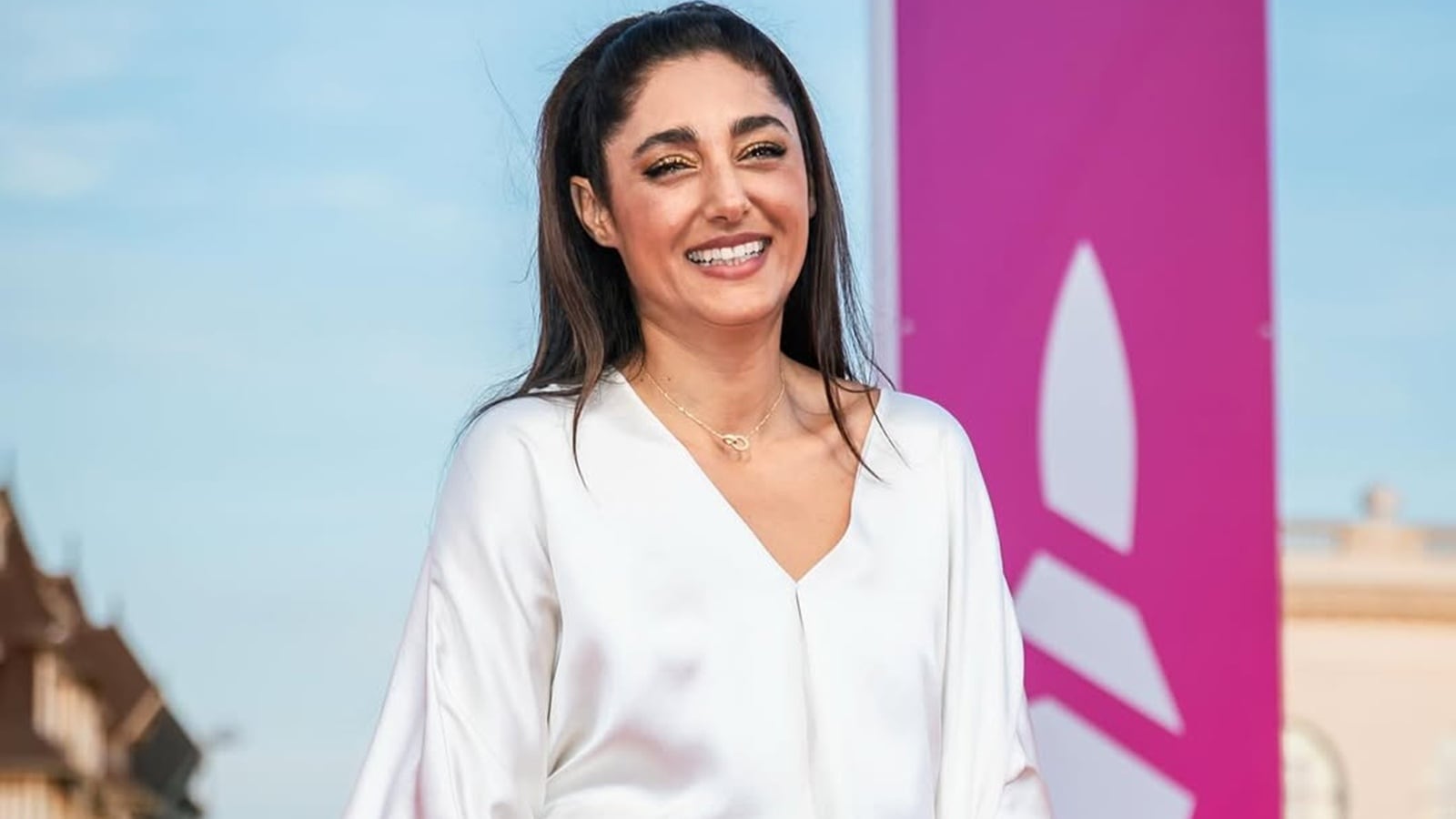
Media outlets are currently scrambling to link Golshifteh Farahani to the latest French political psychodrama involving Emmanuel Macron and Brigitte Macron. They are failing. By treating one of the most formidable actors of her generation as a mere footnote to a domestic European spat, the press isn't just being lazy—they are being culturally illiterate.
The "5 things you need to know" listicles are the junk food of journalism. They reduce a career defined by exile, defiance, and raw cinematic power into a series of digestible trivia points designed to milk SEO traffic from a passing political controversy. If you are clicking on Farahani's name because of a row in the Élysée Palace, you’ve already missed the point of her entire existence.
The Myth of the Accidental Activist
The standard narrative paints Farahani as a victim of circumstance—an actor who was simply "caught up" in the Iranian government’s restrictive web. This is a patronizing lie.
Farahani didn't trip and fall into exile. She chose it with eyes wide open. When she appeared in Ridley Scott’s Body of Lies in 2008, she wasn't just taking a Hollywood paycheck; she was intentionally dismantling the barrier between Iranian talent and the global stage. She knew the consequences. In the Iranian film industry, there is no "separation of church and state." To act is to navigate a minefield.
Most Western commentators treat her exile as a tragic backstory. It’s not. It’s her primary credential. While her peers were playing it safe within the confines of state-sanctioned scripts, Farahani was burning bridges that needed to be burned. To frame her through the lens of French political gossip is to insult the gravity of that sacrifice.
Why the Macron Connection is a Distraction
The sudden surge in interest regarding Farahani in the context of the Macrons is a classic case of proximity bias. Yes, she lives in France. Yes, she is a symbol of the "Marianne" spirit—liberty, reason, and the refusal to submit. But the attempt to use her as a pawn in a debate about French social norms or presidential optics is a shallow exercise in branding.
Farahani is not a mascot for Western liberalism. She is an anomaly. She exists in a space between cultures that most people are too terrified to inhabit. By trying to tether her to a local French "row," the media attempts to domesticate her. They want to make her relatable to a Parisian or New York audience by stripping away the specific, jagged edges of her Iranian heritage.
Stop Calling Her "Brave"
"Brave" is the word critics use when they don't want to engage with the actual work. It’s a backhanded compliment that suggests her value lies in her defiance rather than her craft.
Look at her performance in Jim Jarmusch’s Paterson. Or her haunting presence in The Patience Stone. She isn't "brave" in those roles; she is precise. She is technically superior. She possesses a screen presence that pulls the oxygen out of the room. When we focus on her political utility, we ignore her artistic mastery.
The industry spends millions trying to manufacture "it" factors. Farahani was born with a frequency that most actors can’t tune into after decades of training. If you’re talking about her because of a political headline, you’re looking at a masterpiece through a keyhole.
The Problem with the "Iranian-French" Label
We love hyphenated identities because they help us categorize the "other." Calling her an "Iranian-French actor" is technically true but intellectually dishonest.
Farahani is an actor of the world who happens to be a woman without a country. That displacement is her engine. When the media emphasizes her "French-ness" in the context of the Macron story, they are trying to claim her. It’s a form of soft colonization. "She’s one of us now, so we can use her to talk about our politics."
I’ve watched the industry try to pigeonhole international talent for years. They did it with Gong Li, they did it with Mads Mikkelsen, and they are doing it with Farahani. They want her to be a spokesperson, a revolutionary, or a fashion icon. They rarely want her to just be an actor.
Dismantling the "5 Things" Obsession
Let’s look at what the "lazy consensus" wants you to know versus the reality.
- The Nude Photo Shoot: The media always brings up her 2012 photo for Madame Figaro. They frame it as a "scandal." It wasn't a scandal; it was an eviction notice to the patriarchy. Treating it as a "shocking moment" 12 years later is puritanical and boring.
- The Hollywood Crossover: They mention Body of Lies as if it were her peak. It was a footnote. Her real work is happening in independent cinema, where she isn't relegated to the "exotic love interest" role.
- The Musical Talent: Yes, she plays the piano. No, it’s not a "surprising hobby." It is part of the same rigorous discipline that informs her acting.
- The Exile: It’s not a status; it’s a wound. Stop treating it like a cool biographical detail.
- The French Connection: Living in Paris doesn't make her a character in a French political drama.
The Actionable Truth
If you actually care about Golshifteh Farahani, stop reading about her in the context of Brigitte Macron.
Instead, do this:
- Watch The Patience Stone. Witness what happens when an actor is given the space to dismantle the concept of the "submissive Middle Eastern woman" from the inside out.
- Reject the "Political Prop" narrative. Every time an article uses her face to sell a story about French domestic policy, recognize it for the clickbait it is.
- Demand better casting. Question why an actor of her caliber is often discussed more in the news section than the film reviews.
The obsession with linking celebrities to political figures is a symptom of a dying media cycle that can no longer find value in art for art’s sake. Farahani is a reminder that some people are too big for the boxes we build for them. She isn't in the news because of the Macrons; she’s in the news because the media doesn't know how to talk about her without a crutch.
Stop looking for the political angle. Start looking at the screen.
The woman isn't a headline. She’s a storm. And storms don't care about your local elections.