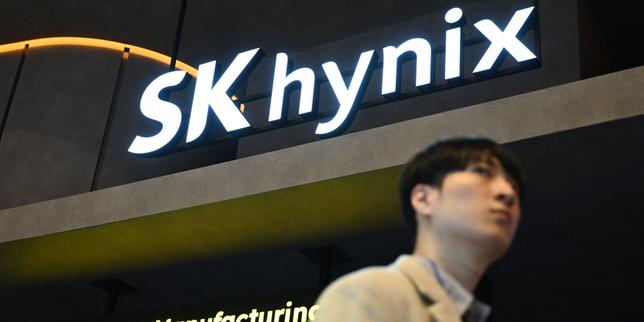
The neon signs of Yeongtong-gu blink through the midnight smog of Suwon, a city swallowed by the gravity of a single corporate titan. Inside a packed gogijip, the thick scent of pork belly searing on charcoal cuts through the exhaustion of twenty-somethings slumped over green bottles of soju. It is 1:00 AM on a Tuesday. At the center table, a young engineer named Min-ho—not his real name, but a composite of three men I spoke with this month—stares at his phone.
A notification pings.
His bank balance has just shifted by 600 million Korean won. That is roughly 400,000 euros. In a single, silent digital transaction, a kid who spent his college years surviving on instant ramyun has just acquired the purchasing power of a seasoned real estate investor.
Min-ho does not shout. He does not pour champagne. He simply shows the screen to his colleague, who nods with the heavy, weary solidarity of a soldier surviving a grueling campaign. They are the new aristocracy of South Korea. They do not wear crowns. They wear blue anti-static smocks and lanyard badges that grant them access to the hyper-sterile, yellow-lit cleanrooms where the future of global computing is etched onto silicon wafers.
The world used to look to oil barons and Wall Street hedge fund managers to find the flashiest displays of sudden, obscene wealth. No longer. Today, the undisputed "kings of modern oil" are twenty- and thirty-something semiconductor engineers in South Korea.
But this sudden influx of wealth is not a lottery win. It is a Faustian bargain struck between a generation desperate for stability and a nation whose entire geopolitical survival rests on a chip measuring mere millimeters across.
The Weight of the Microscopic
To understand the money, you have to understand the terror of the scale.
Imagine trying to draw a map of the entire global highway system, with every exit, lane, and toll booth perfectly detailed, on the surface of a single grain of rice. That is the daily reality inside the fabrication plants of Samsung Electronics and SK Hynix. The margins for error do not exist in millimeters or micrometers; they exist in nanometers. A single speck of dust, smaller than a human skin cell, can ruin a batch of chips worth millions.
This microscopic precision requires a brutal human sacrifice. The engineers live in a state of perpetual, low-humming anxiety. The cleanrooms are windowless, pressurized vaults where time disappears under the buzzing hum of industrial air filtration. Inside, the hours blend together. Day shifts bleeding into night shifts are common. The air is chemically dry. The skin chaps. The mind wanders, but the hands cannot afford to slip.
"You are constantly aware that a mistake on your watch can delay a product launch by three months," Min-ho told me, his fingers tracing the rim of his glass. "If Apple or Nvidia goes to your competitor because your yield rates dropped by two percent, you aren't just losing money for the company. You feel like you are failing the country."
This is not hyperbole. South Korea’s economy is deeply asymmetric, dominated by massive conglomerates known as chaebols. Semiconductors account for nearly twenty percent of the nation's total exports. When the chip market booms, the entire country breathes easier. When it slumps, the national treasury shudders.
To keep the brightest minds from fleeing to Silicon Valley or being poached by rivals in Taiwan and China, the South Korean tech giants have turned to the ultimate motivator: raw, concentrated capital.
The January Mirage
The bonuses arrive like a tidal wave every January. They are called Performance Incentives, calculated as a massive percentage of the annual salary based on how much profit the memory chip divisions raked in during the previous year.
When the artificial intelligence boom exploded, driving an insatiable global demand for High Bandwidth Memory (HBM) chips, the profits reached biblical proportions. Companies found themselves drowning in cash, and under intense pressure from powerful labor unions and a competitive talent war, they opened the floodgates.
Consider the math. A mid-level engineer earning a base salary of 80,000 euros suddenly finds their income multiplied. A bonus of up to fifty percent of their annual salary, combined with special target incentives, can easily push their year-end payout past several hundred thousand euros. For senior engineers and top-tier researchers, that number climbs straight into the 400,000-euro range.
Suddenly, twenty-eight-year-olds are walking into luxury German car dealerships in Gangnam, paying in cash.
The local economy of Suwon, the fortress city of Samsung, has morphed to accommodate this sudden influx of young wealth. High-end omakase sushi restaurants, where a single dinner costs half a month's minimum wage, are booked out weeks in advance by twenty-somethings celebrating a successful product cycle. Luxury watch boutiques look less like exclusive salons and more like high-velocity supermarkets.
Yet, there is a strange, hollow quality to this consumerism.
Walk through the residential towers of Suwon on a weekend. The parking lots are packed with Porsche Macans, BMW M-series sportscars, and Genesis sedans. But the owners are rarely driving them. Most of the time, those pristine machines sit idle in the dark subterranean garages while their drivers are back inside the cleanrooms, staring at yield rate data under flickering fluorescent lights.
The Hidden Cost of the Badge
The money is real, but so is the burnout. South Korea has long been infamous for its grueling work culture, but the semiconductor race has pushed it to an extreme that borders on the unsustainable.
The pressure is psychological, systemic, and relentless. In the chip world, standing still is the equivalent of dying. If an engineer takes a two-week vacation, the architecture they were working on might already be obsolete by the time they return.
This creates a culture of self-policing presenteeism. No one wants to be the first to leave the office. No one wants to be the link in the chain that snaps.
"My parents are proud of me," says Ji-won, a software engineer at a major chipmaker who requested anonymity. "They tell their friends that their daughter works at the company that powers the world's AI. They think I am a billionaire. But they don't see me when I get home at three in the morning, too tired to even chew my food, staring at the ceiling wondering if my hair is thinning because of the stress."
The societal divide is widening rapidly, creating a strange new friction within South Korean youth culture. For decades, the ultimate dream for a graduate was simply securing a stable corporate job. Now, a massive chasm has opened between those who wear the semiconductor badge and those who work in traditional sectors like banking, civil service, or education.
A high school teacher or a mid-level government bureaucrat might work the same ninety-hour week, but their salaries remain tethered to the reality of inflation and standard economic growth. They look at their peers in the silicon fabs with a mixture of envy and resentment. In Seoul's brutal real estate market, where an ordinary three-bedroom apartment can easily cost over a million euros, the chip bonuses have become the only viable ladder to property ownership for the young generation.
If you do not have the silicon golden ticket, you are increasingly left behind in the dirt.
The Horizon of the Silicon Kingdom
The money will continue to flow as long as the world’s servers crave memory. The AI revolution shows no signs of slowing down, and the micro-battlefield remains centered squarely on the Korean peninsula.
But money can only buy compliance for so long. Inside the bars of Suwon, the conversation eventually shifts away from the Porsches and the apartments. The engineers talk about the exodus. A growing number of young technicians are looking for the exit doors, seeking out roles in European research institutes or American startups where the pay might be lower, but the sky is visible during the day.
They realize that the 400,000-euro bonus is not a gift. It is an insurance policy paid by a system that knows it is burning its human capital at an alarming rate to keep up with the relentless pace of global technology.
Min-ho finishes his soju and looks at his watch. It is nearly 2:00 AM. He has to be back in the cleanroom by seven. He stands up, adjusts his coat, and steps out into the freezing night air. His phone buzzes again—a text from a real estate agent offering a viewing for a luxury apartment overlooking the Han River.
He deletes the message, walks toward the corporate shuttle bus waiting at the corner, and steps inside, disappearing into the quiet, wealthy, exhausted crowd of his peers.


