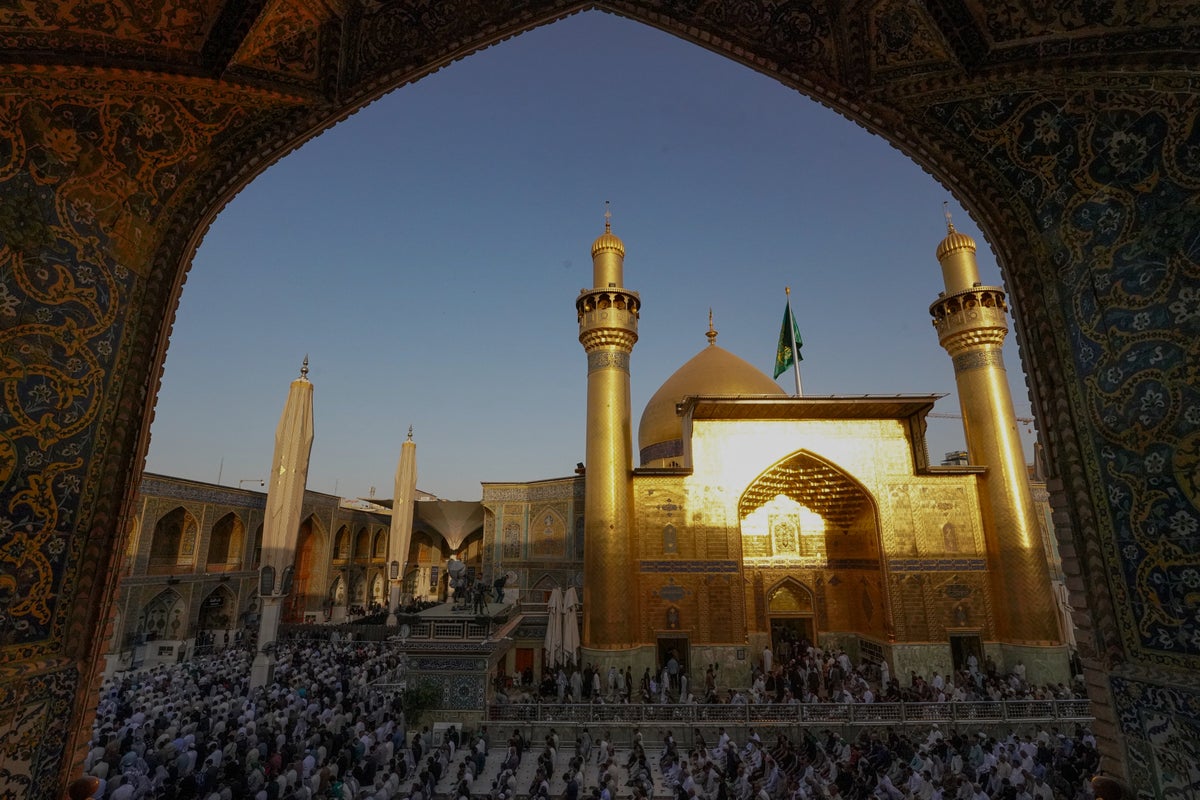
Most media outlets treat Eid al-Adha as a quaint photo gallery of prayer rugs and colorful robes. They zoom in on the "festival of sacrifice" through a lens of soft-focus exoticism, reducing a massive, high-stakes global economic engine to a series of National Geographic outtakes. If you think this is just a religious holiday, you aren't paying attention to the spreadsheets.
This isn't just about faith. It is a stress test for global logistics, a masterclass in decentralized philanthropy, and a massive redistribution of wealth that puts the World Bank's glacial programs to shame.
The Lazy Narrative of the Sacrifice
The standard article tells you that Muslims commemorate Prophet Ibrahim’s willingness to sacrifice his son by slaughtering an animal and sharing the meat. They show you a picture of a crowded market in Cairo or a prayer line in Jakarta and call it a day.
They miss the point entirely.
The "Qurbani" (sacrifice) is one of the most sophisticated examples of just-in-time production on the planet. Within a strictly defined 72-hour window, hundreds of millions of livestock are processed, packaged, and distributed to the world's most vulnerable populations. We are talking about a surge in demand that would break Amazon’s back, yet it happens every year with surgical precision through a mix of ancient tradition and modern fintech.
The Livestock Arbitrage
Stop looking at the camels and start looking at the capital.
The Eid economy is a multi-billion dollar surge. In countries like Pakistan, the livestock sector contributes roughly 11-12% of the national GDP. For a small-scale farmer in rural Punjab or the highlands of Ethiopia, Eid al-Adha is the liquidity event of the year. It is their IPO. They spend twelve months raising an asset to cash out during this specific window of peak volatility.
When you see a "photo gallery" of a crowded animal market, you aren't looking at "tradition." You are looking at a high-frequency trading floor. Prices fluctuate by the hour based on the "beauty" of the animal, its weight, and the proximity to the Eid prayer.
The Hidden Logistics of the Hijaz
Consider the Kingdom of Saudi Arabia. During the Hajj pilgrimage, which coincides with Eid, the sheer volume of meat processed is staggering. We aren't just talking about a few backyard goats.
The Saudi Project for Utilization of Hajj Meat is a logistical marvel. They have automated slaughterhouses capable of handling over a million head of sheep in days. This meat isn't wasted; it is flash-frozen and shipped via sea and air to over 25 countries. This is an international cold-chain operation that rivals the world’s largest food conglomerates.
The Myth of "Senseless" Slaughter
Critics often emerge during this period to decry the environmental impact or the ethics of mass slaughter. These arguments usually come from a place of profound ignorance regarding industrial food systems.
If you buy your steak in a plastic-wrapped tray at a supermarket, you are participating in a disconnected, invisible cycle of death that wastes massive amounts of byproduct. The Eid sacrifice is the opposite. It is radical transparency.
- Zero Waste: In most developing nations, every part of the animal is utilized. The hide goes to the leather industry (a massive export sector in Turkey and Bangladesh), the offal is consumed, and even the bones are processed for industrial use.
- Local Empowerment: Unlike buying a burger from a multinational chain where the profit evaporates into offshore accounts, the Qurbani system forces money into the hands of the rural poor. The buyer pays the farmer directly. No middlemen. No corporate tax dodges.
- The Mandatory 1/3 Rule: Islamic law dictates that one-third of the meat must go to the poor. This isn't a "suggested donation" at a checkout counter. It is a foundational requirement.
The Digital Disruption of the Altar
The "photo galleries" love the blood and the dust of the street markets because it looks "authentic." In reality, the most significant shift in Eid al-Adha over the last decade has been the digitization of the sacrifice.
Wealthy Muslims in London, Dubai, or New York aren't buying goats in their backyards. They are using apps.
Platforms like Global Relief Trust or Islamic Relief allow a donor to purchase a sacrifice in a specific country (say, Yemen or South Sudan) with a single click. The platform manages the sourcing, the slaughter, and the distribution to refugees. This has turned a localized religious act into a globalized philanthropic derivative.
You can now hedge against local meat shortages by funding a sacrifice in a region with a surplus. It is the commoditization of piety, and it is incredibly efficient.
The "People Also Ask" Fallacy
People often ask: "Is Eid al-Adha bad for the economy because of the sudden price hikes?"
This is the wrong question. The price hike is a feature, not a bug. It is a massive transfer of wealth from the urban middle and upper classes to the rural agrarian class. It is one of the few times a year where the "wealth gap" is narrowed through a direct market transaction rather than a failed government social program.
Instead of asking if it's "barbaric," ask why the Western world hasn't figured out a way to mandate that 30% of all luxury food purchases be distributed to the homeless.
The Harsh Reality of the "Festival"
Let’s be honest about the downsides, because a contrarian view requires skin in the game.
The surge in demand creates massive waste management nightmares for cities like Karachi or Dhaka. The infrastructure often fails to keep up with the biological reality of millions of animals in a concentrated space. This isn't a failure of the religion; it is a failure of municipal governance.
Furthermore, the leather industry often exploits this period of "excess" hides to drive down prices paid to local collectors, proving that even in a religious festival, predatory capitalism finds a way to bleed the margins.
Stop Looking at the Pictures
When you scroll through those glossy slideshows of kids petting goats and men hugging in white tunics, realize you are seeing the surface tension of a deep, complex ocean.
Eid al-Adha is a massive, decentralized, annual redistribution of global protein. It is a logistical feat that operates without a central headquarters. It is a market that survives inflation, war, and pandemics because its "incentive structure" isn't quarterly profits—it’s something far more durable.
If you want to understand the Muslim world, stop analyzing their politics and start analyzing their supply chains during the tenth day of Dhu al-Hijjah.
The meat isn't just a meal. It's a currency.
The sacrifice isn't just a ritual. It's a market correction.


