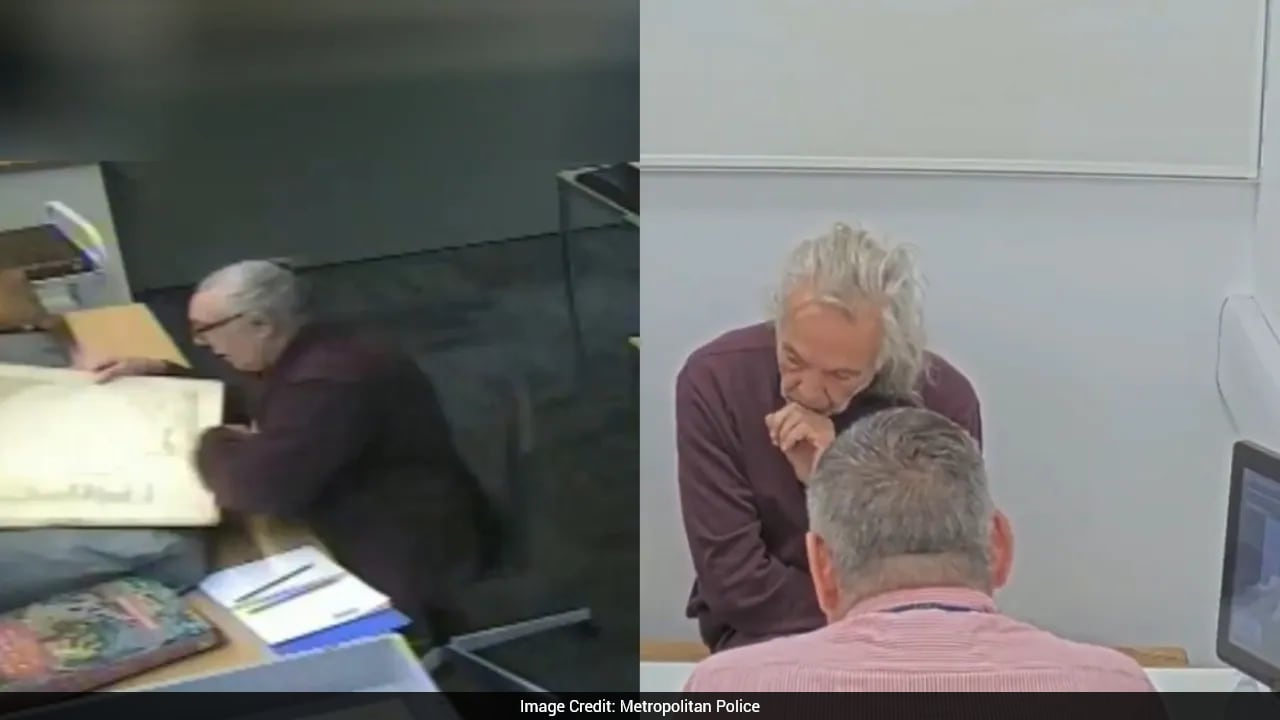
Three years in prison. That is the going rate for erasing centuries of human geography and holding history hostage.
The mainstream press loves a good heist story. When headlines broke about a man sentenced to just three years behind bars for stealing a priceless, rare world map—and stubbornly refusing to tell authorities where he hid it—the coverage followed a predictable, lazy script. Reporters painted him as a romantic rogue, a modern-day Thomas Crown outsmarting the system, while framing the court's sentence as a neat, tidy resolution to a quirky crime.
That narrative is dangerously naive.
In the high-stakes world of rare books, antiquarian cartography, and cultural heritage security, this case is not a charming footnote. It is a catastrophic failure of legal deterrence. By handing down a light sentence while the artifact remains missing, the justice system just sent an open invitation to every black-market syndicate on the planet. The math is brutally simple: take a three-year nap in a minimum-security cell, keep your mouth shut, and walk out to a multi-million-dollar payday—or worse, leave an irreplaceable piece of human intellect rotting in a damp basement forever.
The Myth of the Gentleman Thief
Mainstream crime reporting relies heavily on Hollywood tropes. Journalists love to imply that high-end art and map thieves are cultured connoisseurs who rescue neglected treasures from dusty archives because they love the craft too much to let the public touch it.
Ask anyone who has actually spent twenty years investigating cultural property crime, and they will laugh in your face.
Rare cartography thieves are not aesthetes. They are predatory liquidators. When a thief slices a 16th-century Ptolemy or a rare Mercator projection out of a bound atlas in a university reading room, they are not admiring the copperplate engraving or the hand-applied period color. They are calculating how fast they can fence it to a shell company in Zurich or a private buyer who cares more about status than provenance.
The competitor coverage of this sentencing completely misses the mechanics of the theft. You do not accidentally walk out of a secure archive with a rare world map. These thefts require months of reconnaissance, fake academic credentials, specialized blades designed to sever linen bindings without making a sound, and a pre-arranged exit strategy. Treating this perpetrator as a stubborn lone wolf ignores the reality of the illicit antiquities pipeline. Nobody steals a high-profile, un-sellable artifact without either a commissioned buyer waiting in the wings or an acute, delusional misunderstanding of how the antiquarian market functions.
Why You Cannot Actually Fence a Famous Map
Here is the massive irony that lazy reporters never bother to explain: stealing a globally recognized rare map is one of the dumbest financial crimes imaginable.
Unlike gold bullion, bearer bonds, or uncut diamonds, an early printed world map is a forensic fingerprint. Cartographers of the Renaissance and the Age of Discovery worked with hand-carved woodblocks and engraved copperplates. Every single impression pulled from those plates carries microscopic flaws—a tiny crack in the border, a specific wormhole in the rag paper, a unique pattern of hand-coloring, or the distinct library stamp of the institution that owned it.
Let us run a quick thought experiment. Imagine a scenario where you successfully steal a 400-year-old world map worth $500,000 at auction. You get it out of the building undetected. Now, how do you turn that paper into cash?
You cannot take it to Sotheby's or Christie's. Every major auction house cross-references high-value consignments against the Art Loss Register and Interpol's Stolen Works of Art database. You cannot sell it to a reputable dealer belonging to the International League of Antiquarian Booksellers (ILAB); their entire livelihood depends on airtight provenance, and touching a hot map is instant professional suicide.
That leaves the mythical "billionaire collector" who supposedly buys stolen masterpieces to hang in a secret underground bunker. In reality, that buyer barely exists. Ultra-high-net-worth collectors buy trophy assets to brag about them, loan them to museums for tax write-offs, and eventually resell them at a profit. A stolen map is a toxic asset. You cannot insure it, you cannot exhibit it, and you cannot legally pass it on to your heirs.
This brings us back to the terrifying reality of the thief refusing to reveal the map's location. If he cannot sell it, and he will not return it, the artifact is trapped in limbo. And paper does not survive limbo.
The Silent Destruction of Paper and Ink
When the public hears that a thief refuses to disclose where a stolen map is hidden, they picture it resting safely inside a climate-controlled Swiss bank vault.
The reality is usually a cardboard box in an unheated garage, a storage unit prone to summer humidity spikes, or a damp crawlspace behind drywall.
Early cartography is remarkably resilient when properly cared for, thanks to high-quality linen and cotton rag paper that puts modern wood-pulp paper to shame. However, rag paper is still organic matter. Without strict environmental controls—specifically, relative humidity kept between 45% and 55% and temperatures hovering around 65 degrees Fahrenheit—historic maps degrade rapidly.
- Foxing and Mold: High humidity triggers fungal blooms that eat directly into the cellulose fibers, leaving permanent reddish-brown stains and turning crisp paper into soggy tissue.
- Copper Green Corrosion: Many Renaissance maps utilized verdigris, a vibrant green pigment made from copper acetate. Over centuries, the acid in this pigment literally burns through the paper, causing the oceans and borders to fall out of the map like a jigsaw puzzle. Improper storage accelerates this chemical decay exponentially.
- Creasing and Acid Migration: Thieves frequently fold large folio maps to hide them inside briefcases or coats. Folding brittle, centuries-old paper snaps the fibers permanently. Worse, storing a stolen map inside a cheap modern plastic sleeve or cardboard tube causes acid migration, yellowing and embrittling the sheet within months.
By refusing to reveal the location, the thief is not just obstructing justice. He is actively destroying an irreplaceable primary source of human history. Every day that map sits in an unverified hiding spot is another day closer to total, irreversible loss.
The Broken Math of Cultural Property Sentencing
Why on earth did a judge hand down a three-year sentence when the stolen property is still missing?
Because Western legal systems still value cultural heritage based on outdated, purely commercial metrics—or worse, treat non-violent archive theft as a victimless white-collar misdemeanor.
Look at the precedent set by historical cases. When E. Forbes Smiley III pleaded guilty in 2006 to stealing nearly 100 rare maps worth over $3 million from institutions like Yale, Harvard, and the British Library, he received just 42 months in federal prison. Smiley at least cooperated and helped recover the maps. In contrast, when Gilbert Bland—the notorious "Al Capone of Maps"—was caught in the 1990s after systematically gutting rare atlases across 19 universities, he served a mere 17 months.
Lawmakers and judges routinely fail to grasp the difference between stealing $250,000 in cash from a bank and stealing a $250,000 map from a public archive. Cash is fungible. The bank is insured, the Federal Reserve prints more currency, and society moves on without losing a shred of collective knowledge.
A rare world map is non-fungible. It represents a specific moment in human understanding—the exact year European cartographers realized California was not an island, or the first recorded coastline of a newly charted continent. When you steal and hide that object, you are robbing millions of researchers, students, and future generations of a piece of their intellectual inheritance.
The Coercive Contempt Solution
Legal systems already possess the exact mechanism required to break a thief's silence, yet judges rarely deploy it in art and archive thefts: coercive civil contempt.
Instead of a flat, determinate three-year sentence—which allows the criminal to simply run out the clock—courts should impose a mandatory baseline punitive sentence for the theft itself, paired with an indefinite contempt order that does not begin to expire until the artifact is physically recovered and authenticated.
Think about the psychological shift that creates. Under the current system, the thief holds all the cards. He knows the exact date he will walk free, regardless of whether he cooperates. Under a coercive contempt structure, the thief holds the keys to his own cell. Every morning he wakes up behind bars is a direct result of his own refusal to return the map.
I have seen defense attorneys argue that indefinite detention for property crimes violates proportionality principles. They have a point—if you apply it to a stolen television or a luxury car. There is a genuine risk of judicial overreach if courts start locking people up indefinitely over insured commercial goods.
That is why the distinction must be surgically precise. Coercive retention should apply exclusively to registered cultural heritage, irreplaceable archival materials, and items of verified historical significance. When the stolen object cannot be replaced by any amount of insurance money, the state has a compelling interest in compelling its return.
Institutional Negligence Is the Silent Accomplice
We cannot lay all the blame at the feet of the courts and the thieves. Libraries, universities, and archives bear massive responsibility for making these thefts embarrassingly easy.
For decades, the prevailing culture in rare book rooms was built on gentlemanly trust. Curators assumed that anyone requesting access to a 1507 Waldseemüller map or a 16th-century Ortelius atlas was a noble scholar pursuing pure academic truth. Security protocols were treated as an annoying barrier to research.
I have walked into major institutional reading rooms where the security procedures were a total joke. Bags were barely checked. Researchers were left completely unobserved behind tall stacks of reference books. High-value bound atlases were handed over without anyone counting the plates beforehand or checking the volume upon return.
Even worse is the culture of institutional cover-ups. When a major university realizes a priceless map has been sliced out of a folio, their first instinct is rarely to call the FBI Art Crime Team. Their first instinct is to call their public relations department.
Administrators are terrified of looking incompetent. They worry that if wealthy alumni and donors find out the library cannot protect its existing collections, those donors will stop giving money or bequeath their rare books elsewhere. So, the library quietly sweeps the theft under the rug, delays reporting it for months, and gives the thief a massive head start to flee the jurisdiction and bury the evidence.
How Archives Must Fix Their Security Tomorrow
If institutions want to stop bleeding priceless cartography, they need to abandon the 19th-century honor system and adopt modern asset-protection protocols immediately:
- Mandatory Pre- and Post-Use Collation: No bound volume containing plates or maps should ever be handed to a researcher without a staff member documenting the exact plate count on a physical slip, and verifying every single page is intact before the researcher is allowed to exit the room.
- High-Definition Micro-Tagging and Digitization: Every high-value map must be digitized at ultra-high resolution—capturing the exact fiber structure of the paper—and marked with invisible, non-destructive synthetic DNA micro-dots. If the map surfaces fifty years later in a private collection, its provenance is undeniable.
- Zero-Tolerance Reporting Mandates: Publicly funded institutions and tax-exempt universities must be legally required to report missing cultural artifacts to law enforcement and the Art Loss Register within 48 hours of discovery. Failure to report should result in the immediate suspension of federal grant eligibility.
- Strict Physical Isolation: Researchers do not need to sit next to their backpacks, heavy coats, or personal notebooks. Reading rooms must enforce strict zero-item policies—providing archive-issued pencils and single sheets of paper, monitored by high-definition overhead cameras directly above every reading table.
Dismantling the "Victimless Crime" Fallacy
When people search for news about map thefts, they often ask if stolen art can ever be sold legally, or why museums do not just put copies on display and lock the originals away forever.
The first question exposes a profound misunderstanding of title law. Under common law jurisdictions, a thief can never pass good title to stolen property. Even if that stolen world map changes hands five times over the next century, and even if the final buyer pays full market value in total good faith without knowing its history, the original institution still legally owns it. The map remains perpetually hot.
The second question—why not just lock the originals away and show reproductions—strikes at the very heart of why physical artifacts matter. A digital scan or a high-res print shows you the image, nothing more. It cannot tell you about the chemical composition of the ink, the watermarks embedded in the paper mold that prove where the sheet was manufactured, or the faint marginalia scribbled by a 16th-century navigator. Studying a reproduction instead of the original map is like reading a plot summary of Hamlet instead of watching the play.
By treating the theft of this map as a three-year slap on the wrist, the court validated the dangerous lie that history is disposable.
If a man can walk into an archive, steal an irreplaceable piece of human cartography, refuse to tell the world whether it is safe or rotting in a ditch, and serve less time than someone caught with a few ounces of narcotics, the system is broken beyond repair. Until judges start keeping these thieves behind bars until the artifacts are back in the light, the looting of our collective memory will only accelerate.


