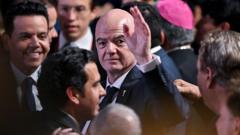
The cracks at the top of world football are widening fast. The Scottish Football Association just confirmed it won't back Gianni Infantino in the upcoming presidential election, joining a growing wall of European resistance. If you've been watching how global sports politics operates, you know federations don't pull endorsements lightly. When smaller and mid-tier associations start breaking ranks with Zurich, the power dynamic shifts.
Chief executive Ian Maxwell made the stance crystal clear. The SFA aligned directly with UEFA, echoing anger over a massive breakdown in governance. Scotland joins heavyweights like England, Wales, and the Republic of Ireland in dumping their prior written support for Infantino. The rush to abandon ship isn't random. It stems directly from a botched commercial maneuver that caught national associations completely off guard.
The World Cup Sell-Off That Backfired
At the heart of this revolt lies the failed FIFA Forward Enterprise project. FIFA tried to establish a subsidiary to manage commercial rights and event operations across its marquee tournaments, floating a plan to sell a minority stake of up to twenty percent to private investors.
The valuation floated around twenty billion dollars, with projections of raising over four billion. Private equity in the World Cup sounds great on a PowerPoint slide in Zurich, but national associations hate surprises. Member federations discovered they were looped out of high-stakes financial structuring. When three major confederations published an open letter accusing leadership of deception over the private investor push, the writing was on the wall.
FIFA eventually scrapped the proposal, admitting to communication missteps. But apologies don't fix lost trust. National FAs realized that multi-billion dollar commercial plays were being cooked up behind closed doors without meaningful consultation.
Why This Revolt Actually Matters
You might wonder if losing Scotland or Ireland really breaks Infantino's grip. After all, global football politics relies heavily on blocks of votes across Africa, Asia, and the Americas, where Infantino has historically maintained deep pockets of support.
Yet, European solidarity carries serious weight. When UEFA's fifty-five member nations coordinate pushback against central authority, the ideological fracture becomes impossible to ignore. Ian Maxwell didn't hold back when pointing out the absurdity of the current administrative circus. When the headlines focus constantly on boardroom scandals and opaque investor pitches rather than the actual sport, the system is broken.
Think about the fan experience. Millions poured into recent tournaments, yet the post-match discourse gets hijacked by corporate greed and political maneuvering. Administrators are supposed to keep the machine running quietly in the background. When an executive starts treating the world's game like a private equity playground, grassroots resistance follows.
What Happens Before the Congress
The path to next year's FIFA Congress is messy. Infantino faces fierce scrutiny, denying allegations and attempting to rally remaining loyalists. FIFA's leadership recently gathered to weather the storm, blaming critics for orchestrating a coordinated campaign to undermine the organization.
However, defensive PR statements won't restore faith among federations that feel sidelined. The upcoming election won't just be a coronation. It's turning into a referendum on transparency, corporate overreach, and whether global football governance answers to national associations or just the executive office.
Keep an eye on how other confederations respond. If European unity holds firm and bleeds into other regions, Infantino's invincible aura takes a permanent hit. Transparency isn't just a buzzword here; it's the baseline requirement for keeping football's house together.