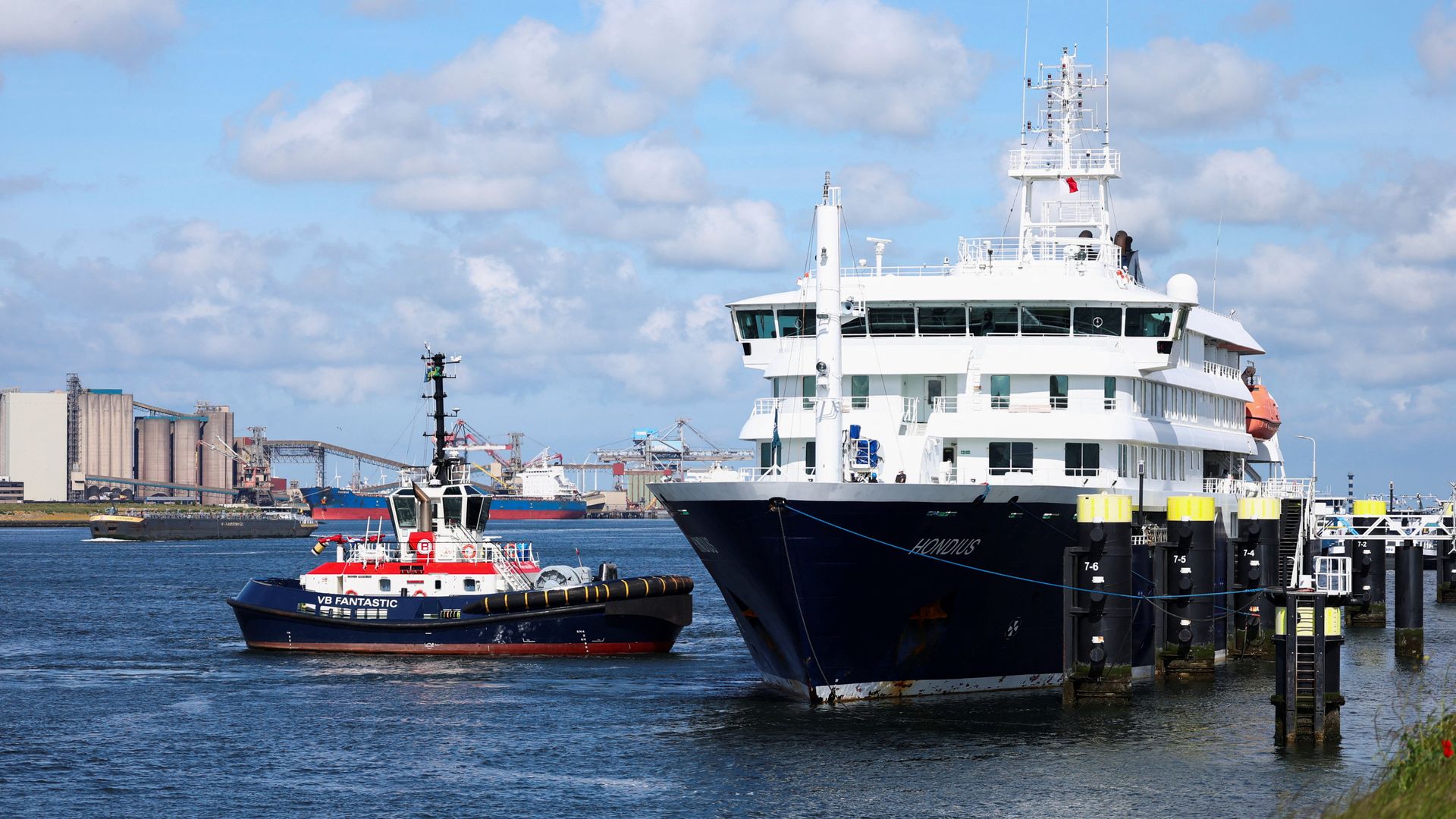
The scent of ozone and industrial-grade bleach lingers long after the scrubbing stops. It clings to the back of your throat, a sharp, chemical reminder that someone went to war in this room. To the average vacationer stepping onto a newly refurbished cruise liner, the pristine white sheets and polished brass fixtures signal luxury. But if you know where to look, the ghost of what happened here remains.
A cruise ship is a floating ecosystem. It is a marvel of human engineering, a small city thrust out into the merciless blue of the open ocean. When it functions well, it feels like magic. When something invisible slips past the threshold, that magic curdles into a claustrophobic nightmare. Don't miss our previous coverage on this related article.
Right now, a vessel once defined by fear is being quietly prepped for its return to the waves. The workers polishing the handrails and testing the buffet heating elements aren't just preparing for a new season of tourism. They are trying to erase a history written in biohazard tape and panic. They are trying to outrun a headline that most travelers have already forgotten, but one that the maritime industry will remember for decades: the outbreak of Hantavirus at sea.
The Sound of a Cough in Paradise
Imagine stepping onto your balcony at dawn. The air is thick, salty, and warm. The horizon stretches out infinitely, a seamless blend of sapphire water and pale sky. You paid months of salary for this peace. You unpacked your bags, leaving the stress of land life thousands of miles behind. To read more about the background of this, AFAR provides an excellent breakdown.
Then, from the cabin next door, you hear it. A deep, racking cough.
At first, you ignore it. People get colds. Travelers get fatigued. But over the next forty-eight hours, the atmosphere on the ship shifts. The casual laughter in the hallways quietens. You notice crew members moving with a strange, calculated urgency. The ship’s medical bay, usually a quiet office treating sunburns and mild motion sickness, suddenly has a line stretching down the corridor.
This isn't a hypothetical drama. It is exactly how the reality of a shipboard outbreak begins. When Hantavirus entered the closed loop of a vacation vessel, it didn't announce itself with a siren. It arrived like a shadow.
Hantavirus is not your standard winter flu. On land, we associate it with rural cabins, dusty barns, and the frantic scurrying of rodents. It is a pathogen born of the wilderness, transmitted through the aerosolized particles of mouse droppings. When a human breathes in that dust, the virus takes root. It waits.
When it awakens, it mimics the common cold before aggressively attacking the lungs, causing Hantavirus Pulmonary Syndrome. The fluid builds. The breathing grows shallow. On land, you call an ambulance. At sea, when you are three days from the nearest port, that cough sounds like a ticking clock.
The Engineering of an Invisible Shield
How does a virus born in the dirt find its way onto a multi-million-dollar luxury liner?
Ships are built to keep the ocean out, but they are also incredibly complex networks of pipes, ventilation shafts, and storage holds. A ship docks at a tropical port. Supplies are loaded. Crates of fresh fruit, clean linens, and structural materials are hoisted into the belly of the beast. All it takes is one hitchhiker. A single infected rodent nesting in a palette of goods can introduce a lethal pathogen into an environment where thousands of people breathe the exact same recycled air.
The public reaction to the initial outbreak was a mix of bewilderment and terror. People asked how a modern vessel could let this happen. The answer is simple: we are remarkably fragile, and our grandest machines are only as safe as their weakest link.
But the real problem lies elsewhere. It rests in the immense challenge of decontamination.
To prepare a compromised ship for a new cruise, you cannot simply wipe down the counters with disinfectant wipes. You have to treat the vessel like a patient in critical condition. Specialized bio-recovery teams must dismantle the infrastructure of comfort.
Consider what happens next:
Every mattress is stripped and incinerated. Every square inch of carpet is pulled up, exposing the cold steel beneath. The entire HVAC system—miles of twisting, dark ductwork that snakes through every cabin and public ballroom—must be systematically flushed with vaporized hydrogen peroxide.
The crews undertaking this work wear positive-pressure suits. They look like astronauts walking through a ghost town. They move methodically, room by room, testing the air, scrubbing the bulkheads, and replacing every filter. It is a grueling, invisible war waged against a microscopic enemy. The financial cost is staggering; the cost to human trust is immeasurable.
The Psychology of the Cabin Door
There is a unique psychological horror to being sick at sea.
If you fall ill in a city, your world remains wide. You can look out a window and see traffic, pedestrians, the reassuring monotony of everyday life. If you are quarantined in a cruise cabin, your world shrinks to twelve by fifteen feet of carpet and a view of an indifferent ocean. The walls feel thicker. The silence of the hallway becomes oppressive.
During the cleanup and preparation phase, investigators spoke with survivors and crew members who lived through the lockdown. Their stories didn't focus on the medical statistics or the viral load data. They talked about the sound of footsteps outside their doors. They talked about the tray of food left on the floor, the knock, and the quick retreat of the server.
One passenger recalled watching the horizon for hours, wondering if the ship was turning back toward land, or if they were simply drifting, waiting for permission to dock. That sense of isolation changes a person. It turns a vacation into a confinement.
The shipping company faces an existential puzzle. How do you convince a family to book a vacation on a vessel that was recently a floating quarantine zone?
They do it through radical transparency and engineering overkill. The ship currently being prepared isn't just being cleaned; it is being structurally modified. Rodent-proofing a ship requires sealing every gap larger than a dime with steel wool and concrete. It means installing advanced thermal imaging in food storage areas to detect the body heat of any unwanted pests. It means upgrading the air filtration to HEPA standards usually reserved for surgical theaters.
The Price of the Ticket
We live in an age that demands absolute safety but craves total adventure. We want to explore the edges of the map, but we expect the comforts of a five-star hotel to follow us there. The return of this Hantavirus ship is a testament to human resilience, but it is also a reminder of our collective amnesia.
Soon, the bookings will open. The marketing campaigns will roll out, featuring smiling couples sipping cocktails on the sun deck, the ocean glittering like diamonds behind them. The prices might be slightly lower to incentivize the brave, or perhaps the name of the vessel will be quietly changed, a fresh coat of paint covering a dark chapter.
Most passengers who board the new cruise will have no idea what occurred in the spaces where they sleep. They will complain about the Wi-Fi speed or the line at the omelet station. They will live in blissful ignorance, which is precisely what the cruise line is paying millions of dollars to achieve.
But a few will know. A few will sit in those deck chairs, looking at the vent above them, listening to the steady, rhythmic hum of the fans pushing clean, sterile air into the room. They will appreciate the breeze a little bit more. They will understand that the luxury surrounding them was bought not just with money, but with a furious, desperate effort to reclaim a kingdom from the wild.
The ship will slide away from the pier. The lines will be cast off, splashing into the dark harbor water. The engines will rumble to life deep in the hull, vibrating through the soles of everyone on board. As the shore recedes into a low line of blinking lights, the vessel will point its bow toward the open sea, clean, cured, and carrying a cargo of fragile human hopes back into the vast, beautiful unpredictable wild.


