The ink smells different now.
For generations, the ritual of voting was tactile. It was the rough grain of heavy cardstock between your thumb and forefinger. It was the satisfying, blunt thud of a rubber stamp hitting a square box, or the scratch of a ballpoint pen committing a quiet choice to paper. That paper stayed there. You could fold it. You could watch it slide into a locked steel box guarded by neighbors who argued about local property taxes an hour earlier.
Then came the glass.
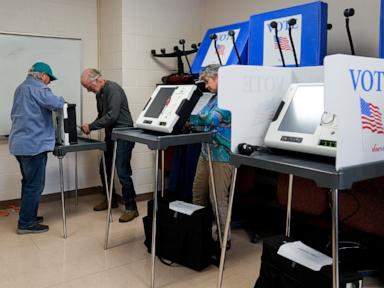
Imagine standing in a high school gymnasium at 7:00 AM. The air smells like floor wax and damp coats. You walk up to a sleek plastic console, a vertical screen glowing with a soft, uniform light. Your finger hovers over a name. You tap. A little checkmark appears instantly. No rustle. No friction. Just a sudden, silent shift of pixels.
How do you know?
That is the question that haunts modern democracies. How do you trust a machine you cannot open, cannot hear thinking, and certainly cannot cross-examine?
When a touchscreen voting machine—known formally as a Direct Recording Electronic device, or DRE—briefly highlights the wrong box or hesitates for a microsecond before registering a tap, collective panic flares. Social media fills with shaky vertical videos. Headlines scream about rigged systems and stolen futures. Every glitch becomes proof of a grand conspiracy, a digital ghost whispering that our collective voice has been hijacked by lines of invisible code.
But panic makes a poor mechanic. To understand why touchscreen hiccups do not equal election rigging, we have to look past the spooky glow of the monitor and examine the heavy, unglamorous machinery of human verification.
Consider a hypothetical voter named Elena. Elena lives in a swing county where every vote is treated like a match near a powder keg. She walks into her polling place, steps up to a touchscreen voting terminal, and makes her selections. As she reviews her ballot on the screen, she notices something terrifying: her choice for county commissioner is highlighted next to the wrong name.
Her heart spikes. Has the machine stolen her vote? Has she been neutralized by a rogue algorithm?
She pulls her hand back as if the glass were hot. She calls over a poll worker—let us call him Marcus, a retired math teacher who has volunteered at this exact precinct for twelve years, fueled entirely by lukewarm coffee and civic duty. Marcus walks over, listens to Elena's frantic explanation, and resets the machine. Elena tries again. This time, the calibration holds, the screen responds accurately, and she casts her ballot.
In Elena's mind, she just narrowly averted a catastrophe. In reality, she experienced a common hardware phenomenon: calibration drift.
Touchscreens rely on pressure or electrical capacitance to determine where a finger lands. Over hundreds of touches, temperature shifts, and minor manufacturing variances, the sensory grid beneath the glass can fall slightly out of sync with the visual interface displayed above it. Think of an old car stereo where the volume knob has to be turned a millimeter past the notch to actually kick in. It is annoying. It is startling. But it is mechanical fatigue, not malice.
The deeper fear, however, persists. What if the machine doesn't just misbehave on the surface? What if it steals votes in secret?
This is where the architecture of modern elections changes the story completely. Cybersecurity experts often point out a fundamental truth about voting machines that separates them from your smartphone or your online banking app: they are profoundly, stubbornly offline.
A voting machine is an island. It has no Wi-Fi card. It has no Bluetooth capability. It cannot connect to a cellular network, and it does not plug into the internet to transmit results. A hacker sitting in a basement halfway across the world cannot ping a voting terminal in Ohio or Arizona because there is simply no digital door for them to walk through. To tamper with a DRE, an adversary would have to gain physical, unsupervised access to thousands of individual machines scattered across thousands of secure, guarded locations—often under the watchful eyes of bipartisan election workers and locked inside tamper-evident seals with unique serial numbers.
Physical security is messy, slow, and loud. It leaves fingerprints.
Yet, skepticism remains healthy. Blind trust is the enemy of a free society. Even election officials admit that relying purely on closed-circuit digital screens leaves a nagging shadow of doubt. That is why the gold standard of modern voting technology has evolved into something remarkably clever: the voter-verified paper audit trail.
Most modern touchscreen systems do not just record your vote in a hidden digital ledger and call it a day. Behind a glass window on the side of the console sits a roll of paper. When you tap your choices on the screen, the machine prints out a physical record of those choices right inside the cabinet. You, the voter, get to lean in and read that printed paper slip behind the glass before you hit final submit.
If the paper says one thing and the screen said another, you sound the alarm. That paper slip is the legal ballot. The digital count is merely a convenience for speed.
Time and again, when discrepancies or calibration errors are reported, post-election audits reveal a reassuring, if mundane, reality. The paper records match the final tallies. Audits—where bipartisan teams manually hand-count stacks of paper ballots to verify machine results—act as the ultimate anchor against both technological failure and human paranoia.
We live in an age where algorithms curate our news, invisible servers route our messages, and artificial intelligence generates art and text. We feel alienated from the mechanics of our daily lives. We push buttons and hope for the best.
When that alienation infects the ballot box, the stakes feel existential. Democracy is not just a system of government; it is a shared story we tell ourselves about who holds power. When the tool we use to tell that story glitches, it feels like the narrative is breaking apart.
But machines break. Software has bugs. Capacitors age. That is the messy physics of the physical world. A miscalibrated touch screen is a maintenance ticket waiting to be filed, not a shadowy coup in progress.
The next time you step up to that glowing glass, remember the invisible army standing behind it. Not hackers in hoodies, but Marcus with his lukewarm coffee. Not a rigged matrix, but layers of paper receipts, bipartisan oversight checks, and hand-counted audits designed to protect the vote from the machine itself.
The ink may be gone, but the proof remains.