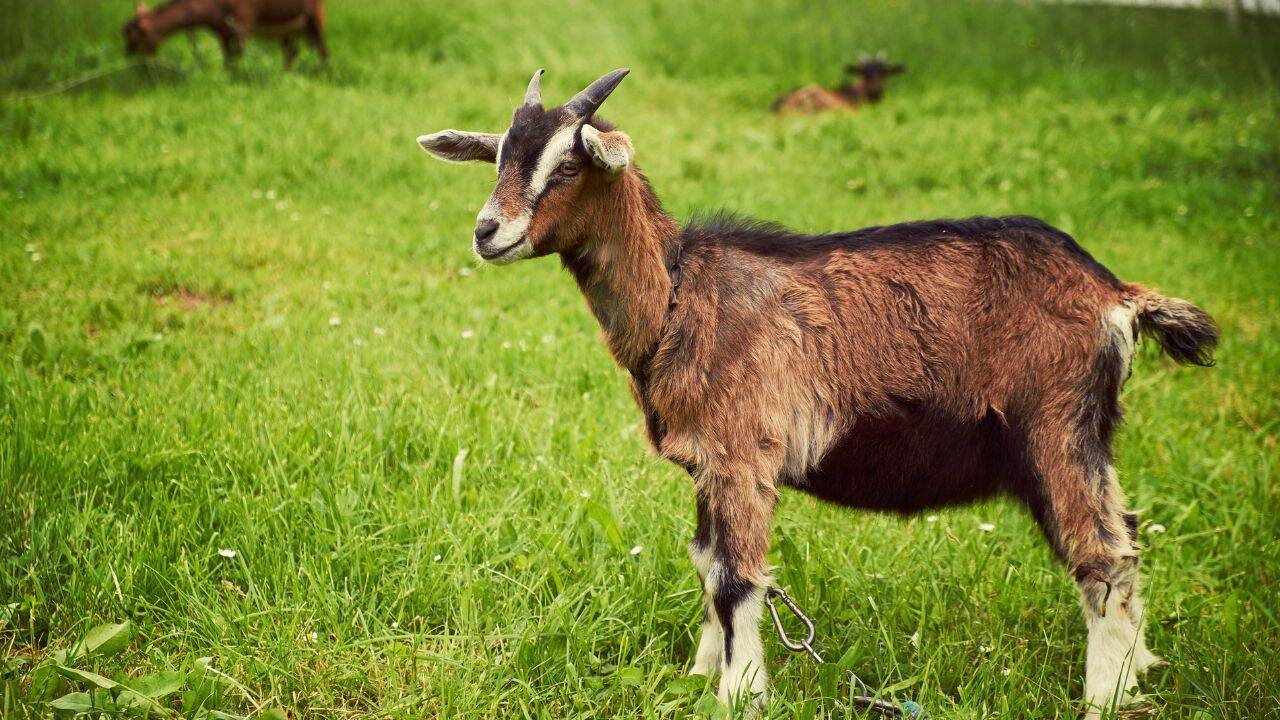
Cold.
That is the first thing you notice when you step out of the blinding Andalusian sun and cross the threshold into Cueva de los Murciélagos, a limestone cavern carved into the hills above Albuñol in southern Spain. The air drops twenty degrees in three paces, smelling sharply of wet mineral dust, bat guano, and something older—a dry, static stillness that belongs to places where wind has not blown for seven millennia.
For decades, archaeologists treated organic artifacts from the Neolithic era like fragile glass. You looked. You measured. You locked them away in climate-controlled drawers and prayed they wouldn't crumble into brown powder before the next generation of scholars could sketch them. Leather, in particular, was considered a biological dead end. Tanning, drying, burial, and time were supposed to shred the delicate double helix into unreadable static.
They were wrong.
In a quiet laboratory thousands of miles from that Spanish mountainside, a team of paleogeneticists recently took a razor-thin sample from a 7,000-year-old scrap of goat leather recovered from Cueva de los Murciélagos—the Cave of the Bats—and pulled something impossible out of the dead skin. They found intact ancient DNA. Not just fragments of the goat that died to make the garment, either. They found a biological fingerprint of the Neolithic world itself, preserved in a piece of clothing that once kept a human being warm in the dark.
The Lie of the Stone Age
We have a terrible habit of naming entire chapters of human existence after the hardest things people threw away.
Think about that for a second. We call it the Stone Age. The Bronze Age. The Iron Age. Because flint blades and shattered clay pots survive the rot of centuries, we have spent two hundred years imagining our ancestors as grey, monochromatic figures clanking rocks together in a barren world. We forgot the warmth. We forgot the textiles, the basketry, the dyed reeds, the supple hides rubbed soft with animal fat and brain matter so a child wouldn't freeze when the Sierra Nevada winds came down off the peaks.
If an alien civilization dug up your neighborhood seven thousand years from now, they would find your stainless-steel kitchen sink, your ceramic coffee mugs, and the titanium screws in your neighbor's knee. Your favorite wool sweater, your leather boots, the cotton sheets you slept on last night—all of it would be gone. If those future historians judged your life strictly by what survived in the dirt, they would assume you lived in a cold, sterile world of metal and porcelain.
Cueva de los Murciélagos is one of the rare places on Earth where that illusion breaks down.
Discovered by miners in the mid-nineteenth century looking for lead, the cave turned out to be a natural vault. The microclimate inside—bone-dry, shielded from rain, insulated from wild swings in temperature—acted like a time capsule. When nineteenth-century workers pried open the chambers, they didn't just find skeletons arranged in a circle around a central figure; they found esparto grass sandals, woven baskets, wooden tools, and scraps of cured animal hide. For over a century and a half, those artifacts sat in museum collections in Madrid and Granada, admired for their craftsmanship, cataloged by their stitching, and assumed to be genetically mute.
A Hypothetical Morning in 5000 BCE
To understand why a scrap of leather matters more than a dozen polished stone axes, picture a hypothetical scene inside that valley seven thousand years ago. Let us call the herder Mateo, though his real name vanished long before writing reached the Iberian Peninsula.
Mateo wakes before dawn. The goat herd is restless in the brush outside the limestone overhang. One of his younger does—a tough, scrub-adapted animal whose ancestors were domesticated thousands of miles to the east in the Fertile Crescent before slowly traveling along the Mediterranean coast—has recently died or been slaughtered for meat and hide.
In Mateo's world, nothing is wasted because nothing is cheap. Skinning the animal takes skill; nick the hide with a flint scraper, and you ruin the waterproofing. Once the pelt is off, the real work begins. You scrape away the fat and connective tissue. You work natural tannins from oak bark or curing agents into the fibers. You stretch it, knead it, smoke it over a low fire until the stiff, rotting skin transforms into pliable leather.
When Mateo's community eventually lays one of their own to rest inside Cueva de los Murciélagos, they dress the dead with care. They weave sandals from wild esparto grass. They place baskets of seeds and poppies beside the bodies. And they wrap or outfit the deceased in that cured goat hide.
For seven thousand years, the cave holds its breath.
How Dead Skin Keeps a Secret
If you have ever tried to read a newspaper that was left out in the rain, dried in the sun, and buried under damp leaves, you have a rough idea of what ancient DNA extraction normally looks like.
DNA is a remarkably sturdy molecule while an organism is alive, constantly repaired by cellular machinery. The moment death occurs, that maintenance crew clocks out. Water hydrolyzes the chemical bonds. Oxygen attacks the bases. Soil bacteria swarm in and chew the long genetic strands into microscopic confetti.
When humans turn animal skin into leather, they deliberately accelerate that chemical assault. Tanning works by altering the protein structure of collagen so bacteria can no longer digest it. In doing so, the process usually cooks, cross-links, or shreds whatever nucleic acids remain trapped inside the skin cells. For years, paleogeneticists operated under an unspoken rule: bones and teeth—especially the dense petrous bone near the inner ear—were the gold mines for ancient DNA. Parchment from medieval manuscripts occasionally yielded genetic data, because parchment is merely limed, stretched, and dried without heavy vegetable tanning. Prehistoric leather? Most researchers wouldn't even waste expensive reagents trying.
Yet the scrap from Cueva de los Murciélagos defied the odds.
Why did it survive? First, the cave itself did half the work. Moisture is the primary executioner of ancient DNA; without liquid water, hydrolysis slows to a crawl. Second, Neolithic leather-working techniques in southern Iberia likely relied on mechanical scraping, fat-curing, and light mineral or smoke treatments rather than the harsh industrial chemical baths that obliterate modern hides.
Inside the desiccated collagen matrix of that tiny Spanish leather fragment, microscopic pockets of goat cells remained shielded from microbial rot. When researchers applied modern next-generation sequencing—techniques sensitive enough to capture fragments of DNA just thirty or forty base pairs long—the signal emerged out of the noise.
What the Goat Remembers
Finding DNA in a 7,000-year-old scrap of leather is a technical triumph, like pulling a clear voice recording out of a melted vinyl record. The real thrill, however, lies in what that recording actually says.
A goat is never just a goat. In archaeology, domesticated animals are living footprints of human migration.
Goats (Capra hircus) are not native to Spain. Wild bezoar ibexes were first domesticated roughly 10,000 years ago in the Zagros Mountains of modern-day Iran and eastern Anatolia. As early farming communities expanded westward, carrying wheat, barley, sheep, and goats across the Mediterranean basin, their livestock carried a running diary of every detour, interbreeding event, and selective breeding choice along the way.
By sequencing the DNA trapped inside the Albuñol leather, scientists can compare that single Neolithic Spanish goat against ancient herds from Anatolia, the Balkans, Italy, and North Africa. They can see which migration route brought farming into southern Iberia—whether herders hugged the northern Mediterranean coastline in small wooden boats, or crossed the Strait of Gibraltar from North Africa, mingling Near Eastern domesticates with local Iberian populations.
Even more remarkably, the DNA reveals physical traits no skeleton could ever show. Bones can tell you how old an animal was when it died, whether it was male or female, and sometimes whether it suffered from joint stress. Bones cannot tell you the color of its coat. They cannot tell you whether it had long, coarse hair suited for wet winters or short, sleek fur adapted to arid scrubland. Genetic markers preserved in the hide can.
And there is another layer—one that makes paleogeneticists lean forward in their chairs.
Leather is handled. Intimately.
Every time a Neolithic artisan chewed a tough edge to soften it, rubbed grease into the grain with bare palms, or wore the hide pressed against sweat-dampened skin, they left behind trace biological debris. Modern contamination is the nightmare of every ancient DNA lab; a single technician sneezing without a mask can drown out seven millennia of history. But inside sterile cleanrooms, using chemical signatures that distinguish genuinely ancient, degraded DNA from modern human sequences, researchers are beginning to realize that prehistoric artifacts don't just carry the DNA of the animal they came from. They can carry the microbial and genetic echoes of the humans who made and wore them.
The Quiet Revolution in Museum Drawers
I have spent enough time around archaeologists and conservators to know the quiet ache that comes with looking at an artifact you cannot fully interrogate.
For decades, museum curators faced an agonizing trade-off. To learn what an ancient object was made of, you had to destroy a piece of it. You burned a chunk of charcoal for radiocarbon dating. You ground a tooth into dust for isotopic analysis. If a fragment of Neolithic leather was only the size of a postage stamp, cutting off a corner felt like vandalism.
That calculus has changed forever.
The breakthrough at Cueva de los Murciélagos proves that vast, untapped archives of genetic history are sitting right now in climate-controlled drawers across Europe, Asia, and the Americas—not inside skulls or femurs, but inside sandals, quivers, drumheads, pouches, and clothing scraps excavated fifty or a hundred years ago.
Consider what happens next:
- Species identification stops being guesswork. Under a microscope, heavily worn Neolithic hide from a sheep, a goat, a roe deer, or an ibex can look nearly identical. DNA settles the question instantly, revealing whether a community relied on domesticated herds or hunted wild game for specific types of gear.
- Trade networks come into sharp focus. If a scrap of leather found in a southern Spanish cave turns out to carry the genetic signature of a lineage raised hundreds of miles away, archaeologists suddenly have hard proof of long-distance exchange, seasonal transhumance, or marriage alliances between distant valleys.
- The invisible laborers step into the light. Stone tools are traditionally studied through the lens of hunting and warfare, activities long assumed—often lazily—to be the domain of men. Hide-working, basketry, and textile production were the lifeblood of prehistoric survival, keeping entire communities alive through winter. Giving those artifacts genetic precision restores dignity and scientific weight to the craftspeople who made them.
Why Vulnerability Matters in Science
There is an honesty required when writing about discoveries like this, and it is worth pausing to acknowledge what we still do not know.
Ancient DNA is a fickle witness. Even in a dry cave like Cueva de los Murciélagos, 7,000 years of chemical drift scrambles the genetic code. Cytosine bases spontaneously mutate into thymine at the frayed ends of DNA strands—a process called deamination that scientists actually use as a badge of authenticity to prove the DNA is genuinely old, even as it blurs the picture.
A single scrap of goat leather does not rewrite the entire history of the Neolithic Mediterranean overnight. One animal might have been an outlier, traded from a neighboring valley or born with an unusual genetic quirk. Science moves slowly, one verified sample at a time, building a mosaic out of fragments that spent seven thousand years in the dark.
Yet standing back from the technical caveats, it is hard not to feel a sudden, sharp jolt of recognition.
We tend to think of prehistory as an abyss—a silent, featureless expanse separating "them" from "us." We look at museum cases filled with flint arrowheads and cracked pottery, and we feel nothing because stone and clay do not remind us of our own skin.
Then someone takes a tiny, wrinkled piece of goat hide out of a Spanish cave, runs it through a sequencer, and finds the living code still coiled inside the dead cells.
Suddenly, the distance collapses. That scrap of leather wasn't a museum specimen. It was someone's coat. Someone's pouch. Someone's warmth against the limestone chill. Seven thousand years ago, in a dim cavern high above the Mediterranean, a grieving community folded a piece of cured goat skin around one of their own and walked back out into the sunlight—never dreaming that the hide itself would remember them long after their names were forgotten.