Two hundred miles south of the Rio Grande, in a concrete warehouse just outside Monterrey, a mid-level logistics manager named Mateo stares at a spreadsheet that no longer makes sense.
Let us be clear from the start. Mateo is a hypothetical composite, a stand-in for thousands of supply-chain planners across northern Mexico whose livelihoods hang by a thread of cross-border trust. Yet the numbers glowing on his monitor are brutally real. Every morning at six, Mateo tracks freight trucks carrying automotive wiring harnesses, medical tubing, and precision-machined steel north toward Laredo, Texas. For years, the math was predictable. Parts crossed the bridge, American assembly lines hummed, and families on both sides of the border paid their mortgages.
Then came the threat of a twenty-five percent tariff.
When Donald Trump announced via social media that he would slap sweeping duties on all Mexican imports on his first day back in the White House unless Mexico halted irregular migration and illicit fentanyl flows, the shockwave didn't just hit diplomatic corridors in Washington and Mexico City. It landed directly on Mateo’s desk. Overnight, a business model built over three decades of free-trade agreements looked like a trap.
The Anatomy of a Standoff
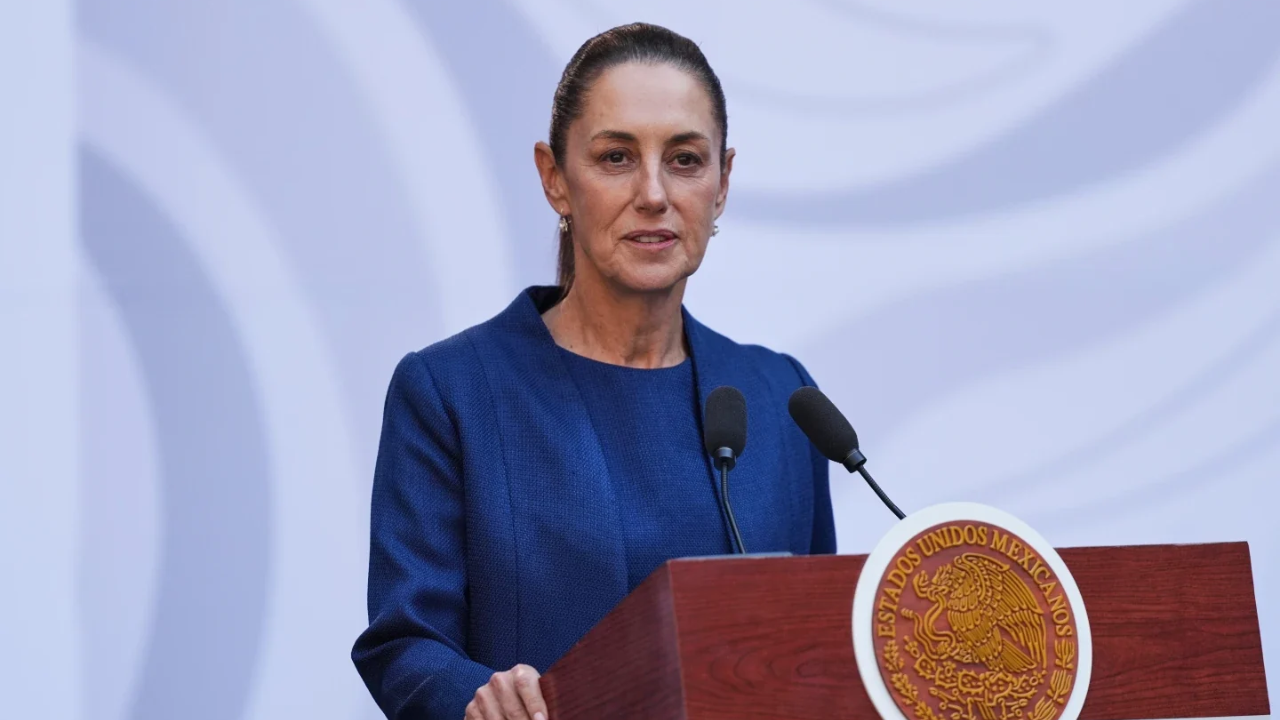
To understand why Mexican President Claudia Sheinbaum stood at a podium in late November 2024 and uttered a sentence designed to stop the political press in its tracks, you have to feel the pressure cooker she inherited.
"Not a single caravan has reached north," Sheinbaum declared.
Stop. Read those seven words again. They were not casual political banter. They were a surgical counterpunch aimed straight at the central premise of Trump’s tariff ultimatum. For months, campaign rallies and cable news loops had been dominated by images of sprawling, desperate groups of migrants walking northward through southern Mexico—a visual shorthand for chaos at the southern border of the United States. Trump’s threat rested on a simple, blunt equation: stop the people and the drugs, or pay a crippling tax at the customs booth.
Sheinbaum, a former climate scientist with a penchant for data over bombast, refused to flinch. In an open letter read aloud during her morning press conference—and later reinforced in a direct phone call with Trump—she laid out an uncomfortable reality that rarely fits onto a campaign bumper sticker. Mexico was already doing the heavy lifting, quietly absorbing the human friction of hemispheric migration long before travelers ever glimpsed the muddy waters of the Rio Grande.
According to Mexican government figures corroborated by U.S. Customs and Border Protection trends throughout 2024, migrant encounters at the U.S.-Mexico border had plummeted by roughly seventy-five percent from their December 2023 peak. Why? Because Mexican immigration authorities and the National Guard had systematically intercepted, dispersed, and relocated migrant groups across southern and central states like Chiapas and Oaxaca. Caravans still formed in Tapachula near the Guatemalan border, driven by violence in Venezuela, economic collapse in Haiti, and instability in Central America. They marched for days under a blistering sun. Then, hundreds of miles short of Texas or Arizona, they dissolved under the weight of checkpoints, bus transfers, and humanitarian processing centers.
The caravans were ghosts by the time they reached the northern tier.
Yet perception in politics often outweighs geography. When a tariff threat lands, it does not wait for fact-checkers to finish their footnotes. It immediately alters the psychology of every investor, factory owner, and family relying on cross-border commerce.
Living Inside the Supply Chain
I remember standing near the World Trade International Bridge in Laredo a few years ago during an earlier bout of border delays, watching eighteen-wheelers stretch back into Tamaulipas until their exhaust pipes merged into a gray haze against the horizon. You could smell the diesel in your clothes hours later. You could hear the frustration in the voices of drivers idling for ten hours without bathrooms, burning fuel just to keep their refrigerated trailers cold so crates of avocados and berries wouldn't rot before reaching grocery shelves in Chicago.
That memory haunts anyone who truly grasps how North America actually works.
Most people picture international trade as finished products—a gleaming SUV rolling off a boat, or a crate of avocados crossing a bridge. That picture is dangerously outdated. Today, the United States, Mexico, and Canada do not merely trade with one another; they build things together. Think of a modern American pickup truck not as a single object, but as an intricate relay race. Raw aluminum crosses from Canada into Michigan. Engine blocks get cast in Ohio, shipped south to Saltillo for precision assembly, sent back north to Texas for electronics integration, and finally bolted into a chassis in Indiana. A single component might cross the border six or seven times before a consumer ever turns the key.
Now apply a twenty-five percent tariff to every crossing.
It acts like sand poured into a Swiss watch. You do not just punish Mexican exporters; you tax the American factories waiting on those parts, the Detroit automakers whose margins vanish overnight, and the families in Phoenix or Columbus shopping for a used car or fresh produce. Sheinbaum knew this math cold. In her letter to Trump, she pointed out what every economist from Wall Street to Monterrey was whispering behind closed doors: slapping unilateral tariffs on Mexico would invite retaliatory tariffs from Mexico, triggering an inflationary spiral that would burn consumers and destroy jobs in both nations.
Why, then, does the tariff hammer keep swinging?
The Invisible Stakes of the Drug Crisis
If migration was the loud, visible front of this diplomatic clash, fentanyl was the dark undercurrent pulling everything downward. Here, the emotional stakes turn lethal, and no amount of macroeconomic charts can soften the blow.
Behind every statistic on synthetic opioids sits an empty chair at an American dinner table—tens of thousands of families shattered by a chemical compound so potent that a few grains can stop a human heart. Trump’s rage over fentanyl resonated deeply because the grief fueling it is real and relentless. In his framing, Mexico was failing to dismantle the cartel laboratories cooking precursor chemicals shipped from Asia into counterfeit pills.
Sheinbaum’s counterargument required the reader to look at the crisis through a wider, more uncomfortable lens. Yes, Mexican criminal syndicates manufacture and traffic the drug, and Mexican authorities had seized tons of illicit substances and arrested thousands of operatives—often at the cost of Mexican police officers' and soldiers' lives. But Sheinbaum highlighted two inconvenient truths that Washington often prefers to gloss over: the insatiable domestic demand inside the United States, and the relentless southbound river of high-powered weaponry.
Consider the iron river. Seventy percent of the traced firearms recovered at crime scenes in Mexico originate in the United States, purchased legally in border states and smuggled south to arm the very cartels terrorizing Mexican towns and trafficking narcotics north. It is a grim, circular economy of destruction. American consumers buy the drugs; cartel enforcers use American-made rifles to fight off the Mexican military; Washington blames Mexico City for the chaos; Mexico City points back at American gun shops and addiction clinics.
When you trap two neighbors inside a blame game like that, cooperation becomes politically toxic. Leaders feel forced to look tough rather than effective.
The Dance Between Diplomacy and Domestic Theater
Watch closely how leaders behave when cornered by an existential economic threat. Panic is fatal. Capitulation is political suicide.
Sheinbaum walked a razor's edge during those tense November days. At home, she had to project unwavering sovereignty to a population deeply sensitive to any hint of American bullying—a historical scar stretching back to the nineteenth century when Mexico lost half its territory to its northern neighbor. Abroad, she had to convince a mercurial incoming president and jittery global financial markets that Mexico was a reliable, indispensable partner.
Her response blended cold statistics with sharp political theater. She reminded Washington that Mexico had replaced China as the top trading partner of the United States, with bilateral trade surpassing eight hundred billion dollars annually. She noted that American corporations—from General Motors and Ford to tech giants and aerospace manufacturers—were the very entities operating the factories on Mexican soil that tariffs would cripple. Hitting Mexico with a twenty-five percent duty was, in practical terms, shooting the American industrial base in the foot to spite the neighbor.
Then came the phone call.
Following the public exchange of warnings, Trump and Sheinbaum spoke directly. Almost immediately, two starkly different versions of the same conversation emerged—a classic diplomatic Rashomon effect. Trump posted that Mexico had agreed to effectively close its southern border and stop migration immediately. Sheinbaum clarified calmly that Mexico’s position was not to close borders, but to build bridges between governments and people, reiterating that existing enforcement strategies were already preventing caravans from reaching the north.
Notice what happened beneath the spin. Neither leader backed down publicly, yet both stepped back from the precipice of immediate economic warfare. The phone call bought time. It shifted the arena from social media ultimatums back toward quiet, grinding negotiations over intelligence sharing, port inspections, and regional migration management.
What Happens When Fear Drives Trade Policy
Let us return for a moment to Mateo in his warehouse outside Monterrey, because his dilemma reveals the quiet damage that occurs even when tariffs remain only a threat.
Uncertainty is an invisible tax. Even before a single customs officer collects an extra dime at the border, the mere threat of a twenty-five percent levy freezes capital. An American medical device manufacturer planning to expand its facility in Tijuana suddenly pauses construction. A logistics firm in El Paso delays hiring twenty new dispatchers. Banks tighten credit lines for mid-sized suppliers whose balance sheets cannot survive a sudden twenty-five percent shock to their cost of goods.
I have spoken with small business owners along the border who describe this limbo as living under a hurricane warning that never quite makes landfall or clears the coast. You board up your windows, cancel your deliveries, and burn through your cash reserves waiting for the sky to decide what it intends to do. By the time the storm passes, you are already bruised.
Meanwhile, the underlying human realities remain stubbornly unresolved. Migrants fleeing collapsed economies and gang extortion in the Western Hemisphere do not read trade journals or tariff schedules; they walk north because staying home feels like a slow death sentence. Stopping them entirely without addressing the desperation pushing them out of their homes—or creating lawful pathways for labor that both aging North American economies desperately need—is like trying to hold back high tide with a broom.
Similarly, fentanyl cannot be defeated purely at a customs checkpoint. As long as cartels can synthesize millions of doses in a hidden kitchen using chemicals ordered online, and as long as millions of Americans struggle with untreated addiction, enforcement alone will remain a bloody game of whack-a-mole.
The Bridge That Cannot Be Burned
There is a temptation, whenever political rhetoric heats up, to treat the U.S.-Mexico relationship like a zero-sum transaction—a poker game where one side must walk away holding all the chips while the other goes broke.
History mocks that illusion. Geography binds these two nations together more tightly than any treaty ever could. They share a two-thousand-mile frontier, intertwined water basins, integrated power grids, millions of mixed-status families, and an industrial ecosystem that has become North America’s single greatest counterweight to Asian manufacturing dominance. When nearshoring brings factories back from across the Pacific to North America, it works precisely because American engineering and capital pair seamlessly with Mexican manufacturing scale and workforce talent.
Sheinbaum’s pushback against Trump’s tariff threat was, at its core, a reminder of that inescapable interdependence. By pointing out that the caravans were already being halted far south of Texas, and by warning that tariffs would trigger mutual economic pain, she forced a moment of sobriety into a debate intoxicated by slogans.
Out on the Rio Grande, at dusk, the trucks still roll across the bridges—thousands of them every hour, headlights cutting through the warm twilight, carrying the raw materials of two nations' daily lives. Drivers tap their brakes at the inspection booths, hand over their manifests, and wait for the green light to flash. Everything on those manifests—every pallet of electronics, every crate of fresh tomatoes, every steel axle—depends on a fragile, unspoken agreement between two neighbors that cooperation beats mutual destruction. Whether that green light stays lit depends entirely on whether leaders in both capitals remember who actually pays the bill when the border slams shut.