The coffee in my kitchen had gone cold.
I stared at the glowing numbers on my monitor, waiting for them to make sense. On any ordinary Tuesday, a few basis points here or there in the Treasury market barely registers as a whisper. It is the background hum of the financial machine, the quiet grease turning wheels that ordinary people rarely see.
Not today.
The ten-year yield had just slammed into a wall, hitting levels we had not seen since January 2025.
To the algorithm runners and the Wall Street terminal jockeys, it was just another data point. To Sarah, who runs a neighborhood bakery three blocks from my house, it was the sound of her oven doors snapping shut.
Let us be completely honest about what is happening. We talk about bonds as if they are abstract concepts floating in a digital ether. They are not. They are promises. They are bets on the future. And right now, that future is getting wildly expensive.
Consider Sarah. She does not own a single government bond. She does not know a Treasury bill from a municipal note. But when the ten-year yield climbs, the gravity of that number pulls down everything else. It drags mortgage rates up with it. It pushes up the cost of her small-business loan. And lurking behind this entire drama is the oldest ghost in the economic playbook: oil.
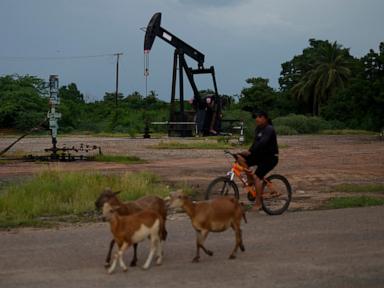
Crude prices are climbing again. Every time a tanker hits turbulent waters or a supply agreement frays, the cost of diesel spikes. That spike travels up the supply chain with ruthless efficiency. It hits the tractor hauling the flour, the truck delivering the butter, and the utility bill keeping the ovens hot.
Inflation worries are no longer theoretical. They are sticky. They are stubborn. They are bleeding into the concrete reality of everyday commerce.
Market watchers spent the morning chasing shadows. They pointed fingers at shifting Federal Reserve expectations, at stubborn employment data, at geopolitical friction points spanning oceans. All of those factors matter. All of them contribute to the pressure cooker.
Yet the core story is simpler and far more visceral.
Bonds are demanding a higher return because investors smell smoke. When energy prices climb, they act as a tax on the entire global economy. They eat into corporate margins and household budgets alike. Bondholders look at that rising tide of costs, look at the persistent ghost of inflation, and demand more insurance for lending their money over a decade. They refuse to get burned by a currency slowly losing its purchasing power.
So they sell. Prices drop. Yields rise.
And the math cascades downward.
Meet David, a fictionalized composite of countless first-time homebuyers currently locked out of the American dream. David spent two years saving for a down payment, carefully budgeting every paycheck, watching housing prices soar past his fingertips. Just as the market showed signs of cooling, the ten-year yield spiked. Because long-term mortgage rates dance in lockstep with the ten-year Treasury, his estimated monthly payment jumped by hundreds of dollars overnight.
His dream house did not change. His income did not change. The invisible machinery of global debt markets shifted, and suddenly, his future shrank.
That is the human cost of a basis point.
We have built a financial ecosystem where a barrel of oil halfway across the world dictates whether a young family can buy a starter home or whether a baker can afford her flour delivery. It feels fragile because it is fragile.
We try to sanitize these shifts with jargon. We call them repricings, yield curves, and macroeconomic adjustments. We treat them like weather patterns we can do nothing about. But weather has seasons. This is human design colliding with human fear.
The climb in the ten-year yield is a loud, blinking warning light on the dashboard of the economy. It tells us that the fight against inflation is far from over. It tells us that cheap energy was the fuel of a different era, and we are now paying the toll for a transitioning world.
Look closely at the numbers. They are not just cold statistics on a screen. They are the pulse of a system under strain.
The coffee is entirely cold now. I close the laptop, but the question remains hanging in the quiet room. If the foundation of global debt keeps shifting beneath our feet, how long before the rest of the house begins to shake?