The ink on a court order is rarely as loud as the sirens that preceded it. Years ago, men in tailored suits walked out of London courtrooms into a flashbulb storm, branded as the architects of a silent robbery. They were traders. Their crime, we were told, was fixing the invisible pulse of global finance: the London Interbank Offered Rate, better known as Libor.
To the public, it sounded like an abstract conspiracy of billionaires manipulating digits on a screen. Numbers that dictated how much a mortgage cost in Ohio, how much a municipality paid for a bridge in Texas, how much a corporate loan swelled by dawn. The trials were swift, the public outrage absolute, and the prison sentences heavy. Justice, it seemed, had drawn a sharp, clean line between the honest economy and the rogue traders who bent it. Recently making headlines in related news: What Most People Get Wrong About Bank Switching Offers.
Except lines drawn in haste often blur when the weather changes.
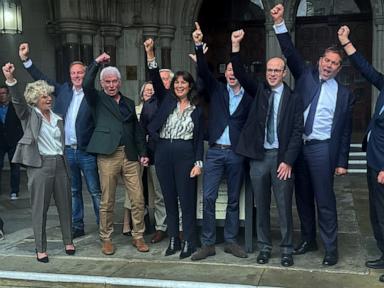
Recently, an appellate court quietly dismantled those convictions. Five men who had spent years behind bars—men whose careers, reputations, and youth were shredded by the machinery of prosecution—had their names cleared. The legal scaffolding of their guilt collapsed under the weight of a simple, uncomfortable truth: what they were doing, however distasteful or culturally toxic, was often standard operating procedure in an industry that had tacitly encouraged the very behavior it later criminalized. More details regarding the matter are detailed by Investopedia.
To understand why those convictions were quashed, you have to step away from the appellate briefs and walk onto a trading floor.
Picture the room. It smells of stale coffee, expensive leather, and sweat. The air hums with the high-frequency chatter of Bloomberg terminals and shouting men whose heart rates spike every time a central bank governor clears their throat. In this room, information is currency, and perception is gravity.
Imagine a trader sitting at one of those desks—let’s call him Arthur, though he could be any of the nameless faces caught in the regulatory dragnet. Arthur doesn't see himself as a criminal mastermind. He sees himself as a survivor in a high-stakes casino where the house rules are written in invisible ink. Every morning, banks across the globe submitted estimates of what it cost them to borrow money. Those estimates formed Libor. They were supposed to be pristine mathematical inputs, pure reflections of market reality.
In practice, they were educated guesses. Sometimes, they were negotiations.
Arthur’s desk held positions tied directly to those numbers. If Libor moved a fraction of a percent, millions of dollars materialized or vanished. So, Arthur did what traders have done since the Tulip Era: he talked to people. He nudged. He asked a friendly submitter at another desk if they could nudge their estimate slightly higher or lower. It was a wink and a nod across an open floor. It was greasy. It was clubby. It was gross.
Was it fraud? For years, prosecutors insisted it was. They argued that any communication around submissions polluted the sacred well of the benchmark. They built a narrative of pure, unadulterated corruption, painting these men as villains who stole from the global economy for personal gain.
The problem with that narrative is that it ignored how the machine was actually built.
For decades, senior management knew exactly how these rates were formed. They knew that submissions involved subjective judgment. They knew that traders and submitters shared office space, drank at the same pubs, and swapped information constantly. The system was built on human relationships, not sterile algorithms. When the 2008 financial crisis exposed the rot in the plumbing of global finance, regulators needed a scapegoat. They needed to show the world that someone was paying for the collapse.
And so, the traders became the lightning rods. They were convicted not necessarily because they violated a clear, universally understood statute, but because the rules were retroactively rewritten in the middle of the storm.
When the appellate court reviewed the cases, they looked past the moral theater. They looked at the actual jury instructions, the definitions of dishonesty, and the legal reality of what constitutes a crime under English law. They found that the convictions were unsafe because the conduct—while emblematic of a deeply flawed financial culture—did not cleanly fit the legal definition of fraud used to convict them. The jury had been told one story; the statutory reality told another.
The quashing of these convictions does not redeem the culture of pre-crisis banking. That culture was predatory, insular, and profoundly detached from the real-world consequences of financial engineering. Millions of ordinary people suffered because the foundation of global debt was vulnerable to manipulation and self-interest.
Yet, there is a profound injustice in holding individuals legally and criminally accountable for systemic failures that their superiors endorsed, profited from, and institutionalized. When an entire system is built on loose definitions and informal norms, you cannot simply pluck out a few mid-level players, lock them away, and declare the disease cured.
The ghost in the benchmark was never just the individual trader trying to shave a basis point off a morning rate. The ghost was the illusion that complex, human-driven financial markets could ever be reduced to pure, neutral science without acknowledging the messy, self-interested humans pulling the levers.
These five men are free now, but their freedom arrives in a vacuum. Their reputations are burned husks. The institutions that fostered their behavior have long since paid fines written off as the cost of doing business and moved on to the next frontier of algorithmic extraction.
We are left with a quiet, lingering question about the nature of justice when applied to abstract systems. If a rule is so blurry that compliance requires mind-reading, and so loose that everyone breaks it until someone needs to be punished, is it law—or is it just theater?
The benchmark still moves. The screens still flicker in the early morning light of London and New York. Trillions of dollars still hinge on whispers and digital signals. And somewhere in the noise, the system keeps running, waiting for the next storm to test whether we have learned anything at all.