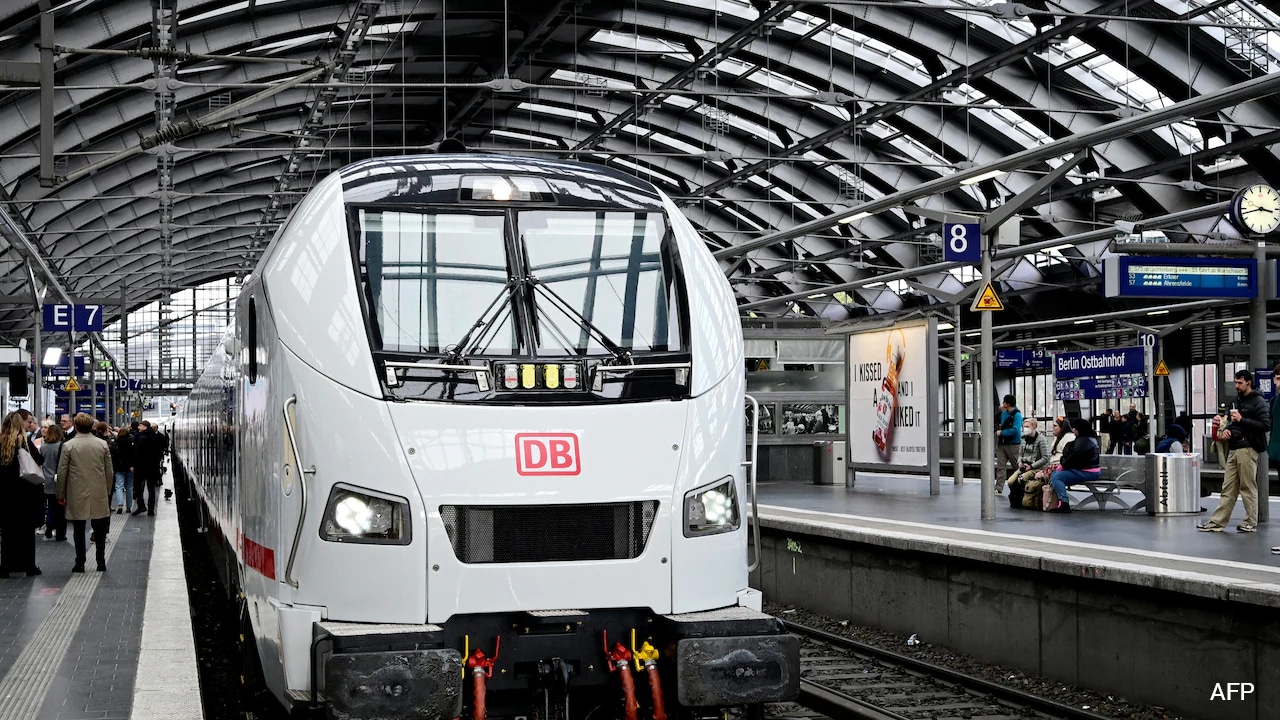
Imagine standing on a crowded platform at Berlin Central Station late on a Tuesday night, watching every single departure board flash red. That was the reality for thousands of commuters on June 23, 2026. In an instant, the entire German rail network froze. High-speed ICE trains, regional lines, and municipal S-Bahn networks all came to a dead stop.
Deutsche Bahn didn't just experience a delay. It suffered a total operational blackout. The culprit wasn't a freak storm or a union strike. It was a complete failure of the digital radio network that keeps train drivers in touch with control centers. When that network goes dark, safety rules dictate that every single train must halt immediately at the nearest station. You might also find this related story interesting: The Logistics of the Hormuz Evacuation: Quantifying the Strategic Bottlenecks.
This latest breakdown exposes the deep vulnerabilities of a transit infrastructure that millions rely on daily. It also reveals a system pushed to its absolute limits by years of neglect.
Inside the GSM-R Breakdown that Paralyzed the Country
The chaos started late Tuesday evening. By 11:00 PM, reports flooded in from every corner of the country. Trains were stuck. Regional operators like Metronom, which moves over 120,000 passengers a day around Hamburg and Hanover, told customers to simply give up and find another way home. The state of North Rhine-Westphalia saw its entire rail system paralyzed. As reported in latest coverage by BBC News, the implications are widespread.
The breakdown centered on a technology called GSM-R. That stands for Global System for Mobile Communications–Railway. It's a specialized digital radio standard used across Europe since 2000. It handles everything from routine voice calls between drivers and dispatchers to critical safety data transmissions.
Think of it as the central nervous system of the railway. If the driver can't talk to the control room, the train cannot move safely. The system has built-in redundancies, but on Tuesday night, both the primary network and its safety backups failed simultaneously.
Deutsche Bahn CEO Evelyn Palla quickly confirmed that technicians were scrambing to stabilize the situation using an emergency system. It took nearly two and a half hours of total paralysis before technicians patched the issue. Around 1:00 AM on Wednesday, the operator announced that the system was slowly resuming service. But for the passengers left stranded in dark stations, the damage was already done.
Incompetence or Sabotage
Whenever a critical piece of European infrastructure goes dark overnight, people immediately suspect foul play. Early social media chatter pointed toward a potential cyberattack or hybrid warfare. This fear wasn't entirely baseless. Back in October 2022, saboteurs intentionally cut vital communications cables in northern Germany, bringing the rail network to its knees for hours in a highly coordinated attack.
Security authorities looked into Tuesday night's outage and pointed to a far more mundane, yet deeply frustrating cause. Internal reports indicate that a faulty software update, rather than foreign hackers or physical saboteurs, triggered the network collapse.
This reality is almost worse than an external attack. It highlights a massive internal failure in how Deutsche Bahn tests and deploys critical IT infrastructure updates. A bad line of code managed to bypass quality control and instantly blinded the communication systems of an entire G7 nation's transport network.
The Myth of German Efficiency Meets Years of Underinvestment
For decades, the world viewed German engineering and public transit as the gold standard. That reputation has cracked. Anyone who travels through Germany today knows that delays, canceled trains, and broken air conditioning units are part of the daily experience.
This radio outage is a symptom of a much larger disease. Germany spent years underfunding its rail network while pouring money into highway expansion. The government-owned Deutsche Bahn is now playing a frantic game of catch-up. They are currently pushing through a series of massive, highly disruptive overhauls on major transit corridors to replace aging tracks and antiquated signaling systems.
Replacing physical tracks doesn't fix a fragile digital architecture. The rail company's IT systems are notoriously outdated. Funding cuts have frequently targeted digital modernization projects, leaving the network reliant on aging software structures that cannot handle modern operational demands. When a single bad update can immobilize thousands of trains simultaneously, the system isn't resilient enough.
The Logistical Nightmare After the Radio Came Back On
Fixing the software bug didn't magically fix the schedule. When a railway shuts down completely for several hours, it creates a massive logistical hangover that lasts for days.
Trains ended up stuck at random stations far from their intended destinations. Drivers and train crews exceeded their legally mandated working hours while waiting for the radio network to come back online. You can't just restart the engines and keep driving when a crew needs to sleep.
Wednesday morning turned into an absolute nightmare for commuters. Trains were out of position, crews were stranded in the wrong cities, and platforms were overwhelmed with passengers who had spent the night in hotels or on station benches. The ripple effects of a two-hour midnight shutdown tore through the entire Wednesday morning rush hour.
What You Should Do When the Rail Network Collapses
If you find yourself caught in a massive infrastructure failure like this, you shouldn't just sit on the platform waiting for an announcement that might never come. You need to know your rights and act quickly to secure alternative travel.
First, check the official Deutsche Bahn app or website immediately for passenger rights declarations. During nationwide technical failures, the operator usually lifts all train-specific ticket restrictions. This means your regional ticket might suddenly be valid for high-speed ICE trains once they start moving again.
Second, look for the emergency vouchers. During the Tuesday night crisis, Deutsche Bahn handed out taxi and hotel vouchers at major hubs. If you're stranded overnight because of a technical glitch, the railroad is legally obligated to provide accommodation or pay for an alternative way to reach your destination. Don't hesitate to line up at the service desk immediately, because those hotel rooms fill up fast.
Third, document everything. Keep your original tickets, take screenshots of the digital boards showing delays or cancellations, and save every receipt for food, water, or alternative transport. You will need this evidence to claim a refund later. Under European passenger rights laws, you are entitled to a partial or full refund depending on the length of your delay, even if the cause was a system-wide IT failure.
Do not assume the next morning's trains will run on time just because a late-night issue was resolved. If a system failure happens close to midnight, look for long-distance bus alternatives or car rentals for the following morning. The network will be clogged with displaced trains and exhausted crews, making further cancellations highly likely.