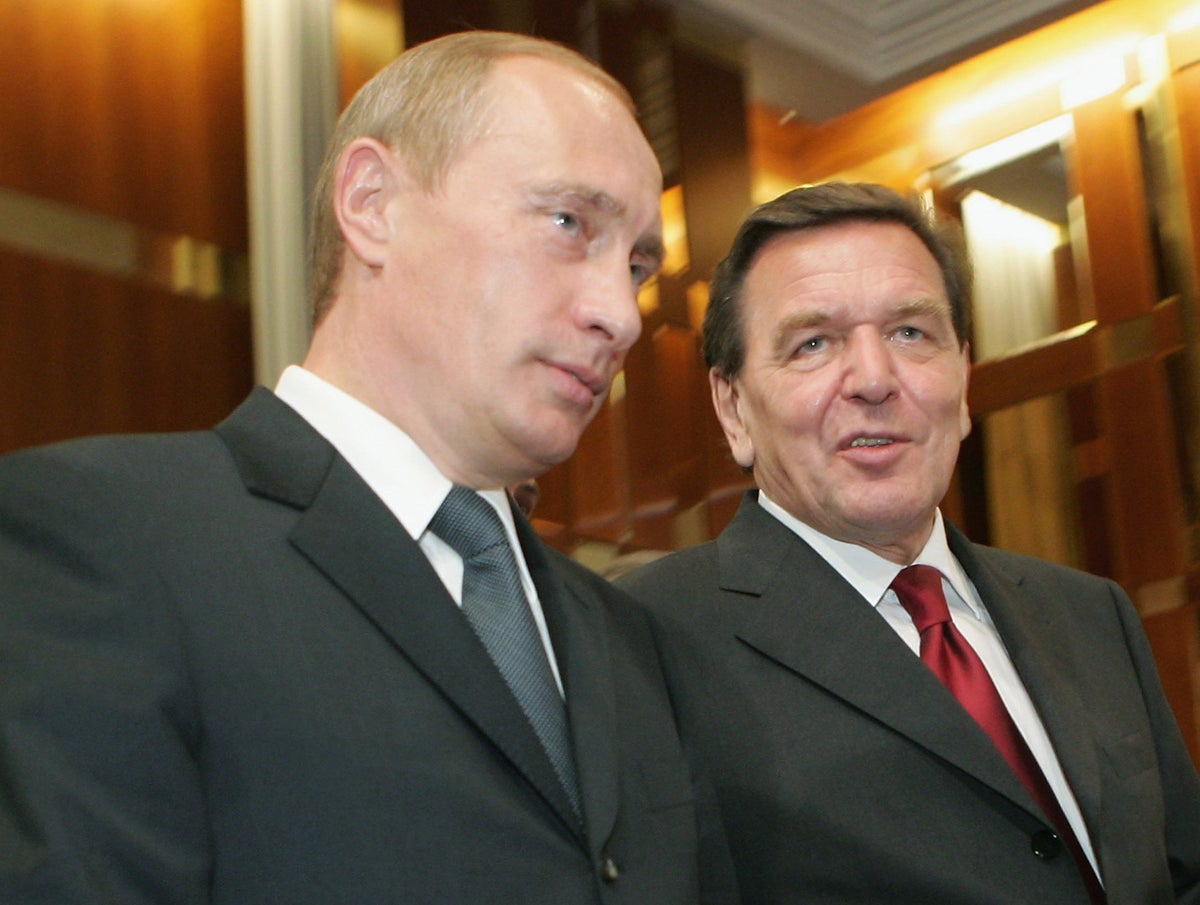
Vladimir Putin doesn't have many friends left in the West. Most world leaders won't even pick up the phone if they know the Kremlin is on the other end. But Gerhard Schröder is different. The former German chancellor isn't just an acquaintance. He's a man who has spent two decades tied to the Russian energy machine. While the rest of Europe views him as a pariah, Moscow sees him as a bridge.
Russia is floating the idea of Schröder as a mediator for Ukraine peace talks. It sounds like a bad joke to many in Berlin. They've stripped him of his office privileges. They've tried to kick him out of his own political party. But if you want to stop a war, you don't talk to your friends. You talk to the person who can actually get the aggressor into a room.
The buddy system that built an energy empire
Schröder's relationship with Putin isn't some surface-level diplomatic courtesy. It’s deep. It’s personal. It started when Schröder was still in power, pushing through the Nord Stream pipeline project that tethered Germany to Russian gas for years. Just weeks after he left office in 2005, he took a job with the company building that very pipeline.
Critics call it corruption. Putin calls it loyalty. In the hyper-masculine world of Kremlin politics, loyalty is the only currency that carries any weight. Schröder famously celebrated his 70th birthday with Putin in St. Petersburg, just months after Russia seized Crimea in 2014. The photos of them hugging went viral for all the wrong reasons. But those hugs are exactly why the Kremlin still trusts him. He didn't blink when things got messy.
The West sees a "sellout." The Kremlin sees a man who kept his word when everyone else turned away. This history makes him a unique asset. He knows how Putin thinks. He knows what Putin wants to hear. Most importantly, he knows when Putin is lying and when he's looking for an exit strategy.
Why the Kremlin is pushing for Schröder now
Moscow isn't suggesting Schröder because they think he’s a neutral arbiter. They’re suggesting him because they want a friendly face across the table. The Russian government knows that any real peace deal will require massive concessions from their side. They’d rather negotiate those concessions with a "buddy" than with a hostile diplomat from Washington or London.
Recently, Kremlin spokesperson Dmitry Peskov pointed out that the "good, personal relations" between Schröder and Putin could help solve problems. This isn't just talk. It’s a signal. Russia is signaling that they are tired of the current diplomatic stalemate. They want a channel that doesn't involve the usual suspects.
Schröder himself hasn't stayed quiet. He’s been vocal about his belief that a diplomatic solution is possible. He’s visited Moscow since the full-scale invasion began in 2022. He claims he’s trying to help. Whether he’s actually doing anything or just enjoying the attention is up for debate, but his presence in the conversation is undeniable.
The massive problem with a Schröder mediation
Here is the reality. Ukraine hates this idea. For Kyiv, Schröder is the embodiment of the German "Wandel durch Handel" (change through trade) policy that failed spectacularly. They see him as a Russian asset, not a mediator. If Schröder walks into a room representing "peace," the Ukrainians will likely walk out.
There’s also the issue of the current German government. Chancellor Friedrich Merz and his administration have moved miles away from the Schröder era. Germany is now one of Ukraine’s biggest military supporters. The idea of an ex-chancellor, who is basically a persona non grata in his own country, representing German interests is a non-starter.
- Conflict of interest: He was on the boards of Rosneft and Gazprom.
- Lack of mandate: He has no official backing from the EU or NATO.
- Public perception: Most Germans view his ties to Putin as a national embarrassment.
You can't have a mediator that one side doesn't trust at all. Peace requires a baseline of good faith. Schröder has plenty of that with Moscow, but he has zero with Kyiv and Warsaw.
A different kind of diplomacy
Maybe we’re looking at this the wrong way. Schröder doesn't need to be the "official" mediator. He could be the backchannel. History is full of unofficial envoys who did the dirty work before the real diplomats showed up to sign the papers.
Think about the Cold War. There were always "useful idiots" or "trusted friends" moving between Washington and Moscow. They carried messages that couldn't be sent through formal cables. Schröder could serve that purpose. He can tell Putin things that a sitting president can't. He can deliver blunt truths about the state of the West’s resolve without it being an official act of war or diplomacy.
It’s messy. It’s ugly. It feels wrong to use a man who profited so much from the very system that funded this war. But ethics and peace talks rarely go hand in hand. If Schröder can convince Putin to sit down, does it matter if we like him? Probably not.
What actually happens if he steps in
If Schröder actually gets involved, expect a circus. The media frenzy would be insane. But look past the headlines. Watch the specific language coming out of Moscow. If they start dropping their "denazification" rhetoric when Schröder is mentioned, it means the channel is working.
We need to watch the energy markets too. Schröder’s expertise is gas. If a peace deal involves the future of pipelines or energy reparations, he’s the only person who knows where all the bodies are buried in those contracts. He isn't just a political friend; he’s a technical expert in the very thing that started this mess.
Don't expect a Nobel Peace Prize for the man. That ship sailed a long time ago. But keep an eye on the private jets flying between Berlin and Moscow. If Schröder is on one, something is moving.
If you’re following this, stop looking at the official press releases from the UN. They're mostly fluff. Instead, track the statements from the Kremlin’s inner circle regarding "former European partners." That's where the real shifts are happening. You should also look into the specific history of the 2022 Istanbul talks. Many reports suggest a deal was close then. Understanding why that failed tells you exactly what kind of narrow window a guy like Schröder is trying to jump through. Read the primary sources on those failed negotiations to see what the actual sticking points are before you believe the "buddy" hype.