President Volodymyr Zelenskyy’s decision to formally forgo kinetic operations against the Victory Day parade in Moscow represents a calculated pivot from tactical disruption to strategic leverage. While the optics of a drone strike on Red Square offer high psychological impact, the utility of such an action is currently outweighed by the tangible necessity of human capital recovery and the preservation of Western diplomatic alignment. This trade-off is not an act of mercy; it is an exercise in Asymmetric Diplomacy, where the absence of action is sold as a premium commodity.
To understand the logic behind this restraint, one must analyze the situation through the lens of three distinct operational pillars: Resource Preservation, Escalation Management, and Political Barter.
The Mechanics of the Prisoner Swap as a Value Exchange
In any high-intensity conflict, the exchange of prisoners of war (POWs) operates on a "shadow market" economy. The value of a captive is not static; it fluctuates based on rank, public visibility, and the political pressure exerted on the respective governments. By tying the safety of the Moscow parade—a high-value symbolic event for the Kremlin—to the return of Ukrainian personnel, Zelenskyy is effectively arbitrage-trading a potential military strike for human assets.
The "Cost-Benefit Function" of a parade strike looks like this:
- Tactical Gain: High symbolic humiliation for the Russian Ministry of Defense; potential destruction of limited hardware.
- Strategic Cost: Immediate termination of all back-channel negotiations; potential "rally around the flag" effect among the Russian civilian population; risk of uncontrolled escalatory responses targeting Ukrainian decision-making centers.
- Opportunity Cost: The loss of hundreds of Ukrainian soldiers who remain in captivity, whose return is vital for domestic morale and the replenishment of experienced units.
By choosing the swap, Ukraine prioritizes the long-term sustainability of its force structure over a short-term propaganda victory. The return of seasoned defenders, particularly those from high-profile sieges, provides a more durable advantage to the Ukrainian war effort than the temporary disruption of a ceremonial procession.
Structural Constraints on Escalation
The decision to offer a "non-aggression" window for the parade highlights the influence of Western "Red Lines" on Ukrainian operational planning. International partners, particularly the United States and Germany, have consistently voiced concerns regarding strikes deep within Russian territory using Western-supplied technology. While Ukraine has developed its own long-range drone capabilities, the political fallout of a strike on a civilian-heavy symbolic event in Moscow could jeopardize future aid packages.
This creates a Dependency Bottleneck. Ukraine requires a continuous flow of 155mm artillery shells, air defense interceptors, and financial aid. If a strike on Red Square were perceived by Western electorates as an unnecessary provocation or an escalation toward a direct NATO-Russia conflict, the political capital required to sustain aid would evaporate.
Ukraine’s restraint is a signaling mechanism. It demonstrates to the "Global West" that Kyiv is a rational actor capable of disciplined military restraint, contrasting it with the Kremlin’s more erratic nuclear signaling. This reinforces the narrative of Ukraine as a responsible sovereign state defending international norms, rather than a rogue entity seeking total destruction at any cost.
The Psychological Operations of Publicized Restraint
There is a distinct difference between not attacking and publicly announcing that you will not attack. By making this a public statement, Zelenskyy achieves several psychological objectives without firing a single shot:
- Projection of Capability: To promise not to strike is to implicitly state that the capability to strike exists. It forces Russian security services to remain in a state of high alert, diverting man-hours and electronic warfare assets to protect Moscow, even when an attack is supposedly off the table.
- Undermining the Strongman Image: When a nation at war publicly "permits" its enemy to hold a parade, it flips the power dynamic. It suggests that the Russian state’s ability to celebrate its military history is contingent upon the permission of the very nation it claims to be "demilitarizing."
- Internal Friction: This announcement puts the Russian leadership in a "Double Bind." If they accept the swap and the parade goes off safely, they look like they are negotiating from a position of weakness. If they refuse the swap and the parade is attacked, they are blamed for failing to protect their most sacred holiday.
Quantifying the "Peace for Personnel" Framework
The specific logic of this barter rests on the Attrition Ratio. Ukraine faces a demographic challenge significantly more acute than Russia’s. Every soldier returned in a swap is a professional whose training and experience represent years of state investment.
The logistical reality of the Ukrainian frontline requires a rotation of troops to prevent combat fatigue. A successful mass swap, facilitated by the "Parade Truce," directly impacts the Combat Effectiveness of Ukrainian brigades. The return of 100 to 200 soldiers is equivalent to the recovery of nearly a full company's worth of experienced leaders and specialists.
Furthermore, the domestic political pressure on Zelenskyy regarding POWs is substantial. The families of the "Azovstal" defenders and other high-profile captives form a potent political constituency. Satisfying this internal demand for the return of loved ones stabilizes the domestic front, ensuring that the social contract between the state and its citizens remains intact during a prolonged war of attrition.
Technical Limitations of a Potential Strike
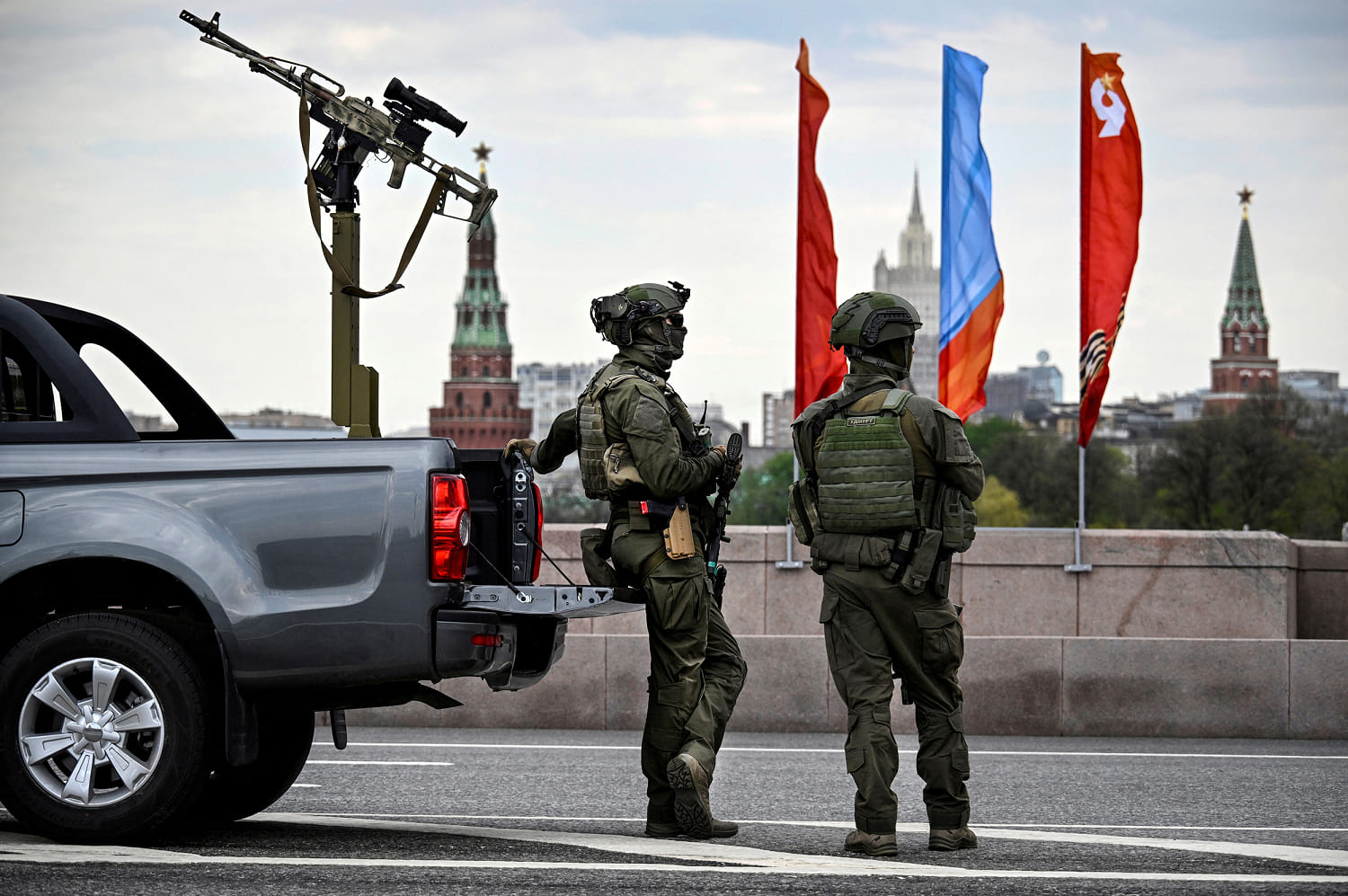
While the narrative focuses on political choice, one must also consider the Probability of Interception. Moscow is currently the most heavily defended airspace in the world against small-diameter slow-moving targets. The deployment of Pantsir-S1 systems on the roofs of administrative buildings and the saturation of the capital with GPS-jamming and spoofing technology make a successful drone strike on Red Square statistically difficult.
A failed strike—where drones are intercepted and shown as "trophies" on Russian state television—would be a net loss for Ukraine. It would demonstrate the limits of Ukrainian reach rather than its extent. By opting for a diplomatic trade, Ukraine avoids the risk of a military failure while still reaping the political benefits of being the party that "showed restraint."
The Strategic Path Forward
The "Parade Truce" is not a ceasefire; it is a tactical pause within a specific geographic and temporal window. For Ukraine, the path forward involves a more aggressive use of this "Conditional Sovereignty" model. Kyiv is likely to continue using the threat of its expanding long-range strike capabilities to extract concessions that were previously unavailable.
We should expect a shift toward:
- Targeted Bartering: Using the safety of specific Russian infrastructure or symbolic events to secure the release of political prisoners or the protection of Ukrainian grain export corridors.
- Psychological Siege: Maintaining the threat of strikes on the Russian interior to force a permanent reallocation of Russian air defense assets away from the frontlines.
- Diplomatic Decoupling: Separating the "Russian People" from the "Russian State" by presenting Ukrainian military restraint as a gesture toward the former, thereby complicating the Kremlin's internal propaganda.
The tactical move here is for Ukraine to immediately leverage the returned personnel into specialized training roles, utilizing their firsthand knowledge of Russian captivity and tactics to better prepare new recruits. Simultaneously, the Ministry of Foreign Affairs must use this documented instance of restraint to lobby for the removal of restrictions on Western-supplied weapons, arguing that Ukraine has proven its ability to exercise the surgical discipline required for such systems. The parade will end, but the returned soldiers will remain, providing a permanent increment to Ukraine’s national power that no amount of firework-induced propaganda can match.