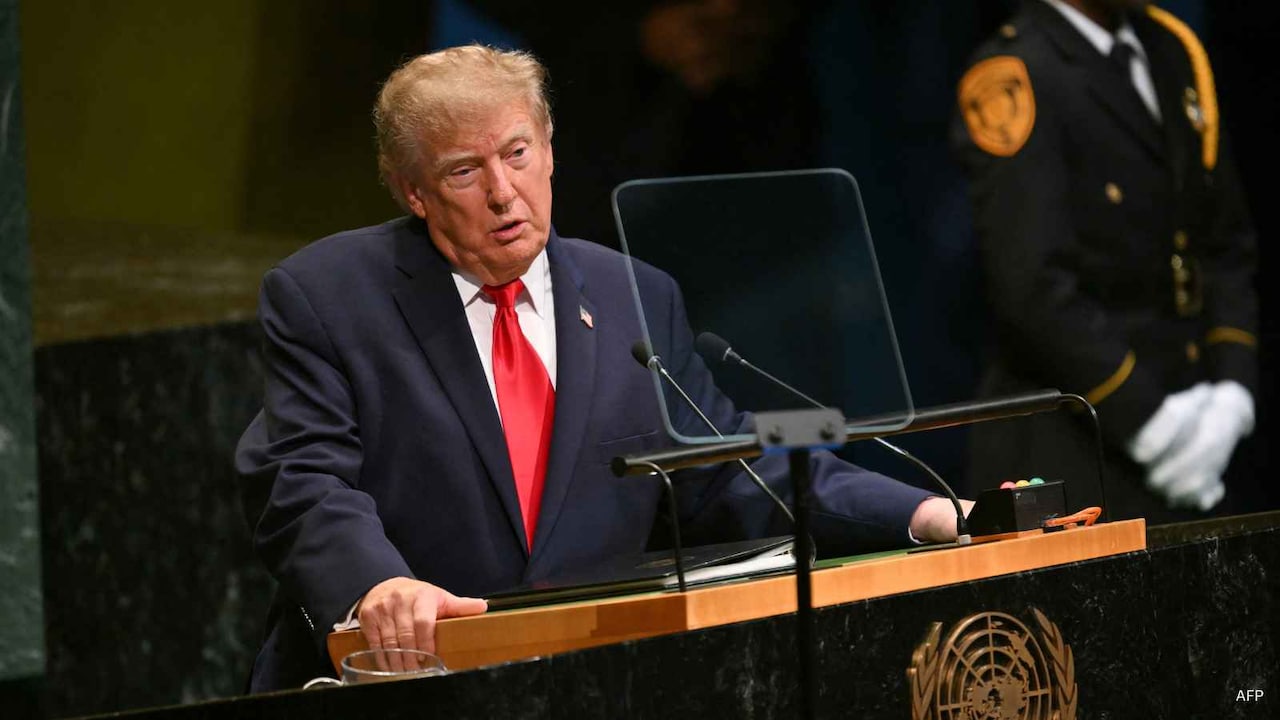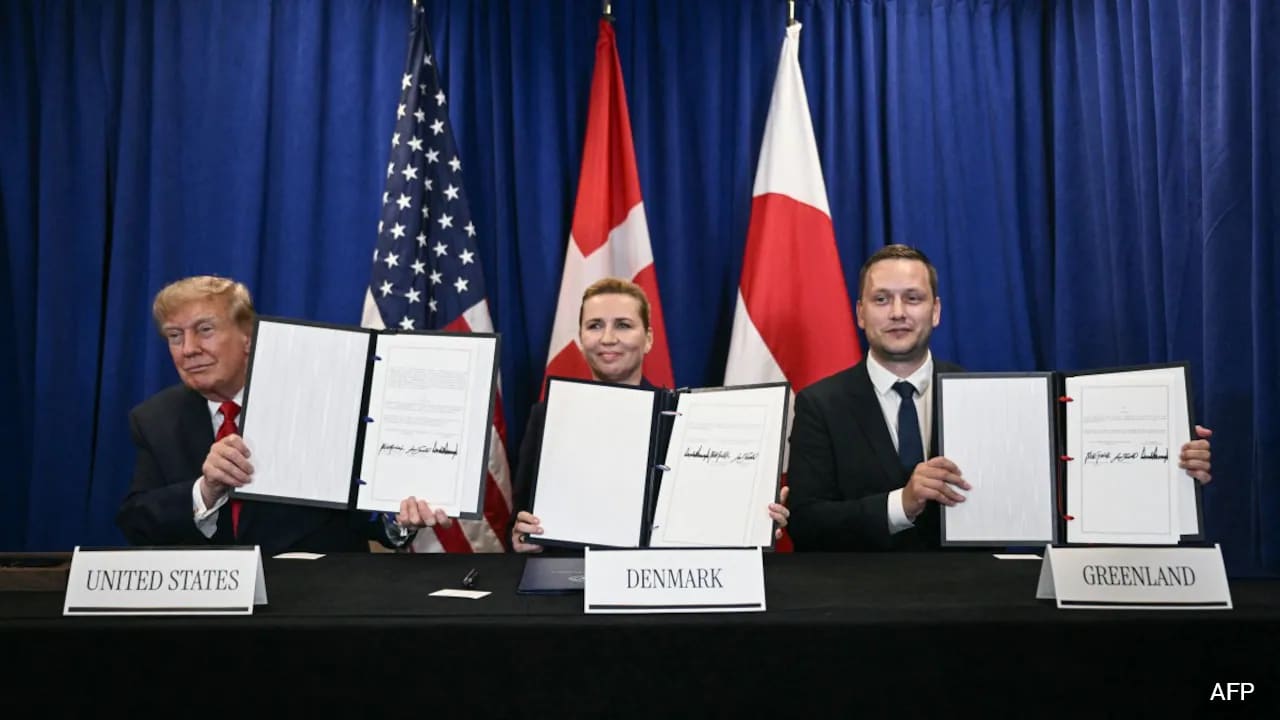
The signing of the September 2026 trilateral defense arrangement between the United States, the Kingdom of Denmark, and Greenland at the United Nations Headquarters establishes a new baseline for High North militarization and resource governance. Discarding the rhetorical volatility that characterized prior years, the accord formalizes structural realities that have been evolving since the 1951 Defense Agreement and the 2004 Igaliku Agreement. The treaty institutionalizes expanded American military positioning, secures veto power over non-NATO economic and strategic entry, and creates a legal bridge anticipating potential Greenlandic independence.
Evaluating the mechanics of this pact requires deconstructing three distinct analytical dimensions: geographic capability expansion, economic resource screening, and sovereignty preservation dynamics.
Strategic Geography and the Expansion of Defense Infrastructure
Military logistics in the Arctic are governed by extreme friction: harsh climatic conditions, vast distances, and limited infrastructure create severe operational bottlenecks. The 2026 agreement alters the regional cost function by authorizing explicit physical expansion across three critical nodes.
First, operations at the Pituffik Space Base are slated for modernization and intensive scaling. Pituffik serves as the core node for ballistic missile early warning and space surveillance. Upgrading its infrastructure reduces reaction times for continental defense architecture.
Second, the establishment of new Defense Areas at Narsarsuaq in southern Greenland and Mestersvig on the eastern coast addresses historical surveillance gaps. Narsarsuaq provides tactical depth for southern maritime approaches, while Mestersvig secures the Greenland Sea corridor. This positioning directly supports the foundational architecture of the proposed strategic missile defense network referred to in diplomatic frameworks as the Golden Dome.
Third, the treaty grants unrestricted overflight, landing, and subsurface transit rights for United States public vessels and aircraft across Greenlandic territory and territorial waters. Undersea access is a vital component often understated in public analyses. The Greenland-Scotland Gap remains the premier chokepoint for submarine transit between the Russian Northern Fleet and the Atlantic. Formalizing unrestricted undersea access ensures continuous acoustic and physical monitoring capabilities without bureaucratic friction during times of crisis.
Economic Security and Resource Governance Mechanisms
Control over physical territory in the twenty-first century is inseparable from resource security and supply chain integrity. The Arctic holds vast deposits of critical minerals, rare earths, and hydrocarbon reserves made increasingly accessible by receding ice sheets.
The 2026 agreement institutes a rigid screening mechanism regarding foreign direct investment in sensitive sectors. Specifically, the treaty bars non-NATO states, non-partner nations, and non-European Union entities from acquiring stakes or conducting operations involving Greenlandic natural resources without explicit, written approval from Washington and Copenhagen.
This provision establishes a protectionist firewall against strategic acquisitions by geopolitical competitors, most notably China. Beijing's previous attempts to finance airport infrastructure and mineral extraction projects in Greenland posed a direct dual-use threat to allied security. By encoding mandatory investment exclusions into a binding defense treaty, the signatories transform economic development screening into an arm of national security policy.
Local commercial stakeholders retain preferential contracting opportunities, and environmental guardrails remain operational, mitigating the domestic political friction inherent in foreign base expansion. However, the economic reality is stark: Greenland’s path toward fiscal self-sufficiency—traditionally subsidized heavily by the Danish block grant—remains tied to resource extraction. By restricting capital sources primarily to Western allies, Nuuk accepts a narrower pool of bidders for its natural wealth in exchange for guaranteed security provisions.
Constitutional Continuity and the Sovereignty Calculus
The most sophisticated mechanism within the treaty addresses the legal contingency of Greenlandic statehood. Under the 2009 Self-Government Act, Greenland possesses the unilateral right to declare independence from the Kingdom of Denmark. This dynamic introduces acute long-term uncertainty for bilateral defense treaties negotiated exclusively with Copenhagen.
The 2026 agreement resolves this structural risk through an explicit continuity clause. Should Greenland transition from an autonomous territory to a fully sovereign nation, the security treaty remains entirely binding, and the newly independent state inherits mandatory membership obligations within NATO.
This clause achieves two strategic aims simultaneously. For Washington, it prevents a future independent Greenland from exiting the Western alliance or negotiating bilateral security arrangements with adversary states. For Nuuk and Copenhagen, it validates the principle of self-determination while insulating the island from coercive pressure by anchoring its security architecture into perpetuity.
Domestic political reception within the Inatsisartut reflects these divergent incentives. While mainstream leadership frames the accord as a triumph of negotiated sovereignty that averted worst-case unilateralism, opposition factions highlight the absence of fixed financial compensation and express concern over long-term commitments binding future generations. The foundational distrust seeded by earlier threats of forced acquisition does not vanish through diplomatic text; rather, it is managed through rigid institutional channels.
Operational Forecast for the High North
The immediate implementation phase requires continuous navigation of parliamentary ratification within the Folketing and ongoing management within the permanent bilateral committees. The strategic center of gravity shifts from high-level diplomatic signaling to operationalizing the Narsarsuaq and Mestersvig defense sites while expanding sensor density at Pituffik.
Intelligence sharing and anti-espionage protocols will tighten across the North Atlantic, raising compliance costs for external actors attempting to bypass investment restrictions. Future friction points will center on environmental monitoring disputes and the precise allocation of infrastructure maintenance costs.
To maintain deterrence stability, Washington and Copenhagen must balance assertive military positioning with respect for local self-governance. Failure to honor local employment preferences or environmental safeguards will erode domestic legitimacy within Nuuk, generating political volatility that adversaries can exploit. Strategic actors operating in the High North must treat the Arctic not as a pristine frontier, but as a contested operational theater governed by strict legal lines, absolute geographic positioning, and immutable great-power competition.