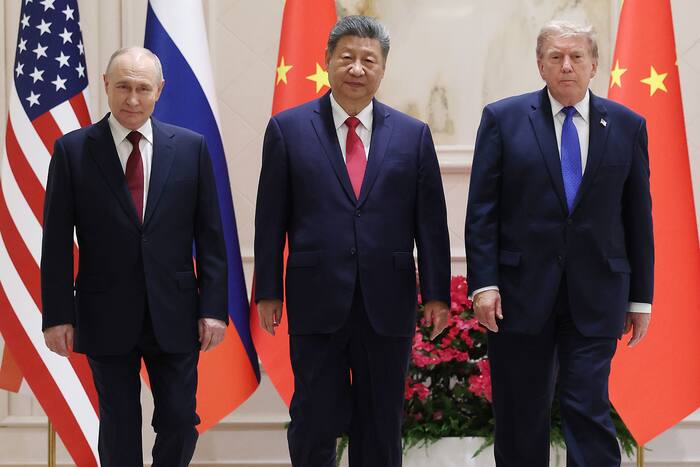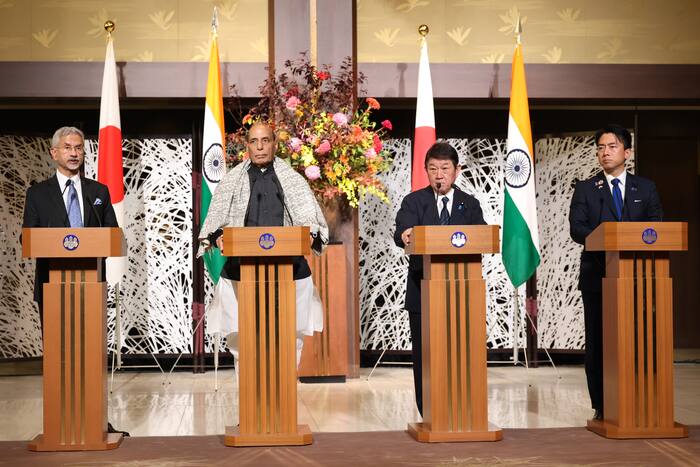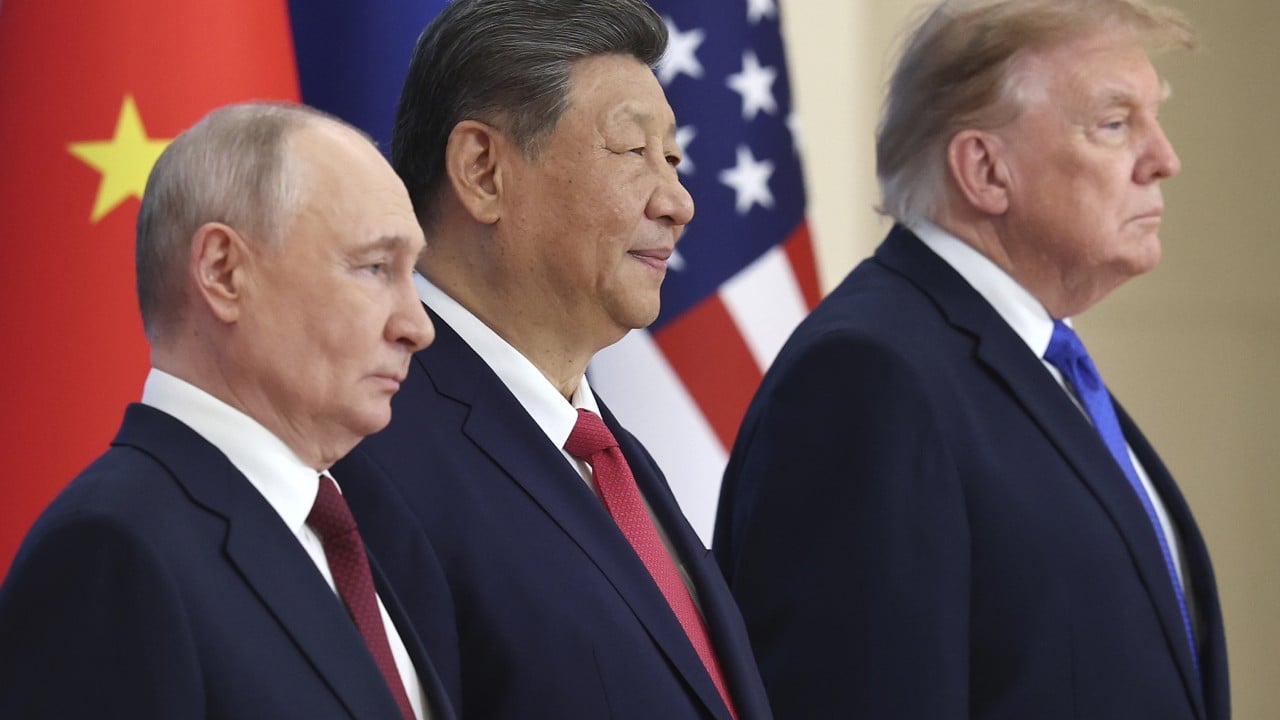
Multilateral economic forums routinely mask hard security negotiations behind trade communiqués, and the latest Asia-Pacific Economic Cooperation (APEC) summit proves that energy supply chains and nuclear deterrence now dictate regional trade policy. While mainstream coverage fixates on diplomatic optics—specifically the absence of North Korean leadership—the underlying structural reality is a tri-cornered negotiation over liquefied natural gas (LNG) routing, semiconductor supply security, and extended nuclear deterrence. Understanding this summit requires stripping away diplomatic theater to examine the hard resource constraints and security architectures binding Washington, Beijing, Seoul, and Tokyo.
The Structural Shift from Trade Liberalization to Resource Securitization
APEC was engineered in 1989 to reduce tariff barriers and promote open regionalism across the Pacific Rim. Over the past three decades, the forum operated under the assumption that economic interdependence naturally dampens geopolitical friction. That thesis has collapsed. The primary mechanism driving state behavior at this summit is no longer comparative advantage, but supply chain survivability under conditions of great-power competition.
When states prioritize survivability over efficiency, three structural adjustments occur immediately:
- Friend-shoring replaces lowest-cost sourcing. Capital expenditure shifts toward allied jurisdictions even when unit production costs rise by 15% to 30%.
- Energy contracts become bilateral security instruments. Long-term LNG and critical mineral off-take agreements are structured to bypass maritime chokepoints controlled by strategic rivals.
- Dual-use technology controls override multilateral trade rules. Export restrictions on advanced compute and manufacturing equipment become non-negotiable baseline conditions rather than bargaining chips.
Mainstream reporting treats energy supplies and nuclear proliferation as separate agenda items. In operational reality, they are coupled variables in a single security equation. East Asian industrial economies—specifically Japan and South Korea—cannot maintain manufacturing competitiveness or grid stability without uninterrupted maritime energy imports. Simultaneously, those same industrial bases produce the advanced components required for modern defense systems and artificial intelligence infrastructure. Any disruption to energy inflows directly degrades industrial output, which in turn compromises national defense readiness.
The Energy Security Trilemma in the Indo-Pacific
Energy negotiations at the summit center on resolving a classic trilemma: balancing supply security, cost competitiveness, and decarbonization mandates. For Asian importers, the acute vulnerability lies in maritime transit. Over 80% of crude oil and roughly 60% of LNG destined for Northeast Asia transits the South China Sea and the Strait of Malacca. In a kinetic conflict or naval blockade scenario, these transit corridors become immediate single points of failure.
To mitigate this exposure without triggering domestic industrial collapse, regional actors are executing a two-pronged diversification strategy:
- Upstream Equity Acquisition in North America and Australia. Rather than relying solely on spot markets, Japanese and South Korean trading houses are securing direct equity stakes in liquefaction terminals along the US Gulf Coast and Western Australia. This locks in physical molecules outside contested Asian waters and routes shipments across the open Pacific.
- Nuclear Baseload Reactivation and Expansion. Intermittent renewables cannot sustain high-density semiconductor fabrication plants, which require zero-variance power delivery 24 hours a day. Consequently, summit discussions heavily favored small modular reactor (SMR) deployment and life-extension protocols for existing light-water reactors. Nuclear power functions here not merely as a climate policy tool, but as an imported-fuel-substitution mechanism that reduces maritime tanker dependency.
The limitation of this strategy is infrastructure lead time. Liquefaction terminals, specialized LNG carrier fleets, and nuclear reactor deployments operate on seven-to-twelve-year capital cycles. Short-term supply shocks—whether driven by Middle Eastern instability or Russian pipeline diversions—still force Asian buyers into spot-market bidding wars with European utilities. This price volatility acts as a regressive tax on manufacturing margins across the Pacific Rim.
Nuclear Deterrence Architecture Without Pyongyang
The absence of North Korean leader Kim Jong Un from the summit proceedings is routinely framed by commentators as a diplomatic snub or a missed opportunity for engagement. From a game-theoretic perspective, his absence is structurally irrelevant to the core nuclear negotiations occurring on the sidelines. Pyongyang does not view multilateral economic forums as legitimate venues for regime-survival negotiations, nor does APEC possess the institutional mandate to offer security guarantees.
The real nuclear negotiation at the summit takes place between the United States and its Northeast Asian treaty allies, alongside parallel signaling toward Beijing. As North Korea expands its solid-fuel intercontinental ballistic missile (ICBM) inventory and tactical nuclear capabilities, the credibility of US extended deterrence faces severe stress tests. Allies question whether Washington would risk Los Angeles or New York to defend Seoul or Tokyo.
To prevent South Korea and Japan from developing indigenous nuclear weapons—an outcome that would trigger a regional proliferation cascade—Washington is institutionalizing nuclear consultation mechanisms. These frameworks operate through three distinct layers:
- Joint Nuclear Planning and Table-Top Exercises. Integrating allied conventional forces with US strategic nuclear planning reduces information asymmetry and demonstrates operational commitment.
- Forward Deployment of Strategic Assets. Regular, visible port calls by nuclear-armed ballistic missile submarines (SSBNs) and overflights by strategic bombers serve as physical signals of capability and resolve.
- Bilateral Civil Nuclear Cooperation Agreements. Tightening oversight on uranium enrichment and spent-fuel reprocessing ensures allied civilian nuclear programs remain strictly below weapons-grade thresholds while still supporting domestic energy security.
Beijing views this strengthened trilateral deterrence architecture between Washington, Tokyo, and Seoul as an encirclement strategy. China's rapid expansion of its own nuclear warhead stockpile—projected by defense intelligence assessments to surpass 1,000 operational warheads by 2030—alters the strategic calculus. Washington is no longer managing a single-peer nuclear dyad; it is managing a two-peer nuclear environment involving both Russia and China, complicated by a rogue regional actor in Pyongyang. The summit's sideline bilaterals between US and Chinese leadership are therefore focused on establishing crisis communication guardrails to prevent conventional maritime incidents from escalating into strategic nuclear alerts.
Supply Chain Chokepoints and Semiconductor Geopolitics
Beneath the macro-level discussions of energy and deterrence lies the granular battle over semiconductor supply chains. Modern economic power and military superiority both depend on access to sub-3-nanometer logic chips and high-bandwidth memory (HBM). APEC economies represent the entirety of this value chain:
- Design and Electronic Design Automation (EDA): Concentrated in the United States.
- Wafer Fabrication Equipment: Dominated by the United States, Japan, and the Netherlands (an external partner deeply integrated into APEC trade flows).
- Foundry Manufacturing: Heavily concentrated in Taiwan and South Korea.
- Assembly, Testing, and Packaging (ATP): Distributed across Southeast Asia and mainland China.
This geographic specialization maximizes economic efficiency during peacetime but creates catastrophic systemic fragility during geopolitical crises. A blockade of Taiwan would immediately sever global access to over 90% of the world's most advanced logic processors, triggering a global depression far exceeding the economic shock of the 2020 pandemic.
Summit negotiations reflect an urgent effort to de-risk this concentration without triggering immediate economic decoupling. Washington's export controls aim to freeze China's indigenous semiconductor manufacturing capabilities at legacy nodes (28 nanometers and above), denying Beijing the compute density required to train frontier military artificial intelligence models. In response, Beijing leverages its near-monopoly over the processing and refining of critical minerals—specifically gallium, germanium, graphite, and rare earth elements—essential for manufacturing both semiconductors and defense hardware.
This dynamic produces a state of mutually assured economic disruption. Neither side can execute a clean break without inflicting severe domestic industrial damage. The tactical objective for middle-power APEC economies—such as Vietnam, Malaysia, and Singapore—is to capture the spillover capital from "China Plus One" manufacturing diversification while avoiding forced alignment with either superpower bloc.
Operational Limitations of Multilateral Consensus
Relying on APEC to produce binding resolutions on these issues misunderstands the institution's design. APEC operates strictly on consensus and non-binding commitments. Every member economy—including both the United States and China—holds an effective veto over joint declarations.
This institutional structure guarantees two outcomes:
- Diluted Communiqués. Official summit statements will inevitably rely on ambiguous language regarding regional conflicts, trade disputes, and climate targets to secure unanimous sign-off. Analysts who judge the summit's success by the text of its final declaration are measuring the wrong variable.
- Bilateral and Minilateral Execution. Real policy execution happens outside the plenary hall through binding bilateral treaties, trilateral security pacts, and targeted plurilateral trade frameworks like the Indo-Pacific Economic Framework (IPEF). APEC serves merely as the logistical convening mechanism that brings heads of state into the same physical building to conduct high-stakes bilateral diplomacy.
Furthermore, domestic political cycles severely constrain the durability of any agreements reached at the summit. Executive agreements signed by a sitting US administration can be reversed by a successor via executive order, creating significant policy risk for Asian allies committing billions of dollars to US-based manufacturing and energy projects. Similarly, domestic fiscal constraints and demographic decline in Japan and South Korea limit their capacity to simultaneously fund massive defense spending increases, energy transition subsidies, and semiconductor industrial policy.
Capital Allocation and Risk Mitigation in the Pacific Rim
Corporate strategists, institutional investors, and policy planners operating in the Asia-Pacific must treat APEC communiqués as lagging indicators of diplomatic sentiment rather than leading indicators of regulatory stability. Capital allocation decisions over the next 36 months must account for the permanent entanglement of energy security, nuclear deterrence, and trade policy.
Organizations with supply chain exposure in the region must execute three immediate structural adjustments:
- Map Tier-2 and Tier-3 Critical Mineral Dependencies. Conduct forensic audits of component suppliers to identify hidden reliance on Chinese-refined gallium, germanium, and battery-grade graphite. Diversify procurement contracts toward Australian, Canadian, and South American processors before export licensing restrictions tighten further.
- Hedge Energy Price Volatility via Long-Term Off-Take Contracts. Industrial operators in Northeast Asia cannot rely on spot LNG markets. Lock in fixed-slope, long-term supply agreements indexed to North American gas hubs rather than Brent crude to insulate operating margins from Middle Eastern and maritime transit shocks.
- Segment Technology Stacks for Jurisdictional Compliance. Multinational technology and manufacturing firms must architect parallel research, data storage, and hardware assembly pipelines—one compliant with US export control regimes for Western and allied markets, and a separate, ring-fenced operation for mainland Chinese domestic consumption. Attempting to maintain a unified global supply chain across the US-China geopolitical fault line is no longer a viable operating model.