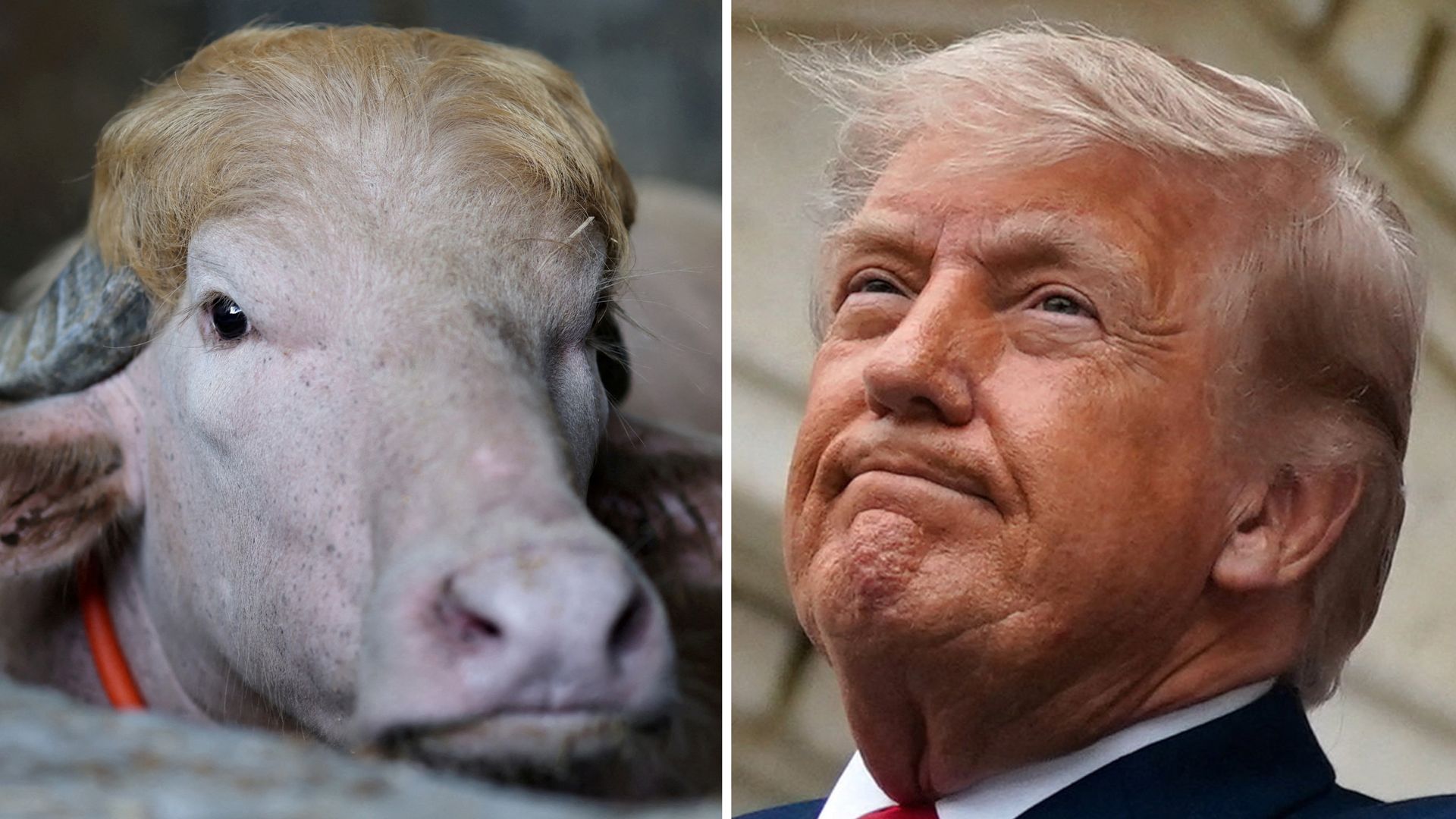
The intersection of digital virality, sovereign security risk, and deeply entrenched religious commodities supply chains presents a rare inflection point for state intervention. This structural friction materialized completely when the Government of Bangladesh, via a direct mandate from the Ministry of Home Affairs, halted the scheduled ritual sacrifice of a 700-kilogram albino water buffalo. The animal, colloquially designated "Donald Trump" due to an atypical, pigment-deficient blond cranial tuft, had transitioned from an agricultural asset into a high-yield digital commodity.
By analyzing this event through the lens of risk mitigation, public choice theory, and cultural economic frameworks, we uncover the systematic mechanisms that dictate how states manage unexpected disruptions in highly sentimentalized public markets. If you enjoyed this piece, you might want to check out: this related article.
The Economics of Hyper-Valuation in Seasonal Live Commodity Markets
The annual livestock market for Eid al-Adha in Bangladesh constitutes a highly compressed, high-velocity financial ecosystem. Over a multi-week period, approximately 12 million head of cattle, buffalo, and caprines are liquidated in transactional volume. In this hyper-competitive trading environment, market premium is driven by specific biological and aesthetic metrics: total live weight, coat symmetry, and rare genetic variations.
The albino buffalo in question, cultivated at Rabeya Agro Farm in Narayanganj, operated outside standard asset valuation models. While typical livestock pricing is indexed strictly to a live-weight metric—in this instance, valued at approximately BDT 550 per kilogram—the introduction of a viral social media narrative fundamentally decoupled the asset’s perceived value from its utility value. For another angle on this event, refer to the recent update from BBC News.
The mechanism behind this transformation relies on a specific digital feedback loop:
- Genetic Rarity as the Baseline: The animal possesses a rare form of oculocutaneous albinism, resulting in a cream-colored hide, a pinkish muzzle, and a localized concentration of unpigmented, blond-appearing hair fibers on the crown. In a domestic market dominated by dark-skinned water buffaloes, this biological anomaly represents an immediate visual differentiator.
- Meme-Based Brand Equity: The assignment of the moniker "Donald Trump" established a cross-cultural meme. This memetic branding lowered the barrier to consumer engagement, converting standard agrarian commerce into a highly shareable social media asset.
- The Crowding Effect: The farm experienced structural visitor saturation. Physical crowds migrated from local digital viewership to on-site congestion, creating a secondary market of attention that fundamentally disrupted standard operational workflows.
When the asset was sold to a private buyer in Dhaka for ritual slaughter, the transaction attempted to treat a hyper-visible cultural artifact as a private consumption good. This friction created an immediate regulatory dilemma for the state.
State Intervention Mechanics: Assessing the Three Pillars of Government Action
State intervention in private transactions within a constitutional democracy requiring stable trade structures is generally rare, unless market failures or security externalities present themselves. The Home Ministry’s directive to take the buffalo into official custody via the Keraniganj Model Police Station reflects a calculated response to three overlapping systemic risks.
                  ┌────────────────────────────────────────┐
                  │    State Intervention Matrix           │
                  └───────────────────┬────────────────────┘
                                      │
         ┌────────────────────────────┼────────────────────────────┐
         ▼                            ▼                            ▼
┌──────────────────┐        ┌──────────────────┐        ┌──────────────────┐
│ Security & Crowd │        │ Diplomatic Risk  │        │ Conservation &   │
│ Control Dynamics │        │  Neutralization  │        │ Institutional Utility│
└──────────────────┘        └──────────────────┘        └──────────────────┘
1. Security and Crowd Control Dynamics
The primary justification cited by law enforcement officers was public safety. The aggregation of thousands of civilians at a localized residential slaughter site during a major holiday presents acute urban management challenges. Crowds of this magnitude in dense environments introduce risks of civil unrest, stampedes, and the breakdown of localized sanitary protocols. By transferring physical custody of the 700-kilogram animal to state control hours before the scheduled ritual, the state dismantled the physical locus of public aggregation.
2. Diplomatic Risk Neutralization
The naming convention of the animal introduced an volatile geopolitical variable. While the initial naming by the farm owner’s brother was an agrarian joke, international media propagation shifted the context. International adversaries quickly utilized images of the animal to craft mocking geopolitical narratives on digital platforms.
For the Bangladeshi government, allowing the public slaughter of a living entity bearing the explicit name and visual caricature of a foreign head of state—specifically a current or former US President—introduces asymmetric diplomatic downsides. The potential for the imagery of the sacrifice to be misinterpreted or weaponized by external political actors threatened bilateral state relations. The state determined that the preservation of diplomatic decorum outweighed the enforcement of an individual private commercial contract.
3. Conservation and Institutional Utility
The Ministry of Livestock and local law enforcement evaluated the animal's long-term utility curve. The buffalo is young, structurally sound, and capable of a multi-year lifespan. Slaughter represents absolute capital destruction of a genetically rare specimen. By reallocating the asset to the Bangladesh National Zoo in Dhaka, the state transformed a short-term private consumption asset into a long-term public good. The zoo gains an immediate, high-drawing attraction capable of generating predictable ticket revenues and public engagement, while preserving a rare biological anomaly for scientific observation.
Contractual and Market Remediation: Resolving the Transactional Friction
To execute this intervention without undermining public trust in market property rights, the state had to implement an immediate transactional remediation strategy.
The final purchaser of the animal, Moniruz Zaman, faced an unexpected loss of a contracted asset hours before its intended utility window. To prevent legal exposure and maintain market equilibrium, the government deployed a direct compensation framework. Under the oversight of the Home Ministry and livestock officials, the state initiated a process to fully refund the purchase capital or, alternatively, supply an equivalent livestock asset (a bull or alternative buffalo of equal mass and market value) from state-managed reserves.
This intervention establishes a clear precedent: when digital virality elevates a private commodity into a matter of state security or diplomatic sensitivity, the state will assert eminent domain over the asset, provided it can absorb the financial liability of the transaction and neutralize the private owner's economic loss.
Strategic Operational Outlook for the Bangladesh National Zoo
The long-term management of the asset transitions from a livestock management problem to an institutional tourism strategy. The National Zoo curator, Atiqur Rahman, outlined the immediate operational protocol required to transition the viral asset into its new environment:
- Biosecurity Quarantine: The animal enters a mandatory 14-day isolation period to monitor for latent epidemiological risks common in high-density livestock markets, ensuring it does not introduce pathogens to the resident zoo population.
- Micro-Climate Adaptation: Due to albinism, the animal possesses lower melanin levels, rendering it highly susceptible to solar radiation and heat stress. The zoo has engineered a specialized, shaded enclosure equipped with a dedicated water-bath infrastructure to replicate the intensive cooling regimen (four baths daily) previously provided by the private farm.
- Monetization of Attention Economics: The zoo is structurally positioned to convert the digital footprint of the animal into physical foot traffic. By establishing a dedicated, permanent exhibit space for the specimen, the institution can capture structural revenue increases through sustained ticket sales over the next decade.
The survival of the animal highlights a shifting paradigm in developing markets: the value of an asset is no longer bound by its traditional weight or utility. In an interconnected digital economy, attention is a raw commodity—one powerful enough to re-route supply chains, alter state policy, and rewrite the fate of an agricultural asset on the eve of its slaughter.