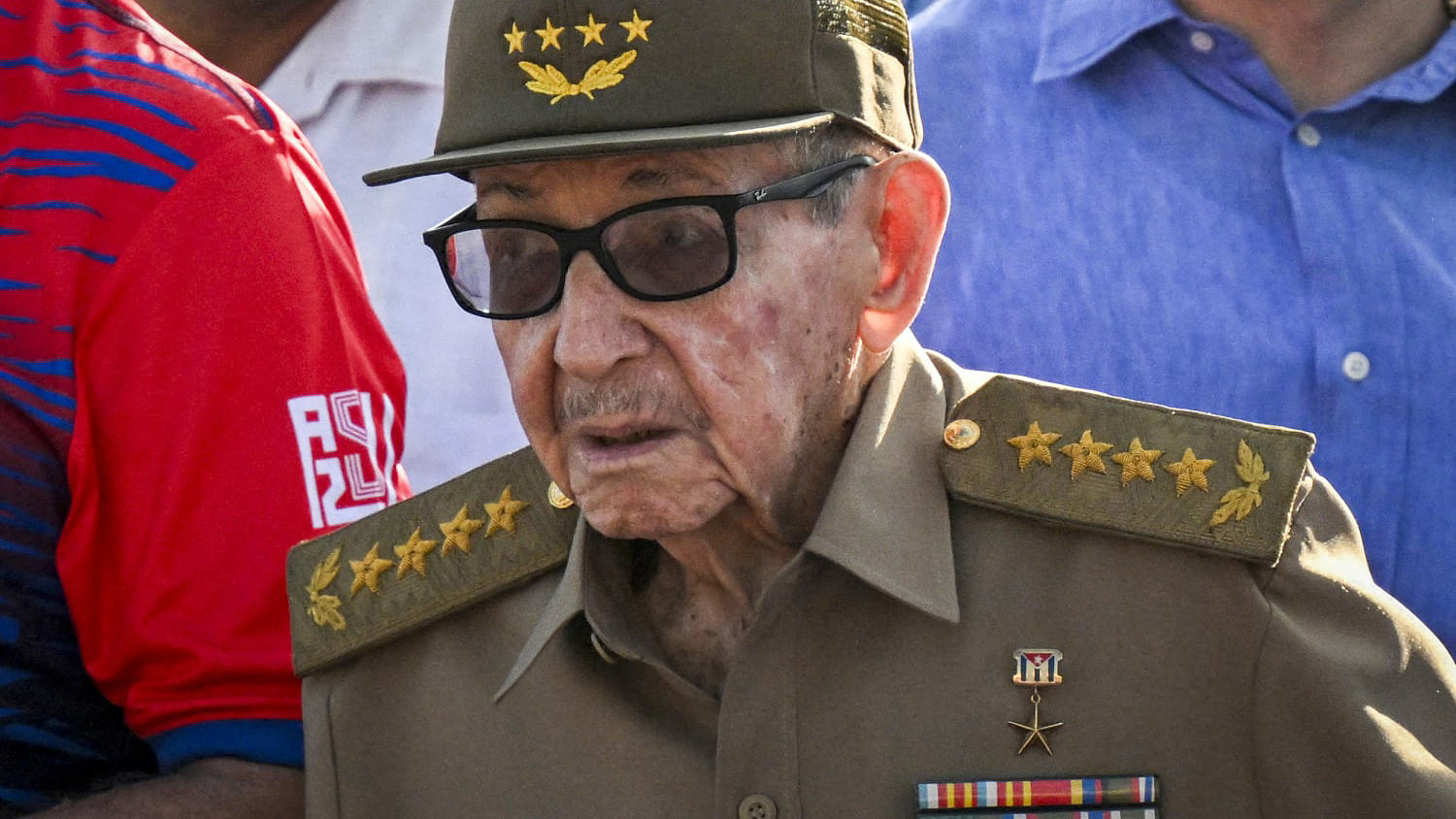
The United States Department of Justice unsealing of a criminal indictment against 94-year-old former Cuban President Raúl Castro Ruz is not merely a delayed exercise in statutory justice. It is a calculated application of asymmetric diplomatic pressure. The superseding indictment, filed in the Southern District of Florida, charges Castro and five co-defendants with conspiracy to kill U.S. nationals, four counts of murder, and the destruction of aircraft stemming from the February 24, 1996, shoot-down of two unarmed civilian Cessna planes operated by the exile organization Brothers to the Rescue (Hermanos al Rescate). By elevating a 30-year-old cold case to a capital federal offense, the Trump administration is deploying an lawfare framework designed to alter the strategic calculus of the Cuban regime during an acute domestic crisis.
To understand the operational mechanics of this legal maneuver, the event must be broken down into its core legal, economic, and geopolitical variables. This analysis deconstructs the structural motivations behind the indictment, maps the systemic vulnerabilities of the Cuban state, and evaluates the strategic utility of using criminal indictments against foreign heads of state as a leverage mechanism.
The Legal Architecture of the Superseding Indictment
The formal charges brought by U.S. Attorney Jason A. Reding Quiñones target Raúl Castro in his capacity as the Minister of the Revolutionary Armed Forces (MINFAR) in 1996. The indictment isolates the chain of command that authorized Russian-made MiG-29 fighter jets to fire air-to-air missiles at civilian aircraft over international waters, resulting in the deaths of Carlos Costa, Armando Alejandre Jr., Mario de la Peña, and Pablo Morales.
The legal strategy relies on three specific statutory pillars:
- Conspiracy to Murder U.S. Nationals (18 U.S.C. § 2332): This establishes extraterritorial jurisdiction, anchoring the crime as an act of state-sponsored violence against American citizens outside U.S. territory.
- Destruction of Aircraft (18 U.S.C. § 32): This treats the civilian aircraft as protected vessels under international aviation frameworks, neutralizing Cuba’s historical defense of territorial airspace sovereignty.
- The Command Responsibility Doctrine: Because absolute executive power in 1996 was concentrated within the Castro diarchy, the prosecution does not require proof that Raúl Castro pulled the trigger; it requires proof that he authorized the rules of engagement or failed to prevent the extrajudicial execution when he held the command capability to do so.
This legal framework mimics the asset-capture and enforcement model executed on January 3, which resulted in the apprehension of Venezuelan leader Nicolás Maduro. By applying the same legal playbook to Havana, the Department of Justice establishes a precedent: sovereign immunity does not shield foreign leaders from U.S. criminal indictments if the targeted actions result in the deaths of U.S. citizens.
The Cuban Crisis Vector and the Convergence of Vulnerabilities
The timing of the indictment is directly linked to the compounding structural failures within Cuba. Havana is currently experiencing its most volatile systemic breakdown since the Special Period of the 1990s. The U.S. strategy leverages three intersecting vulnerabilities to maximize internal friction within the Cuban ruling elite.
The Energy and Economic Collapse Curve
The Cuban state can no longer maintain basic infrastructure equilibrium. A strict U.S. oil embargo, combined with the collapse of subsidized fuel shipments from Venezuela, has produced a catastrophic energy deficit. The island faces rolling grid failures and widespread blackouts, which have sparked spontaneous domestic protests. When a state cannot guarantee baseline electricity or food security, its internal security apparatus must divert resources from external defense to domestic containment. The indictment adds a psychological shock to a regime already operating on thin material margins.
The Succession and Legitimacy Deficit
Raúl Castro formally stepped down from the leadership of the Cuban Communist Party in 2021, handing nominal power to President Miguel Díaz-Canel. However, Castro remains the ultimate authority and the institutional anchor of the regime. The current leadership suffers from a severe legitimacy deficit; they lack the revolutionary credentials of the historic generation and are viewed by the populace as bureaucratic managers of a failing state. By indicting the last living architect of the 1959 revolution, the U.S. targets the regime’s remaining symbolic foundation.
The Backchannel Bifurcation
Recent diplomatic intelligence indicates a dual-track strategy by Washington. Publicly, the administration enforces maximum economic and legal pressure. Privately, backchannels remain active. CIA Director John Ratcliffe’s recent travel to Havana for meetings with Castro’s grandson, Raúl Guillermo Rodríguez Castro, alongside senior State Department meetings in April, points to a deliberate attempt to split the regime. The U.S. is signaling to the younger, technocratic tier of the Cuban military and intelligence apparatus that their future survival depends on marginalizing the old guard and negotiating a transition.
The Asymmetric Strategic Playbook
The deployment of this indictment functions under a specific cost-benefit matrix. While the probability of Raúl Castro standing trial in a Miami federal courtroom remains low due to his age (94) and protection by the Cuban military, the indictment serves as a high-utility instrument of asymmetric warfare.
+-----------------------------------------------------------------+
|                    U.S. Lawfare Framework                       |
+-----------------------------------------------------------------+
                                 |
                                 v
+-----------------------------------------------------------------+
|    Legal Leverage Asset: Indictment of Raúl Castro (94)         |
+-----------------------------------------------------------------+
                                 |
         +-----------------------+-----------------------+
         |                                               |
         v                                               v
+----------------------------------+   +----------------------------------+
|    Regime Escalation Dominance   |   |   Domestic Political Capital     |
| - Deter external adversaries     |   | - Consolidate South Florida base |
| - Disrupt internal succession    |   | - Demonstrate enforcement metric |
| - Enforce financial isolation    |   | - Deflect foreign policy tension |
+----------------------------------+   +----------------------------------+
Strategic Limitations and Regime Countermeasures
Every aggressive geopolitical action carries an inherent risk of unintended systemic feedback. The primary structural limitations of this strategy include:
- The Siege Narrative Reinforcement: Hardliners within the Cuban Communist Party use external threats to justify internal repression. Díaz-Canel’s immediate condemnation of the indictment as a "manipulation of history" illustrates how the regime uses U.S. pressure to demand absolute internal loyalty and suppress domestic dissent.
- The Sovereign Hardening Effect: The Castro family will not extradite its foundational figure. The indictment could cause the regime to freeze existing diplomatic tracks, dig in, and increase its reliance on adversarial foreign powers like Russia and China for security guarantees and economic lifelines.
- The Temporal Decay of the Asset: At 94 years old, Castro’s remaining lifespan is a binding constraint on the utility of this legal leverage. If he dies before the U.S. can extract structural concessions, the indictment loses its operational value.
U.S. Domestic Political Calculations
The indictment serves an equally critical domestic function for the Trump administration. Facing a highly contested midterm election cycle in November and depressed national approval ratings due to complex foreign entanglements—including the ongoing security crisis in Iran—the administration requires a definitive, high-visibility foreign policy victory.
Unsealing this indictment in Miami on May 20—a date heavily associated with Cuban independence themes within the exile community—directly solidifies political capital among anti-communist Hispanic voters in South Florida. This demographic is a vital component of the administration's electoral coalition, and delivering a tangible step toward accountability for the 1996 shoot-down provides a powerful domestic counter-narrative to international complications elsewhere.
The Tactical Roadmap for Escalation
The indictment of Raúl Castro is not an isolated legal historical retrospective; it is the opening gambit in a broader structural campaign designed to force a political transition in Havana. The administration's next operational moves will likely follow a distinct escalation ladder:
- Global Asset Target Mapping: The U.S. Treasury’s Office of Foreign Assets Control (OFAC) will use the criminal conspiracy charges to trace, freeze, and seize any remaining offshore financial networks linked to the Castro family, GAESA (the Cuban military's business conglomerate), and the five co-defendants.
- The Interdiction Threat Metric: Following the Maduro precedent, the U.S. will establish a maritime and airspace interdiction posture around the Florida Straits. By signaling that any unauthorized movement of high-level Cuban officials outside the island could result in apprehension, Washington effectively imprisons the Cuban elite within their own borders.
- The Geopolitical Concession Bargaining Chip: The administration will use the potential suspension or conditional mitigation of enforcement actions as a primary bargaining chip in backchannel negotiations. The U.S. goal is to trade legal leniency for tangible concessions, such as the verifiable release of political prisoners, the removal of Russian electronic intelligence assets from the island, or the implementation of multi-party electoral reforms.