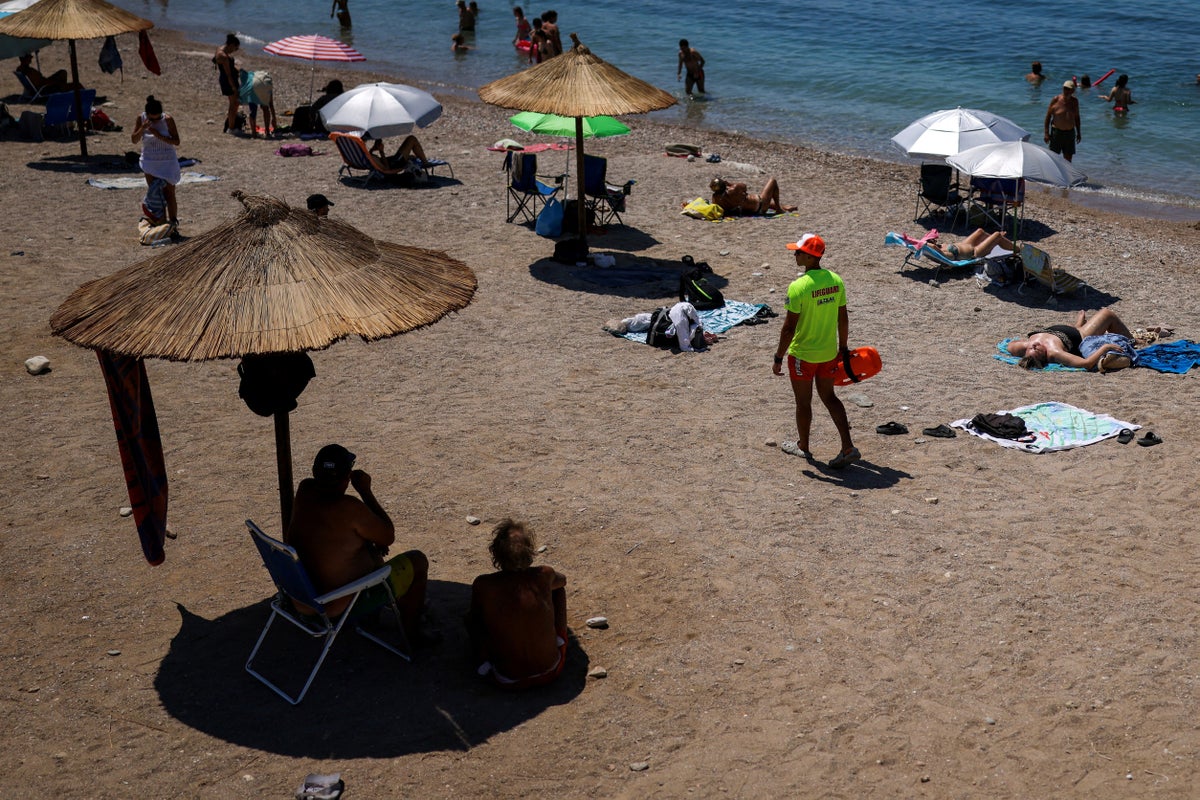
The current European debate surrounding Russian Schengen visa restrictions suffers from a fundamental misapprehension of statecraft levers. Treating travel access as a moral barometer rather than an instrument of asymmetric pressure creates a strategic mismatch. Proponents of total visa bans frame the issue through emotional optics—juxtaposing vacationing citizens from an aggressor nation against active theater casualties—which obscures the operational reality of border control. Weaponizing freedom of movement requires an understanding of how visa policy interfaces with capital flight, espionage vectors, and domestic security architectures.
A rigorous analysis reveals that the European Union’s current patchwork approach to visa policy functions as an inefficient mechanism that fails to achieve either deterrence or security. To correct this, the framework must shift from symbolic exclusion to a calculated security doctrine that systematically devalues the passport potency of adversaries while minimizing self-inflicted economic and intelligence costs.
The Dual-Vector Friction Model of Border Restrictions
Visa policies operate simultaneously on two distinct vectors: economic attrition and national security insulation. When a state alters its entry requirements, it manipulates a complex cost-benefit matrix for both incoming travelers and domestic enforcement agencies.
Economic Attrition and Capital Disruption
The economic argument for restricting entry relies on the assumption that denying luxury access strips an adversary's elite of their comfort, thereby driving internal discontent. This logic relies on a flawed transmission mechanism. Wealthy citizens do not shift state policy because they cannot visit Mediterranean resorts; instead, indiscriminate bans consolidate capital within the adversary state.
When Schengen states impose blanket bans, they trigger an immediate capital containment effect. Funds that would have leaked into European hospitality, real estate, and banking sectors are forced back into the domestic economy of the sanctioned state, inadvertently stabilizing its financial system. A targeted framework assesses the economic footprint of travelers via a multi-tiered filtering mechanism:
- Category A (High-Net-Worth Oligarchy): Individuals whose capital supports the state apparatus. These require absolute exclusion across both biometric and financial registries.
- Category B (The Technocratic Middle Class): Highly skilled professionals, engineers, and developers. Denying these individuals entry halts brain drain, effectively subsidizing the adversary's domestic industrial base by trapping human capital inside its borders.
- Category C (Civil Society and Dissidents): The primary source of internal friction against an autocratic regime. Eliminating their exit pathways neutralizes the external opposition infrastructure.
The structural flaw in the current EU approach is the failure to decouple Category B and C from Category A. By applying uniform restrictions, member states inadvertently solve the adversary’s brain drain dilemma, forcing critical technical talent to remain and contribute to a wartime or sanctioned economy.
National Security and Intelligence Vectors
Border security is an exercise in risk management, not risk elimination. A closed border does not stop espionage; it merely alters the operational methodology of hostile intelligence services.
When official tourist channels close, adversary intelligence agencies pivot from "deep cover" civilian identities utilizing standard Schengen visas to alternative infiltration routes. These include third-country passport acquisition (citizenship-by-investment schemes in neutral nations), illegal border crossings along extended frontiers, or the exploitation of secondary diplomatic channels.
The closure of standard visa processing windows removes a critical intelligence collection point. The visa application process serves as a passive data harvesting system. It forces applicants to surrender biometric data, financial histories, employment records, and digital footprints long before they reach a physical port of entry. Scrapping this system leaves border states blind to the movement profiles of incoming actors, shifting the entire detection burden to overstretched physical border checkpoints.
The Friction Coefficient of Decentralized Schengen Enforcement
The structural vulnerability of the Schengen Zone lies in its asymmetric enforcement architecture. The abolition of internal border controls means the security of the entire bloc is only as strong as its weakest external entry point. This reality creates a profound coordination failure among member states, splitting Europe into two distinct ideological and operational camps.
Frontline Border States vs. Western European Insulators
Geographic proximity dictates risk tolerance. Frontline states sharing direct land borders with Russia (such as Estonia, Latvia, Lithuania, and Poland) view visa policy through an existential security lens. For these nations, a high volume of cross-border transit introduces unsustainable operational friction:
$$\text{Operational Friction} = \frac{\text{Daily Transit Volume} \times \text{Intelligence Deficit}}{\text{Border Patrol Resource Capacity}}$$
As transit volume rises or the ability to vet applicants decreases, the strain on physical border infrastructure increases exponentially. Frontline states lack the administrative bandwidth to conduct deep counter-intelligence screening on thousands of land-border arrivals daily. Consequently, their logical strategic move is a total border closure to reduce the denominator of the risk equation.
In contrast, Western European nations insulated by geographic distance view visas through a lens of diplomatic leverage and economic benefit. Because they do not share a land border, they do not absorb the immediate physical security risks or the administrative costs of managing continuous land checkpoints. This geographic insulation allows them to prioritize long-term diplomatic flexibility and the retention of soft power channels, creating a policy schism that adversaries systematically exploit via forum shopping.
The Forum Shopping Bottleneck
Adversary citizens seeking entry into the Schengen Zone leverage the structural inconsistency of European enforcement through forum shopping. If a frontline state closes its consulate, an applicant routes their request through a more permissive member state in Southern or Western Europe. Once the visa is issued, internal freedom of movement allows the individual to bypass the restrictive measures of the frontline states entirely via intra-Schengen air travel.
This bottleneck invalidates unilateral bans. A visa restriction policy implemented by five member states fails if the remaining twenty-two maintain standard processing pipelines. The result is a system that projects weakness rather than resolve, signaling an inability to coordinate core security priorities across the union.
Quantifying the Strategic Costs of Policy Misalignment
An optimized visa strategy requires evaluating the trade-offs between security gains and geopolitical costs. The current uncoordinated approach yields several measurable strategic deficits.
| Policy Vector | Current Uncoordinated Approach | Optimized Asymmetric Approach |
|---|---|---|
| Human Capital | Traps technical talent within the adversary state, stabilizing its industrial base. | Accelerates brain drain through targeted talent visas, depleting the adversary's technical capacity. |
| Intelligence | Closes standard application pipelines, eliminating passive data harvesting and biometric tracking. | Maintains strict application funnels to gather deep financial and digital footprints of applicants. |
| Alliance Cohesion | Creates deep political friction between frontline states and distant member states. | Establishes a unified, multi-tiered entry framework binding on all Schengen signatories. |
| Financial Flows | Forces capital retention inside the adversary's banking system. | Permits asymmetric capital flight while blocking illicit state-backed assets. |
The data implies that the current system maximizes friction among allies while minimizing the actual economic or operational impact on the adversary.
Restructuring the Schengen Security Architecture
To transition from symbolic optics to a high-utility security doctrine, the European visa framework must be re-engineered around the principles of asymmetric liability and centralized risk assessment.
Implementation of the Asymmetric Talent Siphon
Instead of a blanket ban, visa policy should be deployed as an offensive tool to degrade the adversary’s internal capabilities. This requires the creation of an expedited, highly vetted "Talent Siphon" visa class specifically targeting individuals working in critical sectors: aerospace, software engineering, artificial intelligence, advanced manufacturing, and quantitative finance.
This framework operates on a strict verification protocol:
- Digital Footprint Auditing: Complete verification of an applicant's public and private professional outputs, verifying a lack of state-backed military integration.
- Asset Escrowing: Allowing the transfer of personal wealth into verified European accounts while freezing any assets tied to sanctioned corporate entities.
- Mandatory Relocation Pipelines: Ensuring that beneficiaries are integrated directly into Western labor markets, permanently removing their tax bases and skill sets from the adversary state's reach.
By turning the visa into an instrument of systemic human capital extraction, the EU transforms a passive entry document into an active asset degradation mechanism.
Unified Biometric and Financial Ledger Integration
The loophole of forum shopping can be closed through a mandatory, real-time intelligence overlay applied to all Schengen visa processing centers globally. No single member state should possess the authority to issue an entry permit without the automated consent of an integrated security clearinghouse.
This architecture requires the synchronization of the Schengen Information System (SIS II) with global financial intelligence networks. Every applicant must undergo an automated forensic audit tracking the origin of their travel funds. If the capital used to finance the trip touches state-subsidized banks, sanctioned entities, or opaque shell companies, the application triggers an automatic, non-appealable rejection across all member states. This shifts the enforcement burden from subjective consular decisions to hard financial data metrics.
Tiered Border Access and Strategic Surcharges
To offset the operational costs incurred by frontline states, the EU must implement a mandatory "Geopolitical Risk Surcharge" on all visas issued to citizens of non-cooperative or aggressive nations.
The revenue generated from this premium must be structurally funneled directly to the border management agencies of frontline states. This financial transfer mechanism links the volume of adversary travel directly to the enhancement of physical and electronic border defenses. Furthermore, entry via land borders must be restricted to specific, highly monitored transit corridors, forcing all other traffic through air hubs equipped with superior biometric tracking and counter-intelligence personnel.
This structural rearrangement ensures that if an adversary citizen enters the Schengen zone, their presence directly funds the security apparatus designed to counter their home state's aggression. The choice is no longer between an ineffective total ban and a vulnerable open-door policy; it is the calculated execution of targeted exclusion, intelligence maximization, and deliberate capital extraction.


