The simultaneous execution of hard-power power projection and high-stakes diplomatic mediation defines Pakistan's current posture in the ongoing U.S.-Iran conflict. While acting as the primary diplomatic backchannel between Washington and Tehran—brokering the April 8 ceasefire and hosting direct peace talks—Islamabad has concurrently executed a major military deployment to Saudi Arabia. Far from being a series of contradictory impulses, this dual-track strategy operates on a calculated structural logic: using tangible military deterrence to secure economic survival while leveraging diplomatic access to prevent a regional escalation that would collapse its own domestic stability.
This systemic alignment of military capabilities, financing mechanisms, and diplomatic positioning dictates Pakistan's maneuvers within the West Asian conflict.
The Mechanics of Kinetic Deployment: Force Composition and Logistics
Pakistan’s military expansion into Saudi Arabia is structured to provide integrated air defense and theater-denial capabilities rather than a forward-deployed offensive force. The deployment comprises roughly 8,000 personnel, adding to a baseline of advisory troops already stationed within the kingdom.
The hardware architecture deployed during the opening weeks of the conflict establishes a multi-layered defense network:
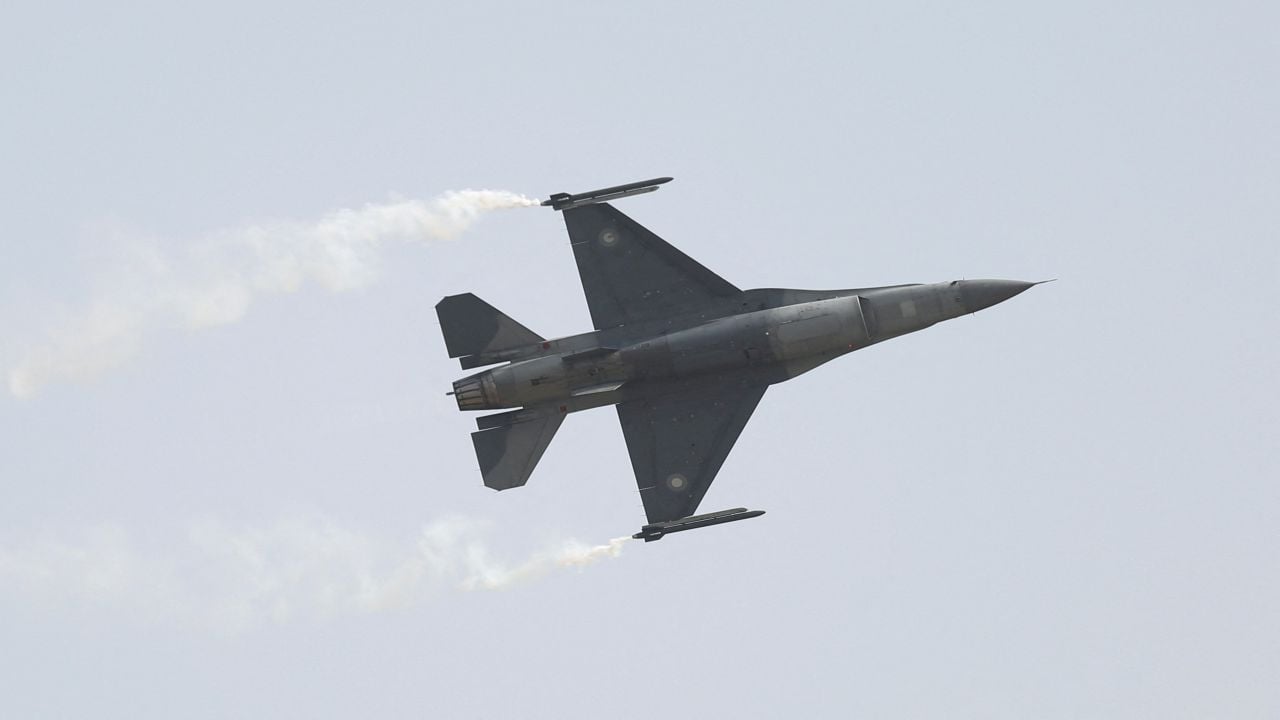
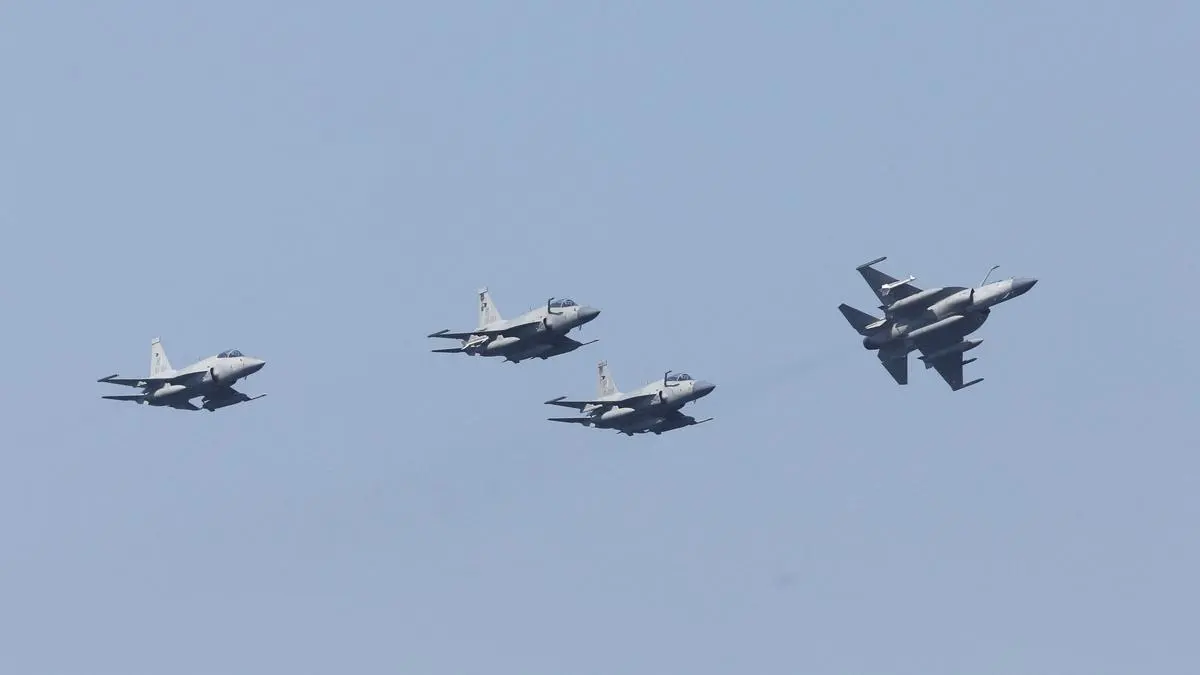
- Air Interdiction Layer: A full squadron of approximately 16 JF-17 Thunder multi-role fighter aircraft, jointly developed by Pakistan and China. These assets were deployed to Saudi airbases in early April following Iranian missile and drone strikes against Saudi energy infrastructure.
- Unmanned Surveillance and Strike Layer: Two dedicated squadrons of unmanned aerial vehicles (UAVs) tasked with persistent intelligence, surveillance, target acquisition, and reconnaissance (ISTAR) along the kingdom's borders.
- Surface-to-Air Denial Layer: A Chinese-manufactured HQ-9 long-range surface-to-air missile system. The HQ-9 provides intercept capability against tactical ballistic missiles, cruise missiles, and aircraft, plugging critical vulnerabilities in the existing Saudi air defense envelope.
- Naval Contingency Layer: Provisions within the bilateral framework for the deployment of Pakistani surface combatants (warships) to secure littoral approaches and sea lines of communication, though their arrival remains unverified.
The operational model relies on a specific division of inputs: Pakistan provides the human capital, technical expertise, and equipment operation, while Saudi Arabia assumes 100% of the financial burden, including logistics, maintenance, and personnel costs. This cost-shifting mechanism ensures that the deployment remains fiscally neutral—or net-positive—for Islamabad’s constrained defense budget.
The Strategic Balance Sheet: The Two Pillars of Pakistani Calculuses
The confidential mutual defense pact signed last year allows for a scalable surge capacity of up to 80,000 Pakistani troops. To understand why Islamabad would commit to such an extensive contingent while actively mediating with Iran, the strategy must be broken down into its two core functional imperatives.
1. The Economic Liquidity Guarantee
Pakistan’s macro-economy is fundamentally bound to Gulf capital. The state faces recurring balance-of-payments crises and relies heavily on Saudi central bank deposits, oil deferred-payment facilities, and rollover loans to avoid sovereign default. By positioning a combat-capable deterrent to safeguard Saudi energy infrastructure, Pakistan is exchanging military security for sovereign financial solvency. The deployment functions as a physical collateralization of Saudi financial assistance.
2. The Extended Nuclear Umbrella
Pakistan Defense Minister Khawaja Asif has explicitly indicated that the mutual defense pact places Saudi Arabia under Pakistan's nuclear umbrella. In terms of strategic deterrence, this extension of a nuclear guarantee serves to disincentivize any state-level existential assault on the Saudi mainland. By establishing a clear threshold, Islamabad attempts to freeze the regional conflict at the proxy or low-intensity level, preventing a total regional war that would disrupt the global energy flows upon which Pakistan relies.
The Causality of the Dual-Track Framework
The primary analytical error made by external observers is viewing Pakistan's mediation between the U.S. and Iran as incompatible with its military deployment to Saudi Arabia. In structural terms, the two tracks are interdependent.
[Kinetic Deployment to KSA] ---> Establishes Saudi Security & Financial Lifelines
                                        |
                                        v
[Diplomatic Mediation Track] ---> Mitigates Iranian Retaliation Risks
                                        |
                                        v
[Strategic Equilibrium] --------> Prevents Full-Scale Regional Escalation
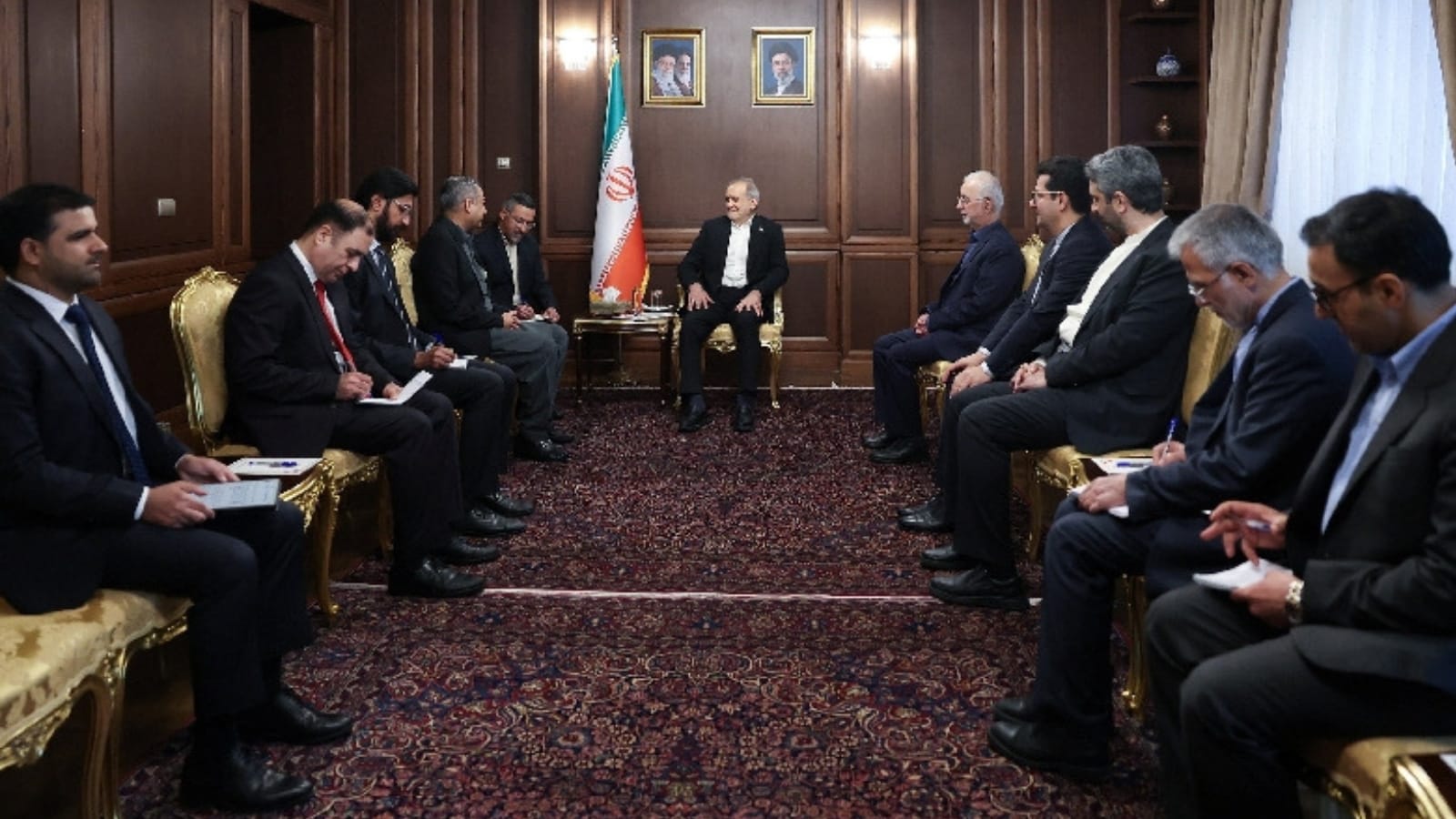
Pakistan’s mediation capacity is validated by its military footprint. Because Islamabad possesses the conventional and strategic weight to alter the local balance of power via its deployment in Saudi Arabia, both Washington and Tehran are forced to treat Pakistan as a serious arbiter. Field Marshal Asim Munir’s direct engagements with Donald Trump and the hosting of U.S. Vice President JD Vance alongside Iranian delegations in Islamabad demonstrate that military relevance generates diplomatic leverage.
Conversely, the diplomatic track mitigates the risks inherent in the military deployment. By maintaining continuous, high-level communication with Tehran, Islamabad can frame its presence in Saudi Arabia as strictly defensive and stabilizing. This reduces the probability of Iranian retaliatory strikes targeting Pakistani assets or stoking sectarian instability within Pakistan’s own borders, which share a volatile 900-kilometer frontier with Iran.
Operational Boundaries and Structural Vulnerabilities
This strategy is subject to severe constraints. No security architecture is flawless, and Pakistan’s dual-track policy contains distinct structural vulnerabilities:
- The Attribution Trap: The primary risk is an operational failure where Pakistani-operated assets—such as the JF-17 squadron or the HQ-9 batteries—intercept and destroy an Iranian asset during an escalation. Even if entirely defensive, the kinetic elimination of Iranian hardware by Pakistani personnel breaks the neutrality narrative and could collapse the diplomatic mediation track instantly.
- Sectarian Domestic Friction: Pakistan contains a significant Shia minority (approximately 15–20% of the population). A prolonged, high-visibility military alignment against Iran risks domestic friction, which could be exploited by internal militant actors to destabilize urban centers.
- The Escalation Clause Dilemma: While the pact allows for up to 80,000 troops, executing a surge of that magnitude would dangerously deplete forces along Pakistan's eastern border with India and its western border with Afghanistan. The operational capacity of the Pakistani military cannot support a full theater deployment abroad without compromising core territorial defense.
Strategic Forecast
The six-week-old ceasefire engineered by Pakistani mediation remains highly fragile, given the scale of the initial disruptions—including the near-closure of the Strait of Hormuz, which compromised 20% of global seaborne oil supplies.
As the conflict enters its next phase, expect Pakistan to maintain its current deployment levels without expanding to the authorized 80,000-troop ceiling, using the present force as a static deterrent. Islamabad will likely resist any pressure from Riyadh to participate in offensive or retaliatory strikes against Iranian territory, bounding its rules of engagement strictly to the territorial defense of the Saudi mainland. The preservation of this equilibrium depends entirely on preventing direct kinetic friction between Pakistani and Iranian forces; so long as that line holds, Islamabad will continue to convert military capital into fiscal survival and geopolitical leverage.