Geopolitical ultimatums function through predictable cost-benefit mechanics rather than random rhetorical escalation. When state actors frame negotiations around binary outcomes such as a negotiated settlement or total structural destruction, they establish a formal bargaining boundary designed to alter opponent risk calculations. Understanding this dynamic requires moving past surface-level rhetoric to analyze the underlying levers of economic pressure, military positioning, and international leverage.
The Binary Choice Matrix
State-level coercion relies on narrowing an adversary's perceived options until compromise becomes mathematically preferable to continued resistance. This strategic framework operates on two distinct pressures: punitive costs and denial of alternative futures.
Punitive costs involve the systematic application of economic isolation, maritime choke-point control, and kinetic deterrence. By restricting the flow of critical commodities through vital global corridors like the Strait of Hormuz, an intervening power forces the target regime to internalize the ongoing price of economic asphyxiation. When commercial traffic requires naval escorts to survive hostile waters, the baseline cost of state maintenance spikes exponentially.
The denial of alternative futures involves convincing the target leadership that time favors the coercing power. If a regime believes it can outlast an administration or absorb sustained economic damage, compliance fails. Conversely, explicit temporal boundaries—such as framing an ongoing conflict within fixed political timelines—compress the target's decision-making window, forcing rapid adaptation or collapse.
Economic Chokepoints and Resource Interoperability
The mechanics of modern state pressure heavily leverage structural choke-points. Control over maritime routes dictates energy pricing and regional stability. When commercial shipping lanes face persistent threats, global supply chains react through volatility premiums.
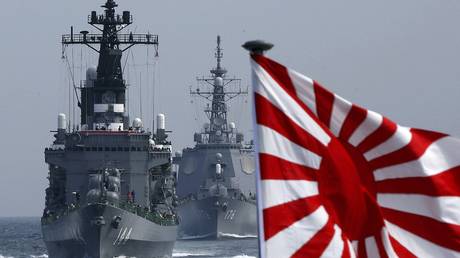
Naval escort operations serve a dual purpose in this calculus. Operationally, they protect resource flows to maintain global economic equilibrium. Strategically, they project continuous state capacity, demonstrating that the intervening power dictates the terms of regional commerce. This creates an asymmetric vulnerability for resource-dependent economies that rely on uninterrupted export revenues for internal state financing.
[Target State Economic Stability]
       │
       ▼ (Maritime Interdiction & Chokepoint Control)
[Export Revenue Compression] ──> [Internal Fiscal Crisis]
       │
       ▼ (Temporal Pressure & Ultimatum)
[Binary Choice: Negotiate vs. Annihilate]
The Information Domain and Domestic Political Feedback Loops
Grand strategy does not occur in a diplomatic vacuum; it intersects constantly with domestic political cycles. Rhetorical framing at international assemblies often serves multiple audiences simultaneously. External signaling warns hostile regimes of maximum kinetic potential, while internal messaging addresses constituent fatigue and legislative accountability.
When prolonged military or economic engagements influence domestic electoral outcomes, political leadership faces intense pressure to achieve definitive resolutions. This dynamic alters the credibility of threats. If domestic constituencies demand closure, the threshold for executing drastic policy shifts drops. Consequently, foreign adversaries must evaluate whether public declarations of potential annihilation represent tactical bluster or a binding commitment backed by domestic political imperatives.
Strategic Execution
Effective statecraft under high-stakes conditions demands ruthless prioritization of leverage points. To operationalize these dynamics without incurring unbounded escalation, decision-makers must maintain calibrated pressure across financial, diplomatic, and kinetic vectors while preserving a functional off-ramp for the adversary.
- Enforce Complete Isolation: Close remaining economic loopholes and multilateral compliance gaps to maximize internal fiscal strain on the target regime.
- Control the Information Horizon: Keep decision timelines compressed to prevent the adversary from establishing stable long-term evasion networks.
- Calibrate Kinetic Credibility: Ensure that military readiness matches rhetorical posture, eliminating any perception of strategic bluffing.
- Maintain Diplomatic Architecture: Keep channels operational via intermediaries to allow the target leadership a face-saving mechanism for transition once the cost threshold is breached.
Trump: Deal with Iran or 'annihilation' (NewsNation)
This video provides direct footage of the high-stakes ultimatum delivered at the United Nations, illustrating the precise rhetorical framing and delivery style analyzed in the strategic calculus above.