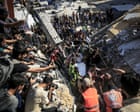
When a multi-storey structure collapses because structural integrity was compromised by prior military strikes, the casualties don't stop with the initial blast. That grim reality played out overnight in Gaza City, where a war-damaged building came crashing down, killing at least 20 people—including multiple children—and trapping dozens of others beneath tons of concrete.
What makes this disaster worse isn't just the sudden loss of life. It’s the agonizing, slow-motion search for survivors constrained by an almost total lack of basic heavy equipment.
The Anatomy of a Preventable Secondary Disaster
The building in Gaza City had already sustained heavy damage from prior Israeli strikes during the ongoing conflict. Yet, hundreds of displaced people—roughly 100 individuals spanning about 10 families—had crowded into the fractured structure and set up makeshift tents right along the roads beside it.
Why would anyone stay in a compromised building? The answer is brutally simple. There is nowhere else to go.
When housing options vanish entirely, people take impossible risks just to have a roof over their heads or a patch of shade for their kids. Civil defense teams had previously issued warnings about structures destabilized by bombardments, but warnings mean nothing when the alternative is sleeping out in the open without shelter amid heavy weather or ongoing displacement.
Digging With Bare Hands
Rescue operations at the site quickly turned into a heartbreaking struggle against time and physics. Alessandro Mrakic, head of the UN Development Programme's Gaza office, pointed out the stark reality on the ground: responders lacked the proper machinery and heavy equipment required to lift large concrete slabs safely.
Instead of cranes and hydraulic rescue tools, local volunteers, civil defense workers, and relatives used their bare hands, shovels, and basic hand tools to claw through the debris.
Voices could still be heard calling out from under the rubble hours after the collapse. Every minute counts in those scenarios, but rescue efforts crawl forward when you're shifting concrete blocks piece by piece.
The Broader Infrastructure Collapse
This single incident highlights a massive, underreported crisis across the strip: structural decay on a massive scale. International organizations and local officials estimate that hundreds of other buildings across Gaza remain at high risk of sudden collapse.
Restricting the entry of heavy machinery, clearance equipment, and reconstruction materials creates a secondary humanitarian catastrophe. While restrictions are officially justified by security policies to keep dual-use equipment out of the hands of militant groups, the practical effect on the ground is that civil defense workers cannot clear rubble or stabilize dangerous facades safely.
Families continue to pitch tents next to ticking time bombs of concrete and twisted rebar because the housing deficit is total. Until structural assessments, clearance tools, and safe temporary shelter options become widely available, tragedies like the one in Gaza City will keep repeating.
The search in the dust of Gaza City is winding down, but the underlying structural danger facing hundreds of thousands of displaced residents remains entirely unaddressed.