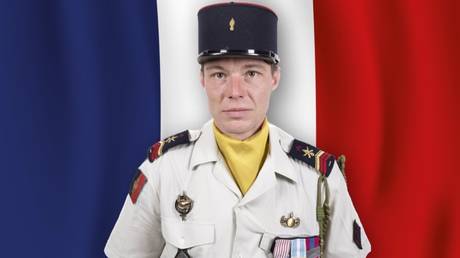
A French soldier has died following an attack in southern Lebanon. It’s a headline that sounds tragically familiar, but the context behind this specific loss signals a dangerous new reality for peacekeeping forces in the region. When we talk about UNIFIL—the United Nations Interim Force in Lebanon—we aren't just talking about a buffer zone. We’re talking about thousands of troops caught in the middle of a high-stakes crossfire that has grown increasingly unpredictable since late 2023.
France has historically been one of the biggest contributors to this mission. Their presence isn't just about manpower. It’s about a long-standing diplomatic tie to Lebanon that dates back decades. But as the conflict between Israel and Hezbollah escalates, these soldiers are no longer just observing. They’re targets, whether by intent or by being in the wrong place during a drone strike.
Why the Lebanon attack on French troops changes the math for Paris
This isn't a simple case of "accidental" damage. The environment in southern Lebanon has turned into a tactical nightmare. French officials confirmed the death of the soldier following an incident that involved heavy fire in a zone where UNIFIL forces have been stationed for years. What makes this significant is the timing. It happens as the international community desperately tries to prevent a full-scale regional war.
The French military doesn't just send anyone to Lebanon. The troops there are often seasoned, part of the "Operation Daman" contingent, which is the French name for their contribution to UNIFIL. They provide everything from demining teams to heavy infantry and radar surveillance. When one of them goes down, it hits the French Ministry of Armed Forces hard because it forces a conversation they’ve been trying to avoid: is the mission still viable?
You’ve got to understand the geography. The "Blue Line"—the border between Lebanon and Israel—is a series of ridges and valleys where visibility is often poor. Hezbollah knows every inch of it. The IDF (Israeli Defense Forces) has the eyes in the sky. The UN sits in the middle in white 4x4s and fortified posts. It's a sitting duck scenario. If you're on the ground, you're basically hoping that the deconfliction lines between the various militaries actually hold up.
The growing list of UNIFIL incidents
This death doesn't exist in a vacuum. Over the past few months, we've seen multiple reports of UNIFIL positions being hit by tank fire, small arms, and artillery.
- Towers have been toppled.
- Cameras have been shot out.
- Communication bunkers have been breached.
Usually, the UN issues a sternly worded press release. They call it a "grave violation of international law." But for the soldiers on the front lines, those words don't stop a 155mm shell. The French government has been increasingly vocal, alongside Italy and Spain, demanding that both the IDF and Hezbollah respect the sanctity of the UN zones. It hasn't worked.
The problem with Resolution 1701
Everyone loves to cite UN Resolution 1701. It’s the document that’s supposed to keep Hezbollah south of the Litani River and ensure only the Lebanese Army and UNIFIL have weapons in the area.
Let's be real: that resolution hasn't been fully enforced in years.
Hezbollah has built an extensive network of tunnels and launch sites right under the nose of the international community. On the flip side, Israel regularly enters Lebanese airspace. The French soldier who died was essentially patrolling a ghost of a treaty. When a soldier dies in a mission that feels like it has no clear exit strategy or enforcement power, the domestic pressure back in France starts to boil.
I've talked to folks who follow French defense policy closely. There’s a growing sense of frustration. You're asking young men and women to put their lives on the line for a "peace" that neither side of the actual conflict seems interested in maintaining right now. It's a brutal position to be in.
Technical realities of the modern Lebanon battlefield
The tech has changed. This isn't the 2006 war.
- FPV Drones: Cheap, fast, and deadly. They don't always distinguish between a blue helmet and a combatant.
- Precision Munitions: Even when a strike is "precise," the blast radius in dense Lebanese villages is unforgiving.
- Signal Jamming: The electronic warfare in the area is so thick that sometimes units lose contact with their command centers.
When a French soldier dies in this environment, the military has to determine if it was a targeted hit or a byproduct of the chaos. In recent cases, the French have been quick to point out that their positions are well-marked. They aren't hiding. Everyone knows where they are. That makes these "accidents" much harder to swallow.
What happens to the French mission now
France isn't going to pull out tomorrow. That’s not how they operate. Paris sees itself as the protector of Lebanese sovereignty. If they leave, the last bit of international oversight in the south vanishes. It would basically be an invitation for an even more violent escalation.
However, expect the rules of engagement to tighten. You’ll likely see less foot patrols and more "static defense." This means soldiers stay behind concrete walls and Hesco barriers instead of interacting with the local population. It makes them safer, but it also makes the mission less effective. You can't gather intelligence or keep the peace if you're stuck in a bunker.
The death of this soldier will trigger another round of diplomatic finger-pointing in New York and Paris. President Macron has already been active in trying to broker some kind of ceasefire, but this loss makes his hand much harder to play at home. Critics of the government will ask why French blood is being spilled for a stalemate.
The ripple effect on European defense
France isn't the only country watching this. Italy has over a thousand troops there. Spain has a massive contingent. If the French start questioning the risk-to-reward ratio, the entire UNIFIL structure could crumble. We are looking at a potential exodus of European peacekeepers if the "incidents" keep turning into fatalities.
The reality on the ground is that the "interim" in UNIFIL has lasted since 1978. It's one of the longest-running UN missions in history. But "interim" isn't supposed to mean "forever war."
If you're following this story, don't just look at the casualty count. Look at the equipment being moved. Look at whether the French start moving their heavy Leclerc tanks closer to the front or if they start pulling back into more fortified bases. That’s your real indicator of how bad things have gotten.
The death of a French soldier in Lebanon is a tragedy, but it’s also a warning. The buffer is thinning. The diplomacy is failing. For the troops on the ground, the "Blue Line" has never looked more like a bullseye.
Stay informed by tracking official updates from the French Ministry of the Armed Forces (Ministère des Armées) and the UNIFIL official press office. Avoid social media rumors about specific names until the families have been formally notified and the state has released its official tribute. Respect the process. It's the least we can do for those on the line.