The feel-good media machine loves a centenarian hand-shake story. Recently, the press fell over itself celebrating Knoebels Amusement Resort turning 100, focusing heavily on a wholesome anecdote about the owner "pinky swearing" never to charge a gate admission fee. It is a heartwarming narrative. It is also an absolute masterclass in distraction.
While regional theme park bloggers swoon over the nostalgia of a free-admission park, they completely miss the economic mechanics at play. They treat "free admission" as a charitable act of pure altruism. It isn't. It is an aggressive, brilliantly executed monetization strategy that exploits consumer psychology far better than Disney's multi-day passes or Six Flags' season subscriptions.
Stop looking at Knoebels as a quaint relic of Pennsylvania history. Start looking at it for what it actually is: a highly sophisticated psychological pricing model that proves everything you think you know about vacation value is fundamentally wrong.
The Illusion of the Open Gate
The "lazy consensus" in travel journalism assumes that charging a ticket price at the gate is the ultimate metric of a park's corporate greed. If Disney charges $150 just to step onto the property, then a park that charges $0 must be the hero of the working class.
This is a massive analytical failure.
When a consumer pays $150 upfront, a psychological phenomenon known as the sunk cost effect kicks in, but with an inverse benefit to the buyer. Once that money is spent, every single ride, show, and experience inside the park feels "free." The friction of spending has been removed entirely for the rest of the day. You ride a roller coaster five times, and your perceived cost-per-ride plummets.
parks like Knoebels turn this dynamic entirely on its head through a pay-as-you-go, ticket-book, or smart-band system.
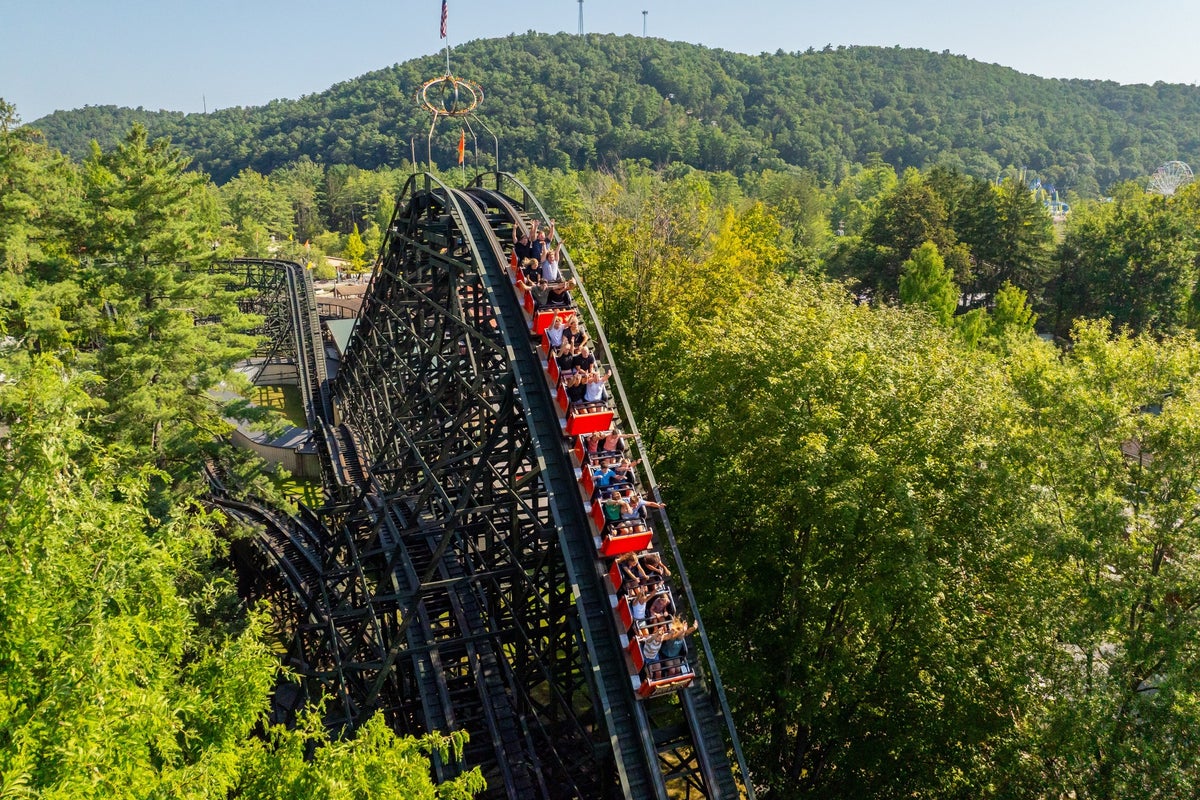
You do not pay to enter, but you pay for everything you do. Want to ride the legendary wooden coaster Phoenix? That will be a specific number of tickets. Want to ride Twister? Hand over more tickets.
By decoupling the admission price from the experience, the park shifts the financial burden from a macro-transaction (the gate) to a relentless stream of micro-transactions. I have spent decades analyzing consumer spend patterns in regional entertainment venues, and the data is consistent: human beings are notoriously terrible at tracking cumulative micro-transactions. You do not realize you are spending $120 a person until your pockets are empty and you are standing at a wooden booth buying your third ticket booklet of the afternoon.
Micro-Transactions and the "Carnival Trap"
Let us dismantle the premise of the "People Also Ask" search queries that inevitably pop up around this topic: Is a free admission park cheaper for a family?
The honest answer is: Only if you do not actually do anything.
If you are a grandparent who genuinely wants to sit on a bench, eat a single slice of pizza, and watch your grandchildren spin in circles on the Grand Carousel, yes, the model works in your favor. But for the average family of four looking for a full day of amusement, the pay-by-ride model introduces a toxic variable: experience friction.
Every single attraction requires a financial decision.
- "Should we ride this coaster again?" That costs $6 more per person.
- "Can we do the log flume?" That is another $5.50.
Instead of a carefree day of escapism, parents are forced to act as micro-managing accountants, constantly weighing the financial utility of a three-minute ride against their remaining ticket balance. It turns leisure into a series of rolling budget negotiations.
Amusement parks that use this model are not rejecting modern capitalism; they are mastering it. It is the exact same monetization framework used by the mobile gaming industry. You download the app for free (free gate), but if you want to actually enjoy the game without waiting hours, you buy digital gems (ride tickets).
We rail against video game companies for this predatory design, yet we write glowing profiles about it when the delivery mechanism is a century-old wooden roller coaster in Elysburg.
The True Cost Breakdown: Fixed vs. Variable
To understand why the "pinky swear" is a brilliant business move rather than a financial sacrifice, look at the operational risk distribution.
| Park Type | Revenue Risk | Consumer Psychology | Per-Capita Spend Drivers |
|---|---|---|---|
| Fixed Gate (Disney/Universal) | Low (Guaranteed upfront cash) | High entitlement, low transaction friction inside | Premium food, merchandise, skip-the-line passes |
| Free Gate (Knoebels/Fairs) | High (Weather dependent) | Low initial barrier, constant micro-friction | High volume ride tickets, food, high-margin games |
In a fixed-gate model, the park takes your money before you even see a ride. If it rains at 2:00 PM, they already kept your entry fee. In a free-gate model, the park assumes the risk that you might leave early without spending.
How do they mitigate this risk? By turning their food and beverage operations into high-margin profit engines that rival their rides.
Knoebels is famous for its award-winning park food. This is not accidental. When consumers feel they "saved" money by not paying an admission fee, their psychological defenses drop regarding secondary spending. They are far more likely to splurge on premium snacks, sit-down meals, and souvenir merchandise because they believe they are "playing with house money."
The park isn't losing out on admission; they are just collecting it at the food stand and the ticket booth instead of the turnstile.
The Operational Nightmare of the Open Perimeter
There is a dark side to the free-admission model that industry insiders rarely discuss publicly, but every park operations manager knows intimately: crowd control and security.
When a park has a $0 barrier to entry, it ceases to be a controlled entertainment environment and becomes a public square. This creates immense operational challenges:
- Capacity Inflation: The park fills up with non-spending visitors who clog walkways, fill parking spaces, and lengthen lines for basic amenities without contributing to the ride or food revenue streams.
- Security Overhead: A paid gate acts as a natural filtering mechanism. An open gate means anyone can wander onto the property at any time, requiring a significantly more robust, yet invisible, security presence to maintain a family-friendly environment.
- Infrastructure Strain: Restrooms, trash removal, and walkway maintenance are utilized by 100% of the crowd, but funded only by the percentage that actually purchases tickets or food.
To survive with these liabilities for 100 years, a park cannot just be "good." It has to run an incredibly tight operational ship where the margin on a tub of french fries or a wooden coaster ride subsidizes the infrastructure cost of the person who walked in just to use the bathroom and enjoy the air conditioning.
Stop Romanticizing Nostalgia
The collective obsession with the Knoebels "pinky swear" highlights a broader problem in how we consume travel and entertainment journalism. We are so desperate for corporate antitheses—for examples of businesses that supposedly reject the bottom line in favor of smiles—that we blind ourselves to basic economic reality.
A business does not survive for a century on sentimentality. It survives on adaptability.
The pay-as-you-go model works for Knoebels because of their specific geographic location, their generational land ownership, and a fiercely loyal regional demographic that views the park as a community park rather than a tourist destination. If you attempted to scale this model to a major market, it would collapse under its own weight within a fiscal quarter.
The contrarian truth is simple: You are always paying for the gate. You either pay it all at once at 9:00 AM, or you pay it in a hundred tiny, agonizing increments throughout the afternoon while trying to convince yourself that you got a bargain.
Stop letting nostalgia warp your financial literacy. The open gate is an invitation to spend, not a gift.