A 19-year-old woman filed a civil lawsuit in Cook County Circuit Court in October 2026 alleging she was raped at an Alpha Delta Phi fraternity party near the University of Chicago in February 2026, claiming the national fraternity and local chapter ignored warning signs stretching back to 2009. The complaint names Alpha Delta Phi, Inc. and the Chicago Society of Alpha Delta Phi as defendants, lists the University of Chicago as a respondent in discovery, and points to prior reports of alleged sexual assaults at the Hyde Park house as proof that safety safeguards were treated as formalities rather than enforceable rules.
The filing puts a spotlight on an uncomfortable structural problem in college town nightlife. When a serious allegation surfaces at an off-campus or unaffiliated fraternity house, the blame often bounces between national headquarters, local alumni corporations, student chapters, and nearby universities. Years of reporting on campus and off-campus Greek life show a recurring pattern. Organizations publish risk-management manuals, issue statements promising cooperation after a crisis hits the news, and leave day-to-day enforcement to college students hosting crowded parties with alcohol. In similar news, take a look at: Why Olive Harvest Headlines Miss the Real War Over Land and Livelihoods.
What the Lawsuit Alleges Happened in Hyde Park
According to court filings and legal summaries reported in October 2026, the plaintiff—identified in the suit as Jane Doe and not a University of Chicago student—attended a gathering on February 7, 2026, at the Alpha Delta Phi house at 5747 South University Avenue in Chicago's Hyde Park neighborhood. The complaint alleges that a fraternity member gave her a shot of alcohol soon after she arrived, after which she quickly felt unsteady and lightheaded. She was allegedly taken to an upper-floor bedroom closed to guests, assaulted while unable to consent, and left unconscious before friends helped her out of the building and she reported the incident to Chicago police the next morning.
Police investigations and civil litigation operate on very different tracks. A criminal probe asks whether prosecutors can prove guilt beyond a reasonable doubt against an individual. A civil negligence suit asks a different set of questions. Did the property owners and supervising organizations know about foreseeable risks? Did they take reasonable steps to prevent harm? Associated Press has analyzed this critical topic in great detail.
In this case, the lawsuit argues that Alpha Delta Phi had prior notice of alleged sexual misconduct tied to the chapter and its house. The complaint cites two reported sexual assaults at the house within five days in January 2009, an anonymous social media post in September 2022 alleging another assault at the location, and other alleged reports between 2009 and February 2026. Allegations in a civil complaint are unproven claims until tested in court, and the defendants have the right to contest them, yet the timeline highlights how easily warnings can accumulate without triggering lasting structural changes.
The Accountability Gap Between Fraternities and Universities
Watch enough campus misconduct cases unfold and the choreography becomes familiar. A lawsuit or police report lands. Within hours, statements arrive expressing concern, noting that a member has been suspended, or emphasizing institutional boundaries.
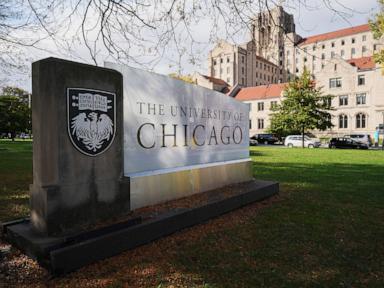
In the Hyde Park litigation, the University of Chicago is named as a respondent in discovery rather than a defendant. Under Illinois procedure, a respondent in discovery is a party believed to hold information relevant to identifying potential defendants or clarifying facts—a legal mechanism distinct from being accused of direct civil liability. University officials have stated that fraternities and sororities operating near campus are not officially recognized, affiliated with, or regulated by the university, while noting that students remain subject to university conduct policies and that the institution cooperates with law enforcement.
That distinction matters enormously in practice. When a university has limited formal oversight over a house or chapter, its direct leverage over house rules, guest entry, or physical security is constrained. At the same time, national fraternities sit hundreds of miles away—Alpha Delta Phi, Inc. is based in Minneapolis—relying on local chapters, alumni boards, and event monitors to carry out policies on Friday and Saturday nights.
Paper policies do not stop harm at a crowded party unless someone is actually checking doors, guarding private rooms, and enforcing consequences before a crisis occurs.
Consider a hypothetical example that illustrates how enforcement breaks down on the ground. Suppose a national fraternity requires sober monitors at stairwells and locked doors on residential floors during large social events. On paper, the organization looks compliant. In reality, a 20-year-old chapter member assigned to watch a hallway leaves to grab food or socialize, a guest wanders upstairs looking for a quiet place or a restroom, and nobody logs the lapse until months later during a lawsuit. Without independent verification and real penalties for non-compliance, rules exist mostly as legal cover.
Why Prior Incidents Rarely Force Immediate Overhaul
One of the sharpest points raised in the lawsuit is what allegedly did not happen after earlier reports. The complaint contends that despite prior reports and warnings, the national organization did not impose an interim suspension on the chapter, restrict its social events, require residential floors to be secured during parties, or mandate sober monitors at access points to upper living spaces.
There are several practical reasons why organizations often stop short of sweeping restrictions after an isolated report or an anonymous post.
- Evidentiary hurdles: Early reports, campus inquiries, or social media posts may lack formal findings or criminal charges, leading leadership to treat them as unverified rather than patterns requiring immediate intervention.
- Decentralized decision-making: Alumni housing corporations may own or manage the physical building, student officers run day-to-day chapter life, and national headquarters oversee charters, creating diffuse responsibility when trouble brews.
- Fear of pushback: Cracking down on social events can trigger fierce resistance from active members and alumni who view strict limits as overreach.
- Delay between incident and lawsuit: Civil suits often arrive months after an alleged event—here, the alleged incident occurred in February 2026 and the lawsuit was filed in October 2026—meaning public scrutiny can lag behind the underlying events by nearly a year.
There is a legitimate counter-argument worth weighing, too. Overly broad knee-jerk sanctions based on unsubstantiated rumors can penalize innocent people or push gatherings further off the radar into unmonitored private rentals or off-campus apartments where safety protocols are even weaker. Real accountability requires disciplined investigation and clear standards, not performative crackdowns. Still, doing almost nothing when multiple warnings pile up over years carries its own steep cost.
What This Moment Means for Students and Neighbors
This litigation did not land in a vacuum. News reports in October 2026 also noted a separate Chicago police investigation into an alleged sexual assault at a nearby Alpha Epsilon Pi fraternity house, with university officials and fraternities addressing public safety concerns around Hyde Park social events. Even though the two matters are separate, overlapping headlines quickly reshape how students, parents, and neighbors view off-campus party culture.
For anyone attending college parties or living near Greek houses, relying on a host's reputation or a fraternity's national brand is a gamble. A chapter's history rarely travels smoothly to every freshman, transfer student, or visitor from another campus who walks through an open front door.
If you or someone you know is heading to an off-campus or fraternity gathering, take practical steps before walking in: establish a clear check-in plan with friends, keep your own drink in hand from the moment it is poured, know the address and nearest safe exit or rideshare pickup point, and save local emergency and campus safety numbers in your phone.


