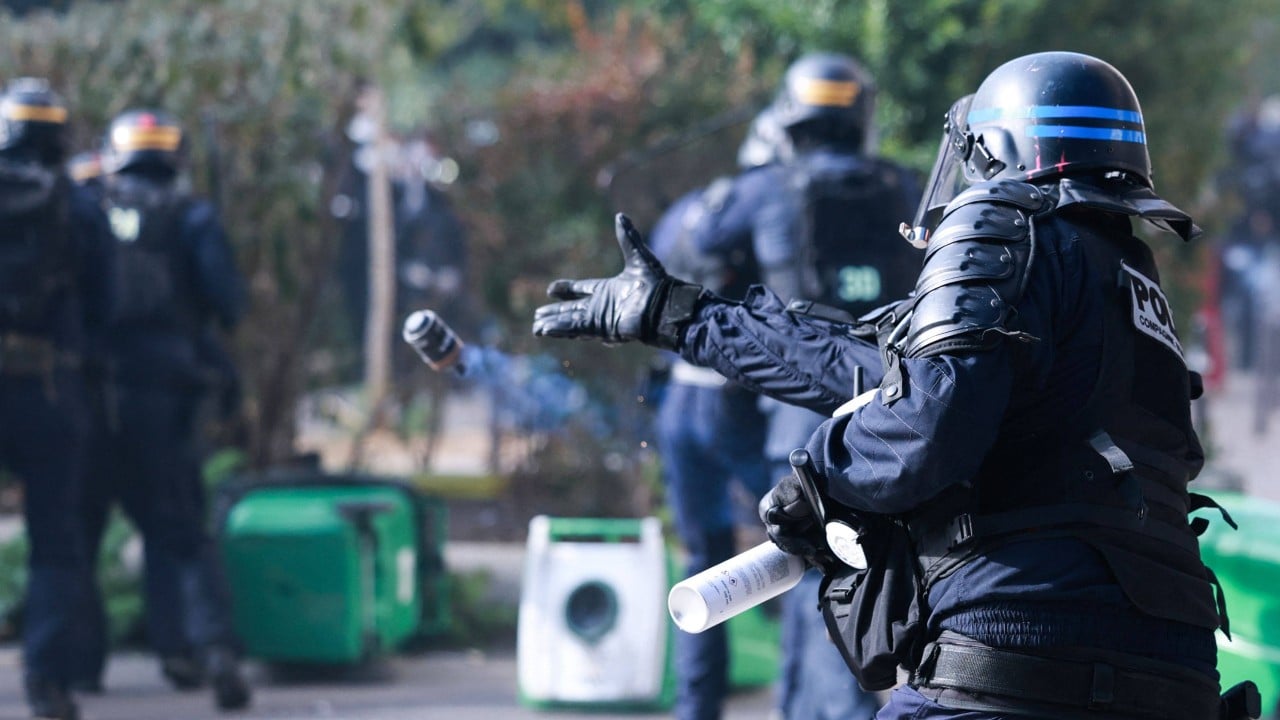
When a fifteen-year-old student lost his hand during a demonstration in northern France, the state's heavy-handed approach to crowd control crossed a line that could no longer be ignored. Interior Minister Laurent Nunez announced an immediate suspension of stun grenades for policing school protests. It took a life-altering mutilation to trigger a policy change that human rights groups had demanded for years.
The protests weren't born in a vacuum. Tens of thousands of students flooded the streets across France to protest crumbling school infrastructure, soaring teacher shortages, and a widening educational inequality gap. OECD data showed French fifteen-year-olds tumbling in reading and math scores, sliding further than almost any other developed nation over the past decade. Students were angry, cold in poorly heated classrooms, and tired of empty political promises.
Instead of addressing root infrastructural failures early, authorities met adolescent frustration with tear gas, rubber bullets, and explosive dispersal devices.
The Dangerous Reality of Less-Lethal Weapons
We call them "less-lethal," but that term hides a terrifying reality. Stun grenades—often referred to as flash-bangs or grenades de désencerclement—are designed to disorient crowds through deafening noise and blinding light. Many variants, however, contain explosive charges and hard shrapnel or rubber casings that act like miniature landmines when detonated at ground level.
Human rights organizations like Amnesty International have pointed out the obvious for years: throwing high-powered explosives into dense crowds of teenagers is a recipe for disaster. You cannot control where a rolling metal canister bounces. When it explodes near a teenager's feet or hands, the physics of the blast do catastrophic damage.
The incident in Lens, where a teenager suffered devastating injuries to his hand, forced the government's hand. While Interior Minister Nunez framed the measure as a temporary suspension limited strictly to high school student movements "until light has been shed," critics argue that a temporary pause doesn't go far enough. Amnesty International and various civil liberties groups are demanding a permanent, total ban on these weapons during all public demonstrations. Protests should never resemble active combat zones.
The Cost of Institutional Neglect
The government finds itself trapped in a fiscal and political corner. Prime Minister Sébastien Lecornu and President Emmanuel Macron's administration face intense pressure to slash public spending and rein in national debt. At the same time, education ministers admitted that dozens of high schools suffered severe fire and vandalism damage during the peak of the unrest, racking up tens of millions of euros in repair bills and locking thousands of students out of classrooms.
Politicians on the extremes have capitalized on the chaos. Marine Le Pen's far-right faction has pushed hardline rhetoric demanding that convicted student vandals or their families foot the bill for property damage. Meanwhile, hard-left politicians like Jean-Luc Mélenchon's France Unbowed have backed the student cause, accusing the state of orchestrating violent police repression against minors.
Polling indicates that the public sees right through the political posturing. Surveys show that a vast majority of French citizens view the students' core grievances—broken boilers, overflowing classrooms, and missing teachers—as entirely legitimate, even if many disapprove of the blockades and street violence.
Where Public Safety Meets Accountability
Suspending the use of one dangerous riot control tool is a start, but it doesn't solve the structural rot within French public education or heal the deep distrust between youth and law enforcement. Over six thousand people, the vast majority of them minors, have been caught up in arrests since the movement began. Hundreds of students and police officers alike have sustained injuries in street skirmishes that could have been avoided with proactive dialogue instead of militarized containment.
If policing in a democracy relies on public consent, turning explosive weaponry on children protesting for better textbooks destroys that consent completely. The French government promised action plans to fix school infrastructure and address staffing crises. Until those promises materialize on the ground, changing tactical gear manuals will do little to cool the anger burning in the streets.