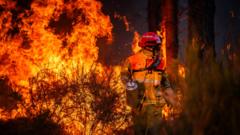
France is pointing fingers, and the numbers are staggering. Over 400 people have been arrested or detained this summer in connection with the catastrophic wildfires scorching the country. With more than 120,000 hectares turned to ash, the government wants heads to roll.
Among those detained are dozens of minors, careless tourists, and suspected arsonists facing years behind bars. But focusing entirely on criminal cuffs ignores a much harsher reality. You can arrest every bad actor in sight, yet the forests will keep burning.
The Human Element Behind the Blazes
Official statistics show that roughly nine out of ten French wildfires trace back to human hands. That sounds like a clear-cut case for law enforcement. If humans start them, stop the humans.
Reality is messier. A massive chunk of these incidents aren't malicious acts of arson. They are accidents born from bone-dry conditions and everyday ignorance. Think about a carelessly tossed cigarette butt or an unauthorized barbecue on a blistering afternoon.
French interior ministry data reveals a wild mix of suspects. You have a 23-year-old man in the Var region accused of deliberately setting a streak of fires. Alongside him, prosecutors have hauled in homeless individuals and people with severe developmental disorders over dropped cigarette ashes. Legal experts are already pushing back. Some defense lawyers argue that sweeping, aggressive arrests look more like political theater than sound justice, noting that many detained individuals will never face a conviction that sticks.
Why the 30 Rule Changes Everything
To understand how easily a disaster starts, look at what experts call the thirty rule. Fire safety specialists point out that a blaze can ignite with terrifying speed when temperatures hit thirty degrees Celsius, humidity drops below thirty percent, winds stay under thirty kilometers per hour, and at least thirty percent of a cigarette remains unburned.
When a severe drought grips the countryside, those thresholds drop even lower. Throw a tiny spark into a parched pine forest, and the landscape erupts within seconds. Prosecutors like Bordeaux's Renaud Gaudeul argue that treating minor negligence as a severe crime of endangering lives is the only way to shock the public into compliance. Critics counter that throwing heavy jail sentences at a homeless person or a confused teenager does nothing to fix the systemic vulnerabilities of the ecosystem.
Shifting Blame Away From Structural Failures
Pointing the finger at individual culprits lets authorities dodge a tougher conversation. Critics and environmental analysts are asking a blunt question. Is the government itself underprepared?
France just smashed historical records for land lost to fire over the last half-century, blowing past previous devastation benchmarks from 1976 and 2022. When climate conditions shift this aggressively, old firefighting playbooks break down.
President Emmanuel Macron has called the current wave completely unprecedented. He insists that long-term survival requires rethinking how the country manages its woodlands. Yet, heavy-handed arrests make great headlines while actual forestry management lags behind. Replanting trees the exact same way guarantees the next heatwave will yield the same charcoal results.
What Actually Needs to Happen Now
If you want to stop watching forests vanish every summer, policy needs to pivot from reactive punishment to proactive landscape management.
- Redesign forestry zones: Stop planting dense, single-species timber farms that act like fuse boxes. Transition to mixed-species forests that resist natural ignition.
- Enforce strict seasonal bans: Zero tolerance for open flames near high-risk zones, backed by heavy digital monitoring rather than relying on catch-as-catch-can policing after the smoke clears.
- Upgrade local infrastructure: Invest heavily in localized water reserves and rapid-response aerial assets so small flare-ups don't mutate into multi-thousand-hectare catastrophes.
Punishing offenders satisfies a primal urge for retribution. It feels good to see handcuffs on someone who caused a catastrophe. But until France treats structural climate adaptation with the same aggression it brings to criminal courtrooms, the ashes will keep piling up.


