Scars do not check diplomatic itineraries. They do not care about runway clearances, motorcade routes, or the expectations of millions of people waiting behind metal barricades under a blazing tropical sun. They pull when you twist. They ache when humidity settles into the bones. They remind you, with every quiet catch of breath, that the body is made of fragile tissue rather than authority.
Exhausted. That is the simplest word for what happens after cancer surgery, even when the surgeons step out of the operating room wearing quiet confidence and speaking in measured medical terms. Recovery is not a straight line upward. It is a series of small negotiations between pride and stamina. You walk down a hospital corridor once, twice, three times, counting tiles to prove you are still whole, while an invisible ledger tallies every ounce of energy spent.
Now picture taking that tender, recently stitched body and boarding an airplane bound for Latin America.
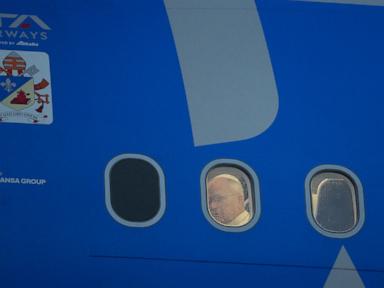
For Pope Leo, stepping onto the tarmac in a continent that carries nearly half of the world's Catholics is never just a trip. After cancer surgery, it becomes a test of endurance measured in altitude, heat, crowds, and time zones. A headline can reduce the moment to a neat sequence of events: surgery happened, recovery followed, the journey began. Headlines are tidy. Real human bodies rarely are.
What Recovery Actually Feels Like Behind Closed Doors
When people hear that a prominent leader has undergone cancer surgery, their minds often jump straight to two extremes. Either they imagine a sudden collapse, or they assume a clean reset once the operation ends. Neither captures the middle ground where most real recovery lives.
To understand the weight of this journey, consider a hypothetical character—let us call her Beatriz, a sixty-eight-year-old school administrator in Lima who spent two months recovering after abdominal tumor surgery of her own. Beatriz is not famous. Nobody tracks her blood pressure in morning briefings. Yet her days after discharge follow a rhythm anyone who has survived oncology surgery recognizes instantly.
Morning begins slowly. You sit on the edge of the bed and wait for dizziness to pass. You dress carefully so waistbands do not rub against healing skin. You eat smaller meals because fatigue arrives before hunger does. By mid-afternoon, a heavy, leaden tiredness pulls at your eyelids, not from laziness, but because your immune system and tissues are still doing quiet repair work out of sight.
Beatriz's doctors told her she was doing well. Her scans looked encouraging. Still, when her daughter asked if she felt ready to travel across town for a family gathering, Beatriz hesitated. "I want to go," she admitted, her voice tight with frustration. "I just don't trust my battery yet."
That word—battery—gets closer to the truth than most medical jargon. After cancer surgery, stamina behaves like an old phone battery that drops sharply from forty percent to ten without warning. You can look composed in a photograph, smile for a camera, and speak clearly for twenty minutes, only to feel hollowed out the moment the door closes behind you.
The Invisible Stakes of a High-Altitude Journey
Latin America does not offer gentle travel. Even for someone in peak health, a multi-stop tour across the region demands relentless movement. There are tarmac arrivals in scorching coastal heat and rapid transfers into cities sitting high in the Andes, where thinner air makes every staircase feel steeper and every speech demand deeper breath support.
Consider the sheer physical logistics stacked against a recovering patient. Long flights dry out mucous membranes and swell extremities. Crowded motorcades mean standing, waving, and absorbing heat reflected off asphalt. Long liturgical ceremonies and public addresses require vocal projection and mental focus even when pain or stiffness is whispering in the background.
Medical teams traveling with a high-profile patient plan for contingencies that onlookers never see. They monitor hydration like hawks. They guard sleep windows fiercely. They watch posture, gait, and facial color for subtle signs of strain—a slight wince when rising from a chair, a slower pace between vehicles, a pause that lasts half a second longer than usual.
Why take those risks so soon after major surgery?
Because presence, in this tradition, is part of the message. A letter sent from Rome can comfort. A broadcast screen can reach millions. Yet standing physically among people who feel overlooked, economic strain, political exhaustion, or quiet abandonment carries a weight no studio camera can replicate. When a leader shows up despite physical vulnerability, the gesture speaks in a language beyond policy statements.
There is also a deeper human truth at play here. People living with serious illness often feel set apart from active life. Watching someone go back out into the world after cancer surgery—not pretending nothing happened, yet refusing to stay locked behind heavy curtains—can feel strangely validating. Vulnerability is not erased. It is carried openly.
Why Latin America Holds Such Sharp Meaning
To grasp why this trip matters so intensely, you have to look at the relationship between Rome and Latin America over recent decades. Latin America has long been the demographic heartland of global Catholicism, home to massive congregations, vibrant parish life, and deep devotion. At the same time, the region has experienced shifting religious landscapes, economic turbulence, migration pressures, and widening gaps between wealthy enclaves and working neighborhoods.
In places like São Paulo, Bogotá, Mexico City, or Buenos Aires, faith is rarely an abstract Sunday habit. It is woven into street processions, neighborhood soup kitchens, grief after violence, and stubborn hope in neighborhoods where public services fall short. When people line a route for hours under harsh sun just to catch a glimpse of a passing vehicle, they are not merely chasing celebrity. Many are bringing private burdens—an unemployed son, a sick parent, a fractured family—and placing them inside a shared public moment.
When the traveler arriving to meet them is himself recently recovering from cancer surgery, the dynamic shifts. The crowd sees authority, yes, with all the white cassock and protocol that entails. Yet they also see a man whose body has recently been tested by illness. That shared awareness of human frailty can soften formality into something rawer and more direct.
I know what it feels like to stand in a room after serious medical treatment and wonder whether you have enough left to give anyone else. You smile. You listen. Inside, you are rationing your strength like water in a drought. Watching someone step into thousands of expectant eyes under those conditions makes you look twice at every schedule, every crowd shot, every hand extended from a barricade.
Separating Fact From Assumption When Health Is Private
Whenever a public figure travels soon after cancer surgery, speculation fills every quiet corner. Rumors travel faster than medical bulletins. Some observers assume a trip means a complete, effortless cure. Others assume the opposite—that pushing forward is reckless or hides worse news.
Both assumptions miss how real oncology care works.
Cancer is not a single uniform event with a single script. Surgery can be curative, debulking, or diagnostic, depending on the type, stage, and location of the disease. Even when a surgeon removes a tumor cleanly, recovery depends on factors outsiders cannot see from a television broadcast: whether adjacent tissue or lymph nodes were involved, what follow-up therapies or medications are part of the plan, how sleep and appetite are holding up, and how steadily strength is returning week by week.
Admittedly, outside observers rarely get every clinical detail, and it is fair to feel some uncertainty when headlines move faster than full medical context. That uncertainty is part of the story. A responsible reader does not invent medical certainty where none is given, nor treat a public appearance as proof of invulnerability. Instead, you look at what is observable: the pace of appearances, the support around the traveler, the balance between public duty and rest.
Even with careful planning, travel after cancer surgery carries real trade-offs. Every extra stop adds fatigue. Every delayed meal or shortened rest window taxes recovery. A schedule packed too tightly can turn a meaningful pastoral visit into a grueling marathon that leaves the traveler depleted for weeks afterward.
The Quiet Choreography Behind Every Public Stop
Imagine watching a single afternoon on this tour unfold in slow motion.
The car pulls up outside a modest parish church or community hall. Outside, hundreds of people have waited since early morning, clutching handmade signs, rosaries, and phone cameras. Inside, cool air offers brief relief from the street heat. A small group of local workers, families, and volunteers waits quietly.
For the visitor, the transition from vehicle to doorway is a physical threshold. Step down carefully. Keep balance on uneven pavement. Breathe steadily. Offer a warm greeting without rushing past the person right in front of you.
A few minutes of unscripted conversation can mean more to the people in that room than a polished address before ten thousand. A mother holds up a photograph. A young man shares what keeps him going. The visitor listens, nods, speaks a few measured words, and offers a blessing. Then it is back to the car, another stretch of road, another crowd, another shift in temperature.
Later, behind closed doors, the pace drops. Shoes come off. Legs go up. Quiet replaces noise. If you have ever watched someone close to you recover from major surgery, you know that quiet hour is where the real work of staying upright happens.
What This Journey Asks of Those Watching
There is a temptation in modern media to turn every major trip into a scorecard. Did the crowds look huge enough? Was the speech sharp enough? Did the schedule keep up with past eras?
Those questions have their place in political and institutional analysis, yet they can blind us to the human reality sitting right in front of us. A recovering body is not a machine built to hit identical output numbers year after year. Sometimes strength looks like a booming voice and a brisk stride. Other times, strength looks like showing up measured, careful, and honest about limits.
Think back to Beatriz in Lima. Months after her surgery, she finally took a longer trip to visit relatives in another city. She needed extra rest stops. She skipped late-night gatherings. She returned tired, yet deeply alive—because staying small out of fear was no longer running her life.
A journey like Pope Leo's across Latin America carries echoes of that same tension between caution and calling. You cannot step away from every risk without shrinking life down to a waiting room. Nor can you pretend surgical scars are invisible without paying a physical price. Somewhere between those two poles lies wisdom: move forward with care, accept help where it is offered, and let presence do what noise cannot.
The plane wheels touch down. Humid air rushes into the cabin doorway. Thousands of voices rise across the tarmac, carrying hopes older than any itinerary, and a man still learning the exact measure of his post-surgery strength steps forward into the light.