Credibility does not announce its arrival. It accumulates in quiet rooms, over lukewarm coffee, in the small, unglamorous moments when a signature on a page means more than the ink that formed it.
Walk down the damp cobblestone streets of a foreign capital—say, Warsaw in late autumn, where coal smoke hangs low beneath gray skies and streetlamps hum against the chill—and you can smell the weight of history in the air. For generations, families in places like this measured security not by the thickness of their walls, but by the reliability of distant promises. When a great power says, "We stand with you," or "This agreement holds," or "You can trade in our currency without fear that tomorrow's whim will rewrite yesterday's rule," ordinary people make ordinary plans. They open bakeries. They send children to universities abroad. They sign mortgages that stretch across decades.
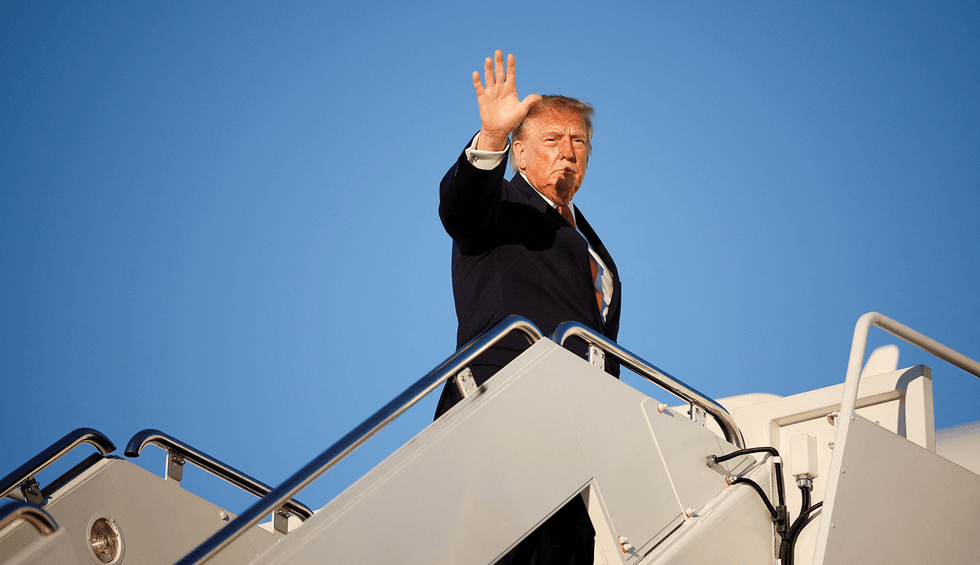
Warnings that Donald Trump's approach to foreign policy and international commitments risks blowing up American global credibility sound, at first glance, like beltway theater. Washington loves a dramatic phrase. Critics and defenders alike trade predictions like poker chips across television panels, and after enough cycles, even serious warnings start to blur into background noise.
Yet credibility is not a talking point. It is a ledger.
Consider a hypothetical character to ground how this ledger works on the ground. Let's call him Marek, a mid-level logistics planner in central Europe whose company moves medical supplies and industrial components across borders. Marek does not read foreign policy white papers before breakfast. He reads shipping manifests, customs timelines, and interest rate shifts. When a major superpower signals that alliances are transactional—that protection depends on a bill being paid on the spot, that tariffs can rise overnight on a mood or a grievance, that treaties signed by one administration can be tossed aside by the next—Marek's job changes overnight. He stops planning for five years and starts planning for five weeks. He holds extra cash in different currencies. He looks for backup suppliers in countries he barely knows.
Multiply Marek by millions of factory managers, central bankers, defense ministers, and everyday citizens from Tokyo to Brussels to Manila, and you begin to see what is actually at stake.
When a Word Stops Being a Bond
Humans have a strange habit of treating trust like oxygen. You barely notice it while it is there, filling every breath with ease. You only realize how much you depended on it the moment the air thins.
In international affairs, American credibility has long rested on two pillars that rarely get equal billing. The first is military and diplomatic reliability—the belief that security guarantees mean what they say, even when fulfilling them is inconvenient or costly. The second is institutional and economic predictability—the belief that the United States operates by durable rules, respects independent checks, honors debt, and treats allies as partners rather than marks.
Critics warning of a rupture point to a pattern of disruption: questioning long-standing mutual defense commitments, threatening sweeping tariffs even against close trading partners, pulling back from multilateral frameworks, and framing diplomacy as a zero-sum contest where every handshake has a hidden trap. Supporters of that disruptive style see something very different. They argue that old arrangements took advantage of American taxpayers, that allies coasted on U.S. muscle while running trade surpluses, and that shaking the table is the only way to force a better deal.
Both sides can point to real grievances. Pretending the old system was spotless is dishonest. For decades, Washington sometimes preached rules it bent when convenient, and some partners did underinvest in their own defense while counting on the American umbrella.
Doubt is healthy. Blindness is not.
The real danger lies in mistaking a hammer for a scalpel. When you smash a table to get people's attention, the glasses rattle, the soup spills, and sometimes the legs splinter. Once a partner concludes—rightly or wrongly—that a promise from Washington has an expiration date tied to the next election cycle or the next mood swing, you cannot simply ask for that trust back with a smile and a press release.
Think of it like a marriage where one partner keeps threatening to walk out every time dinner is late. Even if they stay for twenty years, the other person stops relaxing. They keep a separate bank account. They stop sharing their deepest worries. The house still stands, the routines continue, yet something essential has quietly hollowed out.
The Hidden Cost of Being Unpredictable
If you only watch cable news, you might think foreign policy is about speeches at summits and sharp exchanges at podiums. Out in the real world, it shows up in quieter, sharper ways.
Take the dollar. For decades, the U.S. dollar has served as the world's primary reserve currency, giving America extraordinary advantages: lower borrowing costs, immense sanctioning power, and global financial reach. That dominance was never handed down on stone tablets. It was earned through decades of relative stability, deep and open capital markets, rule-of-law norms, and the conviction that American policymakers would not casually vandalize the plumbing of global finance.
That dominance is not vanishing tomorrow morning. No rival currency has the openness, depth, or institutional trust to replace it overnight. Anyone claiming the dollar is about to collapse next Tuesday is selling fear.
Still, empires and currencies rarely fall off a cliff; they erode along the edges. When allies and trading partners worry that tariffs can become a weapon of first resort, or that financial access can turn unpredictable, central banks diversify a little more. Trade gets settled in other currencies a little more often. Regional security arrangements get built without waiting for Washington's phone call.
Consider what happens next: once nations build parallel tracks—in trade, in supply chains, in defense—those tracks do not disappear just because a new speech sounds calmer. Infrastructure has inertia. Once a port is expanded, a pipeline is routed, or a defense procurement contract is signed elsewhere, reversing course takes years and billions of dollars.
I have spent enough time watching how political shocks ripple through ordinary lives to know that people rarely panic all at once. Instead, they adapt quietly. A small business owner in Ohio wonders whether retaliatory tariffs will price her out of a market she spent ten years building. A young engineer in Taipei weighs whether security guarantees will hold if pressure mounts. A diplomat in a friendly capital spends half her day decoding mixed signals—one official saying one thing, a social media post saying another, a cabinet member contradicting both before lunch.
Confusion is expensive. Every hour spent guessing what a partner actually means is an hour not spent solving real problems together.
Allies, Rivals, and the Mirror of Power
There is an old temptation in great-power politics to believe that fear works just as well as trust, or even better.
Fear has its uses. Adversaries sometimes respect force and unpredictability when they might brush aside polite warnings. A rival who cannot be sure how far a leader will go may hesitate before making a reckless move.
Yet fear is a brittle foundation. You can bully a rival into caution for a season, but you cannot bully a coalition of democracies into genuine cooperation for a decade. Real power—the kind that shapes outcomes without needing to fight every battle on your own—multiplies when other nations choose to align with you because they trust your word and share your stakes.
History offers plenty of reminders of how fragile reputation can be. Great powers rarely lose their footing solely because an enemy defeats them on the battlefield. More often, they overextend, fracture their coalitions, or exhaust the patience of the very partners who made their reach possible.
At the same time, it is worth asking a harder question that critics of disruption sometimes dodge: why did so many Americans grow skeptical of traditional global commitments in the first place?
For years, workers in hollowed-out manufacturing towns watched factories close while elites assured them that global integration was good for everyone. Families felt the sting of offshoring and uneven trade deals while hearing lofty speeches about international order. Ignoring that anger didn't make it go away; it fueled the very populist pushback that now tests long-standing norms.
If defenders of alliances and stable international rules only recite old talking points without addressing why ordinary citizens felt left behind, they will keep losing the argument at home. Credibility abroad cannot survive if legitimacy at home is crumbling.
What Breaks First When Trust Wavers
When people talk about blowing up global credibility, they often picture a single dramatic explosion—a treaty torn up on live television, a summit walked out of in anger.
In reality, it usually looks more like hairline fractures in glass.
First comes hesitation. Allies pause before sharing sensitive intelligence or taking a risky diplomatic stand alongside Washington, wondering if support will still be there six months later.
Second comes hedging. Countries that once treated the United States as their unmistakable anchor begin quietly cultivating insurance policies with rivals and neighbors alike. You don't have to love a rival to strike a pragmatic deal with them when your main partner starts looking erratic.
Third comes the loss of moral and diplomatic voice. When a country's word feels unreliable or transactional, its ability to rally others around shared standards—whether on trade rules, human rights, or territorial sovereignty—grows thinner. Persuasion requires standing. Standing requires consistency.
None of this means the United States is powerless or finished. Far from it. Its economy remains vast, its military unmatched in reach, its universities and innovators still draw talent from around the globe, and its democratic system has weathered storms before.
Resilience is real. So is wear and tear.
Imagine—as a purely metaphorical picture—a suspension bridge spanning a wide river. The cables are thick steel, forged to carry immense weight. A few frayed strands on one side do not drop the bridge into the water today. Cars still cross. Trucks still roll. Yet engineers watching the tension gauges know that if more strands snap without repair, the margin for error shrinks. Every heavy gust of wind feels sharper.
Choosing What Kind of Promise We Are
At the heart of this debate sits a simple, uncomfortable question that no slogan can answer: what does a nation's word mean in a turbulent century?
If America's word is a rock—steady across administrations, grounded in law and alliance, firm even when tested—then partners plan around it, adversaries calculate against it, and the whole international system tilts toward stability. If that word looks like weather—bright one morning, stormy by afternoon, shaped by personal grievances or short-term leverage—then the world adapts to weather. People carry umbrellas. They stay indoors. They look for shelter somewhere else.
There is no easy reset button once that shift takes root. Trust is slow to grow, quick to bruise, and stubborn to restore.
Watch the quiet details, not just the loud headlines. Watch how long trade deals last, how allies talk behind closed doors, how markets price risk, and how ordinary people on both sides of the ocean plan for next year.
A superpower's greatest strength has never been size alone. It has been the quiet conviction across half the globe that when morning comes, the rules of the road will still hold—and the hand extended across the table will still be there.