Silence.
Before a single note of Sibelius or Walton or Tchaikovsky ever vibrates through the air of a concert hall, there is a specific kind of silence that belongs exclusively to classical music competitions. It is heavy, clinical, and thick with the scent of rosin, nervous sweat, and decades of unspoken expectation. You can feel it in your teeth. If you have ever sat in the back row of a conservatoire audition room or watched a young soloist walk across fifty feet of polished oak toward a waiting symphony orchestra, you know that the walk itself is half the battle.
For nearly half a century, that walk belonged predominantly to a very specific demographic, even when the practice rooms down the hall told a different story.
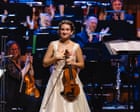
When a teenage violinist lifted her instrument under the bright television lights to claim the title of BBC Young Musician 2026, the headline writers immediately reached for the obvious hooks. They noted her age. They noted the historic nature of the evening—the first all-female grand final in the competition’s forty-eight-year history. Those are the cold, verifiable facts of the broadcast. Yet reducing that night to a tidy demographic milestone misses the real drama playing out between the wooden ribs of a three-hundred-year-old instrument and the calloused fingertips of a seventeen-year-old girl.
To understand why that final note mattered, you have to understand what happens long before the cameras turn on.
The Architecture of Invisible Pressure
Picture a hypothetical practice room in Manchester or London at six-thirty on a Tuesday morning in January. Let us call the student inside Maya, though she could be any of the hundreds of adolescents who enter the preliminary rounds of Britain’s premier classical showcase every two years.
Maya is sixteen. Her left hand has a permanent, slightly yellowed ridge on the index finger where the steel E-string bites into the flesh during shifting exercises. On her left collarbone sits a dark, bruised-looking mark known as a fiddler’s neck—a badge of honor and repetitive trauma caused by clamping a chinrest against skin for four to six hours every single day since she was seven years old. While her classmates are figuring out how to navigate social media or stress over mock exams, Maya is obsessing over the exact weight distribution of a sixty-gram stick of pernambuco wood and horsehair.
That is the unglamorous reality behind the velvet gowns and pristine tuxedos. Classical music is an extreme sport disguised as high art.
Think of a grand concerto final not as a polite recital, but as walking a tightrope stretched across a canyon while someone shoots wind gusts at your ankles. When a soloist stands in front of a seventy-piece symphony orchestra, there is no safety net. There are no second takes, no studio edits, and no amplification to hide a trembling bow arm. A fraction of a millimeter of inaccuracy on the fingerboard turns a soaring, heartbreaking melody into a sour screech broadcast live to millions of homes.
For decades, the mythology surrounding that high-wire act carried a subtle, persistent bias. Walk through the corridors of almost any major European orchestra fifty years ago, and the string sections—particularly the leadership desks—were overwhelmingly male. Even as music schools filled up with brilliant young women, an invisible ceiling hovered just above the solo podium. Conductors spoke in coded language about "command," "stamina," and "authority" when discussing large-scale Romantic concertos, traits casually assumed to belong more naturally to men.
Why 2026 Felt Different
Launched in 1978, BBC Young Musician has served as the launching pad for some of the most recognizable names in modern British classical life—cellist Sheku Kanneh-Mason, violinist Nicola Benedetti, percussionist Evelyn Glennie. Yet across nearly five decades of biennial broadcasts, the final stage had never once been occupied exclusively by women.
Until 2026.
Consider what had to align for that moment to occur. A competition like this does not use quotas; it relies on blind preliminary screenings and multi-stage jury deliberations where world-renowned performers judge purely on intonation, phrasing, rhythmic integrity, and communicative power. When three young women emerged from the category finals—strings, woodwind, brass, keyboard, and percussion—to claim every single spot on the grand final stage, it was not a symbolic gesture engineered by producers. It was a statistical and artistic inevitability finally breaking through the surface.
I remember watching earlier eras of this exact competition from a cramped living room sofa, score open on my lap, rooting for young female players who seemed to carry an extra burden every time they stepped up to the podium. If a young man played aggressively, critics called him "passionate" and "daring." If a young woman played with the exact same ferocity, the commentary subtly shifted toward words like "strident" or "over-driven." If she played with restraint, she risked being dismissed as "delicate" or lacking the sheer physical firepower to cut through a full brass section.
Watching the 2026 finalists take the stage, that double bind simply evaporated.
There was no apology in their posture. No hesitation in how they claimed the acoustic space of the hall. When the eventual winner—a teenager whose composure belied the sheer physical brutality of the repertoire she had chosen—raised her violin, she wasn't asking permission to be heard over the orchestra. She dictated the tempo with a microscopic nod of her scroll, and eighty seasoned professionals followed her lead without blinking.
The Physics of Persuasion
People who don't spend their lives around classical instruments often wonder how one person holds an entire auditorium hostage with four strings and a wooden box. It looks effortless on television, which is the greatest illusion in performing arts.
In truth, producing a sound that carries past the tenth row of a concert hall requires managing a constant war between tension and release. If you tense your right shoulder—the inevitable physiological response to adrenaline when red tally lights blink on television cameras—the bow bounces uncontrollably against the string. Your vibrato seizes up. Your breathing turns shallow, starving the muscles of oxygen right before a three-minute cadenza where you stand completely alone without orchestral accompaniment.
Winning BBC Young Musician isn't really about playing the right notes. By the time a teenager reaches the semi-finals, everyone can play the right notes. The notes are just the entry fee.
What separates the champion from the runner-up is emotional architecture—the ability to make a listener in their kitchen, half-distracted by a kettle boiling, suddenly stop and feel a lump rise in their throat. It is the courage to take a phrase slower than expected, stretching the silence until the tension becomes almost unbearable, before releasing it into a cascade of sound.
During the 2026 final, that mastery was on full display across all three finalists. Each brought a radically different temperament to the stage, proving that an all-female lineup didn't represent a single "style" of playing, but rather the full spectrum of human expression. One offered razor-sharp architectural clarity; another leaned into lush, operatic warmth; and the teenage violinist who ultimately lifted the trophy combined ferocious technical precision with an instinct for storytelling that felt decades older than her birth certificate.
The Myth of the Prodigy
We love the word prodigy because it lets us off the hook. If we decide that a teenage violinist wins a national title because she was simply born with magic in her DNA, we don't have to confront the staggering discipline, sacrifice, and support networks required to get her there.
Let us be completely honest about what that word hides.
Behind every teenager standing under those lights is a decade of missed birthday parties, holidays spent hunting for hotel rooms that allow four hours of daily scale practice, and parents who turned their lives into unpaid logistics operations. There is also the quiet, terrifying vulnerability of adolescence itself. At sixteen or seventeen, your body is changing, your sense of self is shifting daily, and you are being asked to bare your innermost emotional life in front of millions of strangers while a panel of judges takes notes on clipboards.
Many young musicians crack under that scrutiny—not because they lack talent, but because the psychological weight becomes unsustainable. In an era where classical music institutions face shrinking budgets, closed youth orchestras, and endless debates about relevance, watching three teenage girls command prime-time television with acoustic instruments felt less like a museum piece and more like an act of quiet rebellion.
They weren't preserving a dusty tradition. They were proving it still had a pulse.
Beyond the Trophy
When the jury chair stepped forward to announce the winner of BBC Young Musician 2026, the reaction on stage told its own story. Before the tears, before the cameras zoomed in on the trophy, the three finalists turned immediately toward one another. There was genuine warmth in that embrace—the shared recognition of three young women who had just survived the same impossible crucible together.
Critics sometimes dismiss milestones like an all-female final as mere symbolism, arguing that art should be judged blind to gender. In an ideal world, they would be right. We do not live in an ideal world. Young girls picking up a violin, a flute, or a French horn for the first time in primary school classrooms across Britain still look at the stages above them to figure out where they belong.
Representation doesn't play the notes for you. It doesn't tune your strings or fix your bow hold at six in the morning when your fingers are stiff from the cold. What it does is remove the static in the back of your mind—that nagging, unspoken doubt asking whether the space at the very top was actually built for someone like you.
By the time the final chords of the winner's encore faded into the rafters, that question had been answered without a single speech being delivered.
The hall erupted, warm and deafening, washing over a teenager standing center stage with a violin resting lightly against her hip, breathing hard, smiling through the exhaustion. Somewhere out there, in a cramped living room with a rented instrument propped against the sofa, another seven-year-old was watching—and realizing she didn't have to ask for room on that stage anymore.