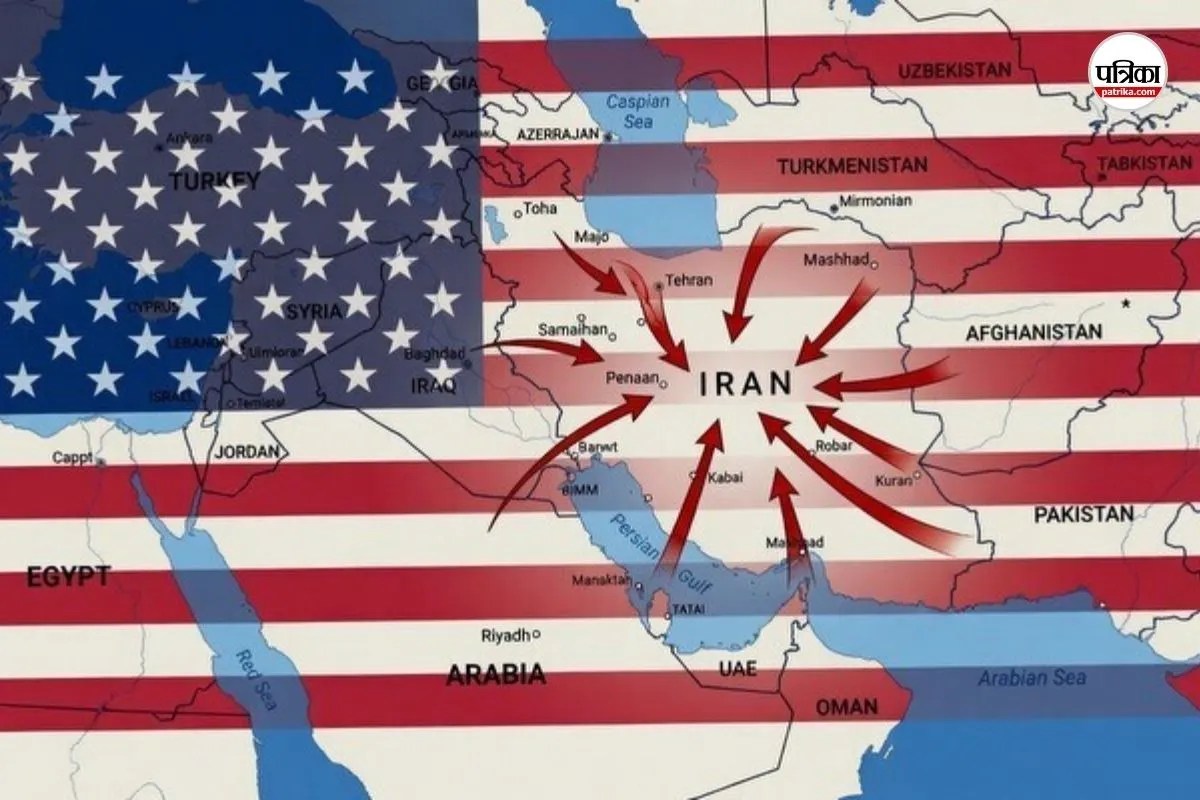
International human rights reporting has fallen into a predictable, numbers-driven complacency. Every year, global watchdogs release data sets, the media echoes the shocking percentages, and the public participates in a brief cycle of outrage. The recent wave of reports focusing heavily on Iran driving global executions to their highest levels since the 1980s is a prime example of this dynamic.
The data is real, but the analysis is fundamentally lazy.
By treating capital punishment as a monolithic moral metric, western analysts fail to understand the internal mechanics of state survival, judicial warfare, and the actual regional drivers behind these numbers. Outrage is not an analytical framework. If we want to understand why executions are surging, we have to stop looking at the numbers as a scoreboard of global evil and start viewing them as raw data points of domestic state anxiety and legal restructuring.
The Mirage of the Global Trend
The headline narrative implies a synchronized, global regression into state-sanctioned violence. This is a analytical failure. What we are actually witnessing is not a unified global trend, but a hyper-localized spike driven by specific regimes reacting to internal existential threats.
When Amnesty International reports a massive spike in executions, attributing the bulk of it to Iran, it conflates a regional anomaly with a global shift. For years, I have monitored how international policy think tanks process Middle Eastern state data. The consensus always leans toward projecting a broad, sweeping narrative of authoritarian consolidation. But the mechanics on the ground are far more fractured.
Take the data at face value, and you miss the structural shifts. The vast majority of Iran’s recorded executions are tied to two specific categories: drug trafficking offenses and security-related charges linked to domestic unrest. To lump these under a generalized umbrella of "rising global cruelty" obscures the specific operational failures of the counter-narcotics strategies in Central Asia and the Middle East.
The Drug War Failure Nobody Talks About
Iran sits directly on the deadliest drug trafficking artery in the world—the transit route from Afghanistan to Europe. For decades, the international community, including European law enforcement agencies, quietly cooperated with Iranian counter-narcotics forces to stop the flow of Afghan opiates.
When the political climate shifted and sanctions tightened, that cooperation fractured. Left to manage a massive, armed trafficking crisis on its eastern border alone, the state resorted to its bluntest legal instrument: the death penalty.
- The Reality: A significant percentage of the execution spike is a direct consequence of a failed regional drug war, not just a sudden spike in ideological cruelty.
- The Counter-Intuitive Truth: Shaming the regime via press releases does nothing to alter the economic reality of the multibillion-dollar narcotics trade flowing through a porous border.
By framing this strictly as a human rights issue, western observers miss the law-enforcement and border-security crisis driving the judiciary's decisions. It is easy to condemn executions from a well-funded office in London; it is much harder to propose an alternative strategy for managing heavily armed drug cartels when you have cut off all diplomatic and intelligence-sharing channels with the country holding the frontline.
The China Blind Spot Destroys the Data
Any analysis of global execution trends that relies on definitive charts and rankings is fundamentally dishonest. Why? Because the world’s largest executioner does not publish its data.
China classifies its capital punishment statistics as a state secret. Independent estimates consistently place Chinese executions in the thousands per year—dwarfing the combined totals of Iran, Saudi Arabia, and the rest of the world.
When watchdogs publish absolute totals and declare that "global executions have reached a 40-year high," they are using a dataset that completely excludes the largest data point on earth. This is bad science and worse journalism.
Why the Methodology is Broken
- Selective Transparency: The countries that are sloppy or deliberately public with their execution data get penalized in the court of public opinion, while states with total informational control escape the worst of the statistical headlines.
- Distorted Baselines: Asserting that global numbers are at a historic high based solely on the countries that allow tracking creates a false sense of historical comparison. We do not actually know if global executions are at a 40-year high, because we do not have forty years of reliable data from the world's most populous nation.
This methodological flaw matters because it skews policy. When international bodies focus their rhetorical fire entirely on the states with visible data, they signal to authoritarian regimes that the best way to avoid international condemnation is not to stop executing people, but to hide the bodies more effectively. Total informational secrecy is rewarded with statistical invisibility.
Capital Punishment as Economic and Social Insulation
To understand the surge in executions within nations facing heavy sanctions, you have to look at the domestic economy. This is where conventional human rights reporting completely detaches from material reality.
When a country is isolated economically, inflation skyrockets, unemployment spikes, and the informal economy takes over. Crime rates inevitably rise. In these environments, the judicial system undergoes a transition. It stops functioning as a mechanism for justice and begins functioning as a mechanism for basic social control.
Imagine a state where the local currency has lost 80% of its value, where basic medical supplies are scarce due to sanctions, and where the population is highly volatile. The government cannot rely on economic incentives or social welfare to maintain order because its coffers are empty. The only currency the state has left to spend is force.
The Mechanism of State Deterrence
In this context, the death penalty is deployed not out of a sense of triumphalist power, but out of desperation. It is used to signal absolute control to a population that is teetering on the edge of economic chaos.
- Public Executions: These are not designed for international consumption; they are grim pieces of domestic political theater meant to warn a desperate population against organized crime and subversion.
- The Cost of Alternative Justice: Maintaining a massive, humane, long-term penitentiary system is incredibly expensive. For states under crushing economic blockades, the financial cost of keeping thousands of capital offenders alive indefinitely in prison is an economic burden they choose to eliminate.
Admitting this truth does not justify the practice, but it changes the prescription. If the surge in executions is inextricably linked to the economic degradation of the state, then applying more economic sanctions as a punishment for those executions is an exercise in futility. It accelerates the very economic collapse that makes capital punishment an attractive tool for state survival in the first place. It is a feedback loop of failed diplomacy.
Dismantling the Consensus
The conventional approach to stopping executions relies on international naming and shaming. The belief is that if you apply enough moral pressure, diplomatic isolation, and targeted sanctions, a regime will eventually capitulate to global norms.
This strategy has a zero percent success rate with entrenched ideologues.
When a state believes it is fighting for its existential survival against foreign subversion and internal collapse, international press releases are completely irrelevant. In fact, external condemnation often serves the internal propaganda narrative of the regime. It allows rulers to frame domestic criminals and dissidents as foreign agents, thereby justifying their execution to the regime's nationalist or religious base.
What Actually Shifts the Data?
If moral condemnation fails, what actually changes judicial behavior? History shows that internal legal reform, driven by pragmatic domestic needs, is the only mechanism that works.
In 2017, Iran amended its anti-narcotics laws after a prolonged internal debate among lawmakers who realized that executing low-level drug mules was not stopping the drug supply and was alienating the working-class base of the regime. That single internal legislative shift caused a massive, temporary drop in execution numbers far more effectively than any United Nations resolution ever achieved.
The rollback of that progress in recent years coincided perfectly with the renewal of maximum pressure campaigns, domestic hyper-inflation, and widespread street protests. When the state feels secure, the judiciary relaxes. When the state feels cornered, the gallows go into overdrive.
Stop Asking the Wrong Questions
The international community keeps asking: How do we punish these states for their human rights records?
The question itself is flawed. It assumes that the West possesses the leverage and the moral standing to dictate judicial outcomes in nations that have built their entire political identities on resisting western dictation.
Instead, policy makers need to ask: What conditions make state terror an obsolete tool for domestic governance?
The answer is stability, economic integration, and normalized borders. But that requires a level of diplomatic nuance that the current international political climate refuses to tolerate. It is far easier to publish an annual report with a shocking percentage on the cover, host a press conference, and pat ourselves on the back for condemning the barbarism of the world from afar.
The current strategy of international human rights watchdogs does not save lives. It preserves a system of moral posturing that allows western governments to look principled while achieving absolutely nothing for the people on death row. If you want fewer executions, stop feeding the geopolitical fires that make states desperate enough to use them.