Every time António Guterres stands at a podium and demands urgent surgery on the United Nations Security Council and the Bretton Woods institutions, the global policy circuit nods along like a church congregation. The media repeats the same lazy consensus: that the post-1945 architecture is simply outdated, that the rising economic gravity of the BRICS block has locked out the Global South, and that a few executive board seat redistributions will fix the machine.
It is a comforting fairy tale. It is also completely wrong.
Let us stop pretending that adding Brazil, India, or South Africa to a permanent veto seat or increasing voting quotas at the International Monetary Fund will cure the structural rot of global governance. I have spent years watching sovereign debt restructurings drag on while populations bleed, and I can tell you that the machinery is not broken by accident. It is working exactly as it was engineered to work.
The standard critique focuses on representation. The real crisis is enforceability and institutional capture.
When the World Bank and the IMF were hatched at Bretton Woods in 1944, they were not designed as neutral aid agencies. They were credit committees for Western capital hegemony, designed to anchor peripheral economies to core currencies and export markets. Changing the passport of the technocrat sitting in the director's chair does not rewrite the balance sheet.
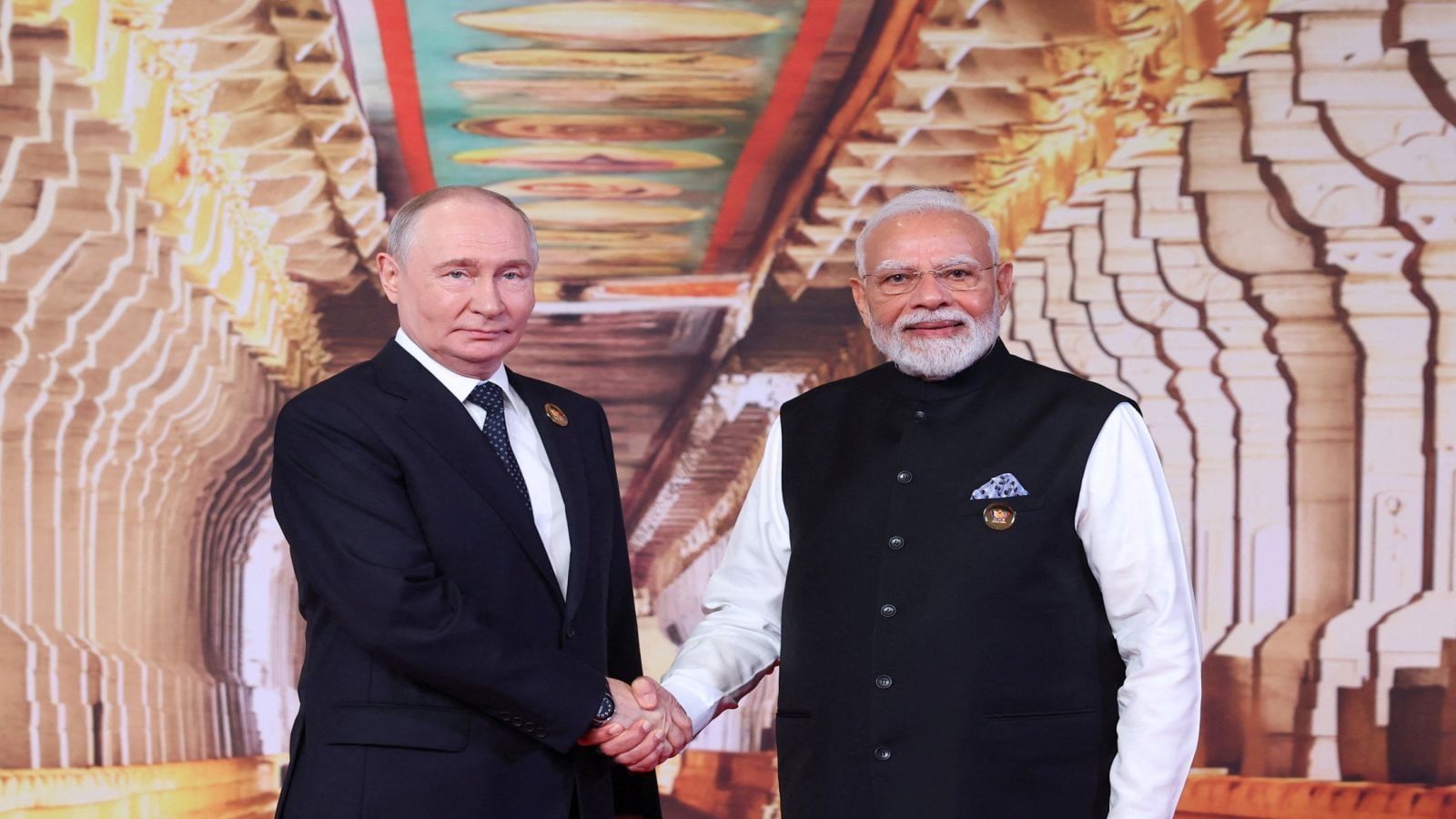
Consider the obsession with BRICS expansion as the great equalizer. The bloc presents itself as the anti-hegemonic vanguard, a counterweight to Washington and Brussels. Yet, look under the hood. You have autocracies rubbing shoulders with functional democracies, tied together not by shared ideological solidarity or a coherent alternative to neo-liberal development models, but by a shared grievance against secondary sanctions and dollar dominance.
De-dollarization makes great headlines at summits in Kazan or Johannesburg, but try pricing a multi-billion-dollar infrastructure project in Chinese yuan or Indian rupees when neither currency offers deep, open capital account convertibility. Ask yourself: if you were a private institutional investor sitting on capital reserves in Santiago or Nairobi, would you trust your long-term liquidity to a currency bloc that restricts capital outflows by administrative decree? Of course not. The dollar remains king not because Washington forces anyone to use it at gunpoint, but because alternative financial systems lack the institutional depth, rule of law, and liquidity pools that global markets demand.
So when Guterres cries out for multilateral reform, he is treating a systemic cardiac arrest with aspirin.
The Sovereignty Trap of Security Council Reform
Let us dismantle the Security Council reform myth. The constant refrain is that the P5 structure—the United States, the United Kingdom, France, Russia, and China—fails to reflect contemporary geopolitical reality. True enough. But adding four or five more permanent members without abolishing the veto is equivalent to taking a dysfunctional corporate board and simply giving more directors the power to smash the boardroom table.
A veto-wielding Security Council is structurally incapable of enforcing peace when the interests of its core members diverge. It was never meant to be a parliament of humanity; it was a mechanism to prevent World War III by institutionalizing great power spheres of influence. If you expand permanent membership to include regional heavyweights, you multiply the friction points. You do not achieve collective security; you achieve institutional paralysis.
The uncomfortable truth is that small and mid-sized nations do not need a bigger seat at a corrupt table. They need an architecture that makes great power vetoes irrelevant. But nobody in the diplomatic circuit wants to talk about that because it requires surrendering sovereign impunity.
Look at how sovereign debt is managed under the current Bretton Woods framework. When a developing nation faces insolvency, the IMF swoops in with its legendary structural adjustment playbooks. They demand fiscal austerity, privatization of public utilities, and rapid trade liberalization. The result? Healthcare budgets get slashed, education funding evaporates, and local industries fold under foreign competition—all to ensure that New York and London bondholders get paid 100 cents on the dollar.
We call these bailouts. They are actually liquidity transfers from the global working class to offshore asset managers.
And here is where the honest critic must admit the downside of the alternative. If you blow up the IMF and the World Bank tomorrow, what replaces them? A fragmented landscape of bilateral lending where predatory creditors can extract resource concessions in the dark without even the minimal transparency requirements that multilateral lenders enforce. China's Belt and Road Initiative demonstrated that decentralized, bilateral sovereign lending can be just as ruthless—if not more opaque—than Washington consensus conditionalities.
The Wrong Questions We Keep Asking
Policy analysts love to debate superficial metrics. They ask: How many voting shares should emerging markets control? How do we balance regional representation in executive suites? These are accountant questions masking political cowardice.
The right questions are far more uncomfortable.
Why do we measure national success through Gross Domestic Product growth while ignoring ecological depreciation and resource extraction? Why do we allow private credit rating agencies headquartered in Manhattan to dictate the borrowing costs of developing nations based on arbitrary criteria that penalize climate vulnerability? Why do global trade rules protect pharmaceutical and technological intellectual property rights while exposing agricultural subsistence markets to subsidized foreign dumping?
Until we answer those questions, debating UNSC reform is like rearranging the deck chairs on a sinking ocean liner while arguing over who gets the captain's quarters.
The BRICS coalition is not an ideological alternative; it is an economic hedge. Member states are playing a hedging strategy against Western overreach while maintaining deep trade exposure to Western markets. China needs Western consumers just as much as Western tech supply chains rely on Asian manufacturing. The idea of a clean decoupling or a neat substitution of the global financial architecture is a fantasy sold by pundits who have never managed an international trade finance desk.
What Real Reform Looks Like
If we are serious about fixing global governance, we have to stop tinkering with institutional org charts and start redesigning the underlying rules of exchange.
First, we need automatic debt jubilee mechanisms tied to systemic shocks. When a pandemic, a global financial crash, or a climate catastrophe hits the periphery, sovereign debt servicing should freeze automatically, without requiring kneeling expeditions to Washington or Beijing for conditional bailouts.
Second, we need to strip credit rating agencies of their regulatory monopolies. Sovereign creditworthiness should not be evaluated by private entities whose revenue models depend on maintaining cozy relationships with Wall Street bond underwriters.
Third, global trade architecture must internalize environmental and social costs. If a nation exports raw commodities while depleting its aquifers and exploiting unorganized labor, the import price should reflect that ecological theft. Stop calling it free trade when it is simply subsidized extraction.
Guterres is right that the system is broken, but he is wrong to think the architects of the current order are going to hand over the blueprints for their own displacement. Real change will not come from a resolution passed in a stale conference room in Manhattan or Geneva. It will come from the margins—from regional currency swaps built out of necessity, from sovereign debt defaults that tear up predatory bond covenants, and from developing nations refusing to play a rigged game by rules written eighty years ago by men in grey flannel suits who have been dead for decades.
Stop waiting for permission from the old guard to build a better system. They are too busy guarding the ruins.