Every single time a missile flies in the Middle East, financial newsrooms execute the exact same predictable playbook.
They splash screaming red banners across trading screens. They interview panicked energy analysts. They run headline graphics showing Brent crude barreling toward $100 per barrel. And right on schedule, retail investors panic, hedge funds execute pre-programmed algorithmic buys, and energy stocks briefly pop.
It is a theatrical production. And if you are buying into the panic, you are the mark.
The narrative machine wants you to believe that regional conflict instantly creates structural energy scarcity. They want you to believe that supply chains are fragile glass sculptures waiting to shatter at the first sign of geopolitical tension.
The physical oil market tells a completely different story.
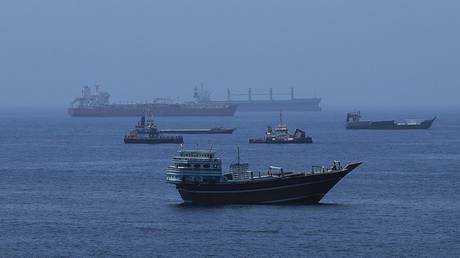
While financial journalists track headline drama, real physical traders track dark-fleet tankers, crack spreads, floating storage levels, and real-time refinery runs. Behind the headline noise, the physical energy market is not choking. It is overflowing. Fading these geopolitical panic spikes is not just a smart trading strategy; it is the only rational response to an energy market whose fundamental architecture has completely changed over the last decade.
The Paper Market Lie vs Physical Reality
To understand why a 5% pop toward $100 oil is a paper tiger, you have to separate the paper futures market from the physical wet-barrel market.
Financial media hyper-focuses on the West Texas Intermediate (WTI) and Brent futures contracts traded on the NYMEX and ICE exchanges. These are financial instruments dominated by systematic commodity trading advisors (CTAs), momentum-chasing quantitative algorithms, and macro hedge funds. When headlines trigger algorithmic risk-off or commodity-buy signals, millions of paper contracts change hands in seconds.
The paper price spikes instantly.
The physical market, however, moves on actual supply and demand mechanics. Refiners buy real physical crude weeks or months in advance based on actual consumer demand for gasoline, diesel, and jet fuel.
Paper Market (Futures)  ---> Algorithm Driven  ---> Spikes on Headlines
Physical Market (Wet)   ---> Refining Demand   ---> Driven by Real Consumption
I have spent years watching institutional trading desks take the other side of these knee-jerk retail trades. When Brent pushes toward $100 on regional conflict headlines while physical differentials remain flat or soft, smart capital sells into the paper rally.
Why? Because unless physical infrastructure—like pumping stations, major export terminals, or critical maritime chokepoints—is physically destroyed and removed from global supply for months, temporary supply fear is just headline noise.
The Non-OPEC Floodgate Has Broken the Cartel
The core flaw in the $100 oil narrative is the outdated assumption that OPEC dictates global energy security.
Decades ago, a supply disruption in the Middle East meant immediate global economic strangulation. That reality no longer exists. The global supply curve has been radically reshaped by non-OPEC+ production, driven primarily by the Americas.
- The United States: Producing record-breaking volumes of crude oil, consistently pumping over 13 million barrels per day. American shale operators have mastered capital discipline, driving down break-even costs and squeezing maximum extraction out of lateral wells in the Permian Basin.
- Guyana: ExxonMobil and its partners have unlocked the offshore Stabroek block, transforming a small South American country into one of the fastest-growing oil producers on the planet.
- Brazil: Deepwater pre-salt fields continue to pump massive physical volumes into the Atlantic market, completely bypassing Middle Eastern supply routes.
- Canada: The expansion of heavy crude pipeline capacity has unleashed steady, reliable flows directly into global refining hubs.
When Middle Eastern supply faces threat perception, Atlantic Basin production ramps up to fill the gap. Global trade routes simply re-route. Tankers change direction. Refiners adjust their slate assays.
The physical market adapts within days.
Furthermore, consider OPEC+ itself. The cartel has been sitting on over 5 million barrels per day of shut-in spare capacity. Saudi Arabia and its allies have spent years cutting production to artificially support price floors. If Brent crude actually sustains a run toward $100, that idle capacity will not stay idle. Saudi Arabia needs revenue to fund its massive domestic infrastructure ambitions, and UAE operators want to monetize their expanded capacity.
The moment paper prices touch triple digits, cartel members face an irresistible temptation to cheat on quotas and dump physical barrels onto the market. $100 oil creates its own supply surge.
The Demand Side Is Structurally Broken
Supply is only half the equation. The financial media's $100 oil obsession completely ignores a far more permanent force: structural demand degradation.
For a sustained oil rally to take hold, high prices must be met with inelastic, surging consumer demand. Today, the opposite is happening across every major economic engine.
China's Irreversible Pivot
China was the undisputed engine of global oil demand growth for twenty-five years. That engine has fundamentally stalled. China's rapid adoption of electric vehicles, liquefied natural gas (LNG) heavy-duty trucks, and high-speed electric rail is actively displacing millions of barrels per day of transportation fuel consumption. This is not a cyclical dip; it is a permanent structural loss of crude demand.
European Industrial Drag
Europe's industrial base has struggled under high input costs and sluggish growth. German manufacturing output has stagnated, dragging down commercial diesel usage across continental freight corridors.
Efficiency Gains
Modern internal combustion engines consume far less fuel per mile than those on the road during the last true $100 crude era. Industrial processes are leaner, freight fleets are optimized, and global growth is increasingly service and tech-driven rather than raw-materials intensive.
When paper oil spikes to $100 in an environment of weakening global demand, it triggers immediate demand destruction. Consumers drive less, airlines trim routes, and industrial buyers draw down existing inventories rather than purchasing expensive spot cargoes.
High prices act as their own cure, capping rallies before they can transform into prolonged inflationary shocks.
How Quantitative Funds Manipulate the Headline Machine
If the physical fundamentals are so clearly capped, why does the market still jump 5% in a single trading session?
Blame market micro-structure.
Modern commodity trading is dominated by systematic trend-followers and momentum CTA algorithms. These automated systems do not read balance sheets or analyze refining yield curves. They trade price action, implied volatility, and key technical breakouts.
When headline news hits:
- Option Dealers De-risk: Market makers who sold out-of-the-money call options must instantly buy underlying futures contracts to maintain delta-neutral hedges. This triggers a mechanical buying cascade known as a gamma squeeze.
- CTA Triggers: Momentum algorithms cross key moving averages, triggering automated buy orders across thousands of systematic portfolios simultaneously.
- Short Covering: Bearish macro funds that were shorting weak physical fundamentals are forced to cover their positions to protect quarterly profits.
Headline Event ---> Volatility Spikes ---> Delta Hedging / Gamma Squeeze ---> CTA Momentum Buying ---> Retail Buy Panic
This creates a violent upward price spike that looks terrifying on a one-minute chart. Financial news outlets immediately grab that short-term price tick and write apocalyptic headlines about $100 crude.
Two weeks later, as the mechanical buying clears, option volatility cools down, and physical refiners refuse to pay inflated prices, the momentum reverses. The paper market quietly leaks all its gains, returning right back to physical fair value.
Retail traders who chased the breakout are left holding the bag. Institutional market makers walk away with the premium.
The Uncomfortable Truth About Risk Premiums
Does geopolitical instability carry zero risk? Of course not. A total black swan event—such as the complete physical destruction of critical processing hubs or a sustained, multi-month military blockade of major shipping straits—would indeed shock global supply.
That is the absolute worst-case scenario. It is also an extraordinarily rare one.
Even during severe geopolitical crises, energy flows find a way. Countries need export revenues to finance warfare and domestic stability. Importers need fuel to keep their power grids alive. Sanctions and military threats routinely result in shadow fleets, dark-ship transfers, discounted arterial sales, and currency workarounds.
The global energy grid is not a fragile chain; it is a complex, self-healing network. The real world works relentlessly to keep the oil moving, regardless of political theater.
Trading the False Breakout
If you want to manage energy risk—or profit from market inefficiency—you must stop reacting like a financial news consumer.
- Track Physical Crack Spreads: Look at refinery margins (the difference between crude oil and refined products like gasoline and diesel). If crude futures are surging but crack spreads are compressing, refiners are telling you that end-user demand cannot support higher crude prices. The rally is a fake-out.
- Watch Time Spreads: Monitor backwardation and contango in the Brent curve. If front-month futures are popping but prompt time spreads are flattening or shifting toward contango, there is no physical spot tightness. It is purely paper speculation.
- Fade Extreme Volatility: Instead of buying into 5% daily spikes, look for opportunities to sell inflated call volatility or establish short-term bearish structures on the paper market once momentum signals exhaust themselves.
- Follow Real Capacity Data: Ignore political speeches. Track satellite data on global inventory builds, floating storage on tankers, and operational rig counts in the Permian Basin.
The next time a headline screams that Brent crude is surging 5% toward $100 amid Middle East tension, turn off the television. Look past the paper market panic, check the physical balance sheet, and let the algorithms burn themselves out.
The $100 narrative is a lucrative illusion designed to cash in on fear. Smart money knows it. Now you do too.