The air smells like sulfur, wet grass, and lighter fluid. It is a scent profile etched into the collective memory of every summer since childhood. You are standing in a driveway, the asphalt still radiating the day's brutal heat, holding a cardboard cylinder covered in cheap, patriotic graphics. The fuse is a stiff piece of green twine. You flick the lighter. The flame dances, catches, and begins to hiss.
In that exact moment, your brain does not process danger. It processes anticipation. It calculates the height of the burst, the sharpness of the crackle, and the brief, brilliant illumination of your neighbors' faces.
But a mile away, inside a reinforced concrete bunker at the city bomb squad headquarters, a technician named Marcus is looking at the exact same cardboard cylinder through a completely different lens. To Marcus, that tube is not a celebration. It is an improvised explosive device with a marketing budget.
Every year, police departments and bomb squads across the country host media demonstrations on the days leading up to the Fourth of July. They set up rows of watermelons, mannequins, and ballistic gelatin hands on folding tables. They light commercial-grade artillery shells and illegal M-80s. The press records the explosions in ultra-high-definition slow motion. The watermelons obliterate into a pink mist. The mannequin hands shatter into jagged plastic shards.
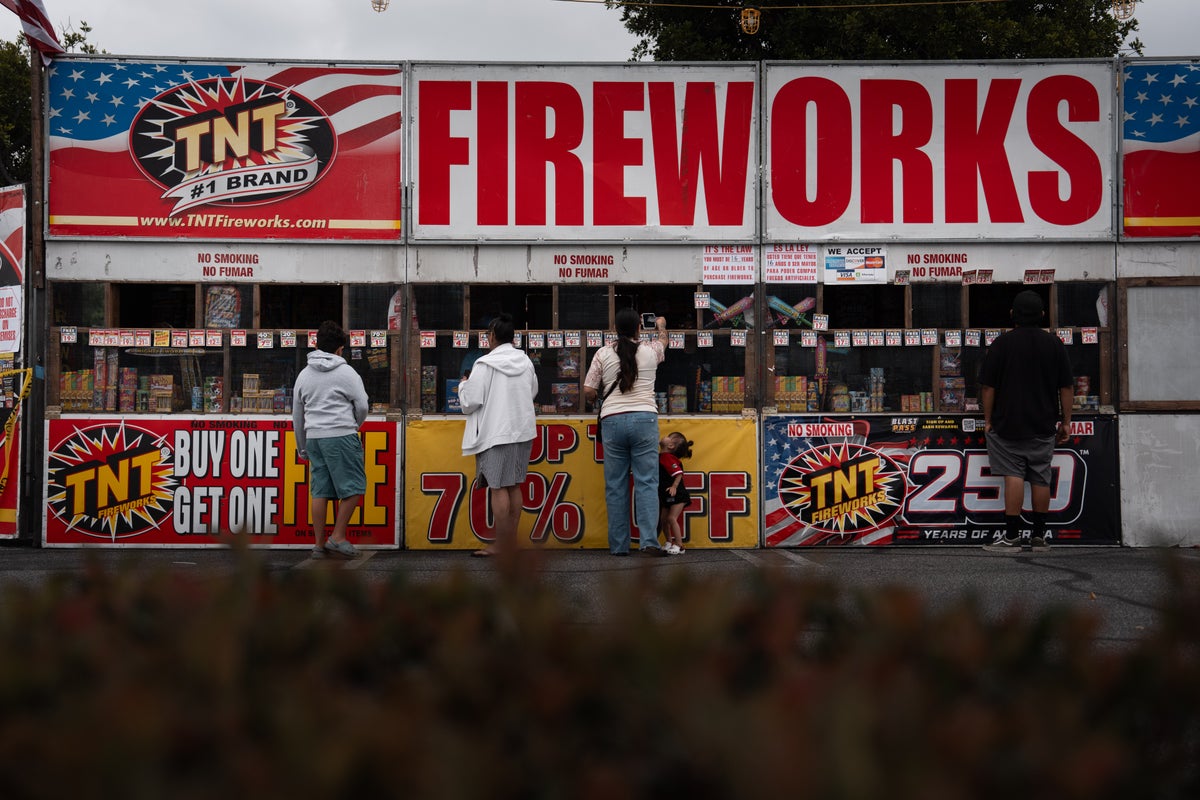
The televised warnings are standard holiday programming, as predictable as the local weather report. We watch them, nod at the visceral destruction, and then go right back to loading our trunks with brown paper bags full of pyrotechnics bought from a roadside tent just across the state line.
We ignore the warnings because we believe in our own coordination. We trust our reflexes. We view accidents as a tax paid only by the reckless or the drunk. But the physics of a backyard firework do not care about your sobriety, your experience, or your best intentions. The line between a successful show and a lifetime of adaptation is exactly five milliseconds long.
The Illusion of the Paper Tube
To understand why these small devices hold such catastrophic power, you have to look past the colorful wrapping paper. The fundamental chemistry of consumer fireworks relies on black powder—a mixture of sulfur, charcoal, and potassium nitrate. When confined inside a tightly wrapped paper or plastic tube, the rapid gas expansion creates immense pressure.
When the structural integrity of the tube fails, that pressure releases instantly. That is the explosion.
The human hand is an incredibly complex engineering marvel. It contains 27 bones, dozens of tendons, and thousands of nerve endings that allow you to tie a shoelace, play a piano, or hold a child's hand. It is also remarkably fragile when subjected to overpressure waves.
Consider a standard aerial shell, the kind meant to be dropped into a plastic launching tube. The lifting charge at the bottom of the shell is designed to propel the projectile hundreds of feet into the air before the secondary charge ignites the colorful effects. If that lifting charge malfunctions, or if the shell is loaded upside down—a common mistake in the dark—the detonation occurs at ground level.
If you are standing over the tube, the blast wave hits your face at several thousand feet per second. The force is enough to fracture orbital bones, rupture eardrums, and strip the skin from muscular tissue.
The bomb squad demonstrations using watermelons are not theatrical hyperbole. The density and water content of a watermelon closely mimic human tissue and organs. When an M-80 or a modified mortar explodes inside or directly adjacent to one, the shockwave travels through the fluid, causing total structural failure. The watermelon does not just split open; it liquefies from the inside out.
The Arithmetic of Trauma
Emergency room physicians see the human cost of this physics lesson every July. According to data collected by the Consumer Product Safety Commission, thousands of people require emergency medical treatment for firework-related injuries during the weeks surrounding Independence Day.
The statistics tell a stark story, but the granular details are worse. More than half of these injuries are burns, and the most frequently injured body parts are hands, fingers, and eyes.
A significant portion of these victims are children.
Think about the sparkler. It is universally regarded as the gateway firework, handed out to toddlers and young children as a harmless introduction to the holiday. We let them run through the grass, waving the glowing metal rods like magic wands.
But a burning sparkler reaches temperatures between 1,800 and 3,000 degrees Fahrenheit.
To put that into perspective, glass melts at roughly 1,600 degrees. Gold liquefies at 1,948 degrees. Cremation ovens operate at 1,800 degrees. When a child drops a sparkler onto their foot or accidentally brushes it against a sibling’s nylon shirt, the fabric does not just catch fire—it melts directly into the skin.
The response to this kind of thermal trauma is immediate and agonizing. The heat destroys the epidermis and penetrates deep into the dermal layers, killing nerve endings and leaving a white, leathery scar tissue that requires multiple skin grafts and months of physical therapy to regain mobility.
Then there are the illegal devices. Items like M-80s, Cherry Bombs, and Silver Salutes were banned federally in 1966 due to the sheer volume of amputations they caused. Yet, they proliferate every summer through illicit online markets and underground manufacturing. These devices often contain flash powder rather than black powder. Flash powder burns much faster and produces a far more violent detonation.
A consumer firework gives you a margin of error measured in seconds. An illegal device, often constructed with unstable chemicals and volatile fuses, offers no margin at all. The fuse can burn instantly, detonating the moment the flame touches the tip.
The Architecture of Aftermath
What happens after the blast is a quiet, agonizing sequence that the bomb squad demonstrations never show. The smoke clears, the ringing in your ears fades into a dull, permanent hiss, and the reality of a altered life sets in.
Imagine Sarah. She is a thirty-four-year-old graphic designer, someone whose entire livelihood depends on the precision of her fingers on a keyboard and a stylus. During a family barbecue, a multi-shot cake firework tipped over on its side after the third discharge. The fourth shot fired horizontally, striking her directly in the right hand as she reached out to shield her niece.
The immediate sensation was not pain. It was a profound, icy numbness, followed by the smell of scorched fabric and flesh.
In the emergency room, the medical team works under a ticking clock. The blast wave from a firework does not create clean cuts; it creates crush injuries and thermal burns simultaneously. The tissue is often embedded with debris—charcoal, paper, unburnt sulfur, and dirt from the ground.
Surgeons refer to this as a contaminated blast wound.
The first priority is debridement, the meticulous process of cutting away dead, blackened tissue and washing out the debris to prevent systemic infection. If the bones in the fingers are shattered into dozens of tiny fragments, standard pinning is impossible. The blood vessels, microscopic and delicate, are often cauterized by the heat of the explosion, cutting off blood flow to the remaining tissue.
Sarah spent three weeks in the hospital. She underwent four separate surgeries to salvage her thumb and index finger. The remaining three fingers could not be saved.
The physical reconstruction is only the first phase. The psychological toll of an accidental injury is uniquely heavy because it is anchored in regret. A person who loses a limb in a car accident or a combat zone can look at the event as an unpredictable tragedy or a risk of the profession. A person who loses a hand to a firework is trapped in a loop of a single, avoidable decision.
If I had just stayed on the porch.
If I had just used a longer lighter.
If I had just walked away.
The financial burden mirrors the emotional weight. The cost of emergency transport, trauma surgeries, intensive care, skin grafts, custom prosthetics, and ongoing physical therapy easily climbs into the hundreds of thousands of dollars. If the victim is uninsured or underinsured, the financial devastation outlasts the physical pain by decades.
A Different Way to Watch the Sky
The desire to gather around fire and light is a primal human instinct. We have been doing it for millennia. The communal experience of looking upward together, feeling the thud of a massive explosion vibrate through our chests, is a beautiful tradition.
But there is a fundamental difference between witnessing a spectacle and attempting to control it with a barbecue lighter.
Professional pyrotechnicians spend years studying chemistry, physics, and safety protocols. They operate from distances measured in hundreds of feet, using electronic firing systems that isolate human beings from the point of ignition. They wear flame-retardant gear, communicate via radio networks, and work in cooperation with local fire departments.
They treat the material with the absolute reverence that explosives demand.
When we buy consumer fireworks, we are attempting to replicate that massive, professional experience inside a space designed for parking cars and mowing lawns. The geometry simply does not work. A suburban cul-de-sac does not provide the safety radius required when a paper tube malfunctions and fires a projectile laterally instead of vertically.
This July, as the sun begins to set and the first pops echo through your neighborhood, consider the invisible stakes. Look at your hands. Look at the people sitting in lawn chairs around you.
The bomb squad does not put on those dramatic, destructive shows to ruin the holiday or to lecture the public from a position of authority. They do it because they are the ones who have to sweep up the debris, write the incident reports, and watch families process preventable catastrophes in hospital waiting rooms.
Enjoy the holiday. Watch the sky turn green, gold, and red. But leave the fire in the hands of the people who know exactly how to put it out.