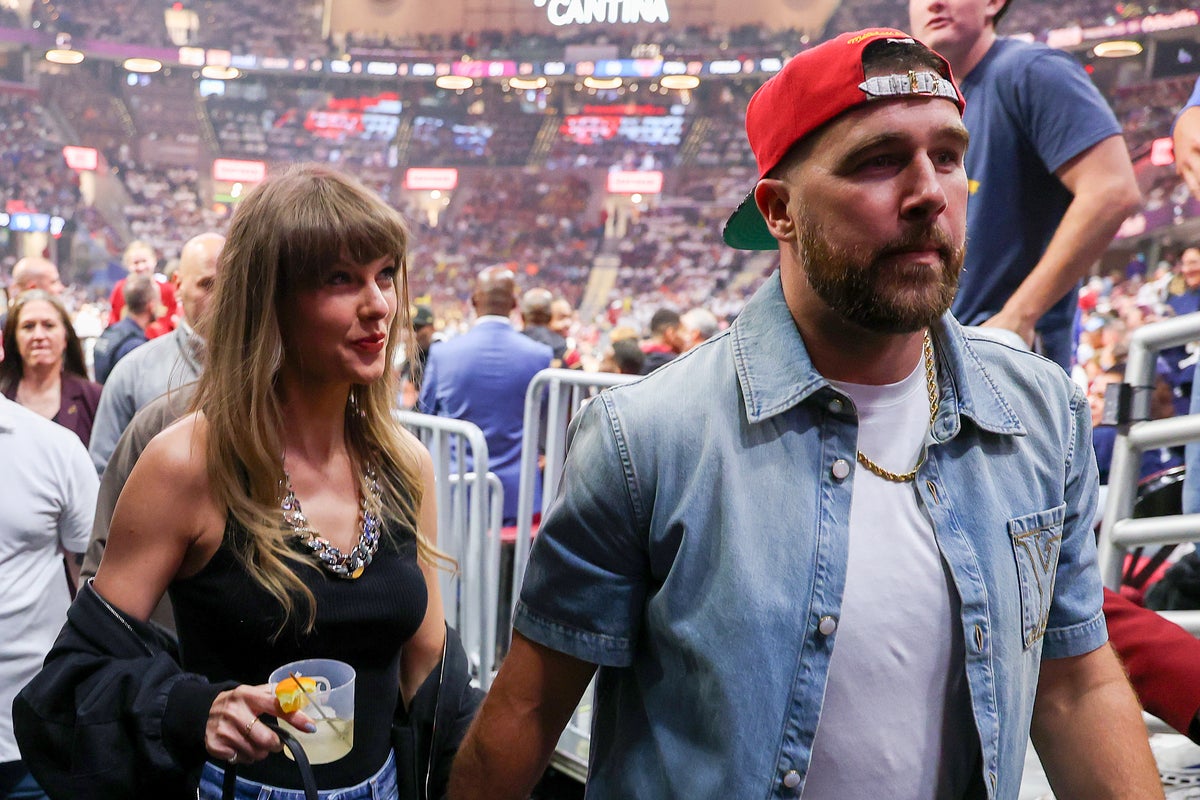
The media is currently obsessing over a hypothetical $5 million security bill for a Taylor Swift and Travis Kelce wedding at Madison Square Garden. Tabloids are breathlessly comparing the logistics to a "presidential visit," quoting talking heads who claim every entrance needs Secret Service-level fortressing.
It is a comforting fantasy. It is also completely wrong.
As someone who has spent two decades auditing risk mitigation and high-profile event logistics for ultra-high-net-worth individuals, I can tell you exactly what that $5 million price tag represents: threat theater. It is the security industry’s favorite cash cow, sold to paranoid managers who mistake a massive headcount for actual safety.
The lazy consensus says that more money equals more protection. The reality is that throwing millions at a centralized venue usually creates more vulnerabilities than it solves. If you are spending $5 million to secure a single night in midtown Manhattan, you are not buying safety. You are buying an expensive illusion to soothe investor anxiety and public relations teams.
The Flawed Premise of Presidential-Level Security
Comparing a celebrity wedding to a State Arrival or a UN General Assembly meeting misunderstands the core mechanics of executive protection.
A presidential detail operates under statutory authority. They can federalize local airspace, execute city-wide street closures, and command hundreds of local police officers via municipal mandates. A private security firm—no matter how many ex-Mossad or former Delta Force operators they put on the payroll—has exactly zero legal authority to shut down 8th Avenue.
When a tabloid claims a celebrity wedding will "rival a presidential visit," they are ignoring the legal and structural realities of private protection.
- Jurisdiction limitations: Private guards cannot legally detaining citizens on public property.
- The optical trap: Hundreds of visible, heavily armed guards do not deter modern threats; they invite them by signaling exactly where the high-value target is located.
- The administrative bloat: In a $5 million budget, at least 40% goes directly to subcontracting markups, emergency compliance permits, and unnecessary tier-one tactical gear that sits in a van.
Imagine a scenario where a private detail attempts to cordon off a public perimeter around Penn Station without NYPD counter-terrorism coordination. It results in immediate gridlock, regulatory fines, and a massive operational bottleneck. True security is invisible. If the public notices the perimeter, the perimeter has already failed.
Dismantling the Madison Square Garden Fallacy
Choosing an iconic, highly public arena like Madison Square Garden for a "secret" or "secure" event is the first logical error the commentators make. The building sits directly atop North America’s busiest transportation hub.
[MSG Main Arena] -> Sitting on top of -> [Penn Station Transit Hub]
       |                                         |
(Private Security Control)               (Public Commuter Flow)
       \                                       /
        \---> The Unfixable Perimeter <-------/
You cannot secure the underbelly of a structure that processes hundreds of thousands of commuters every single day without shutting down Amtrak, NJ Transit, and the New York City Subway. The security architecture of MSG is designed for crowd management and terror deterrence for the general public, not total privacy for two global icons.
To suggest that a $5 million budget can seal the structural leaks of a massive public venue is absurd. Paparazzi do not need to breach a barricade when they can buy a transit ticket, blend into the commuter stream, and use a high-powered lens from a perimeter building or an un-sealable ventilation overlook.
The industry standard for high-profile asset protection relies on compartmentalization, not fortification. You do not build a bigger wall around a stadium; you change the geography entirely.
Where the Millions Actually Go (Hint: It Is Not Safety)
Let's break down the actual mechanics of a $5 million event security budget. When a agency pitches this number, they are pricing in massive redundancies to cover their own liability, not to optimize protection.
The Overhead Breakdown
| Expense Category | Industry Justification | The Hard Truth |
|---|---|---|
| Advanced Site Reconnaissance | Multi-week asset mapping and sweep protocols. | Standard blueprints exist; teams charge 5x retail rates for basic physical walkthroughs. |
| Counter-Surveillance & Drone Jamming | Neutralizing unauthorized aerial photography and signals. | Highly restricted by the FCC; most commercial "jammers" used by private firms are legally toothless. |
| NDAs and Personnel Vetting | Background checks for 500+ venue staff. | High-turnover venue staff cannot be fully insulated; a $15-an-hour line cook will always look at a $50,000 tabloid offer. |
| Close Protection Details | Dedicated units for VIP guests and family members. | Creates a fractured command structure where different agencies refuse to share radio frequencies. |
I have seen production companies blow millions on these exact line items, only for a sub-contracted valet driver to leak the itinerary to a forum three hours before doors open. The vulnerability is almost never tactical; it is always administrative.
The Privacy Paradox: The More You Spend, the Less You Have
The fundamental misunderstanding of celebrity security is the belief that scale protects privacy. The exact opposite is true.
Every dollar added to a security budget increases the operational footprint. A larger footprint means more human beings involved in the chain of command. More security guards, more technicians, more catering staff to feed the guards, and more logistical coordinators loggin schedules into shared cloud databases.
"The probability of an information leak is directly proportional to the number of nodes in the communication network."
If you have a lean, highly specialized team of 12 operators working in an undisclosed, privately owned location, your operational security is near-perfect. If you have 300 guards managing a multi-tiered perimeter at a world-famous arena, your security plan is now a public logistics operation. Someone will talk. Someone always talks.
The Solution the Security Industry Hates
If the goal is actual protection and absolute privacy, the advice is simple but incredibly unpopular with corporate security firms looking for a payday: Stop trying to fortify the public eye.
The most successful high-value events in history did not cost $5 million to secure because they utilized natural anonymity. They took place on private islands with restricted maritime approaches, or within deep-interior private estates where the perimeter is naturally miles long and entirely controlled by property law, not municipal permits.
The downside to this approach? It lacks the performative grandeur that modern celebrity brands often crave. It requires sacrificing the optics of a massive New York City production for the quiet, boring reality of effective risk management.
If you want to keep a wedding private, you do not hire an army to stand outside Madison Square Garden while the world watches. You hire a dozen elite logistics experts, sign ironclad non-disclosure agreements with a staff of twenty at a private estate in Big Sur, and let the media spend $5 million chasing a ghost.
Stop buying the theater. The circus is already free.