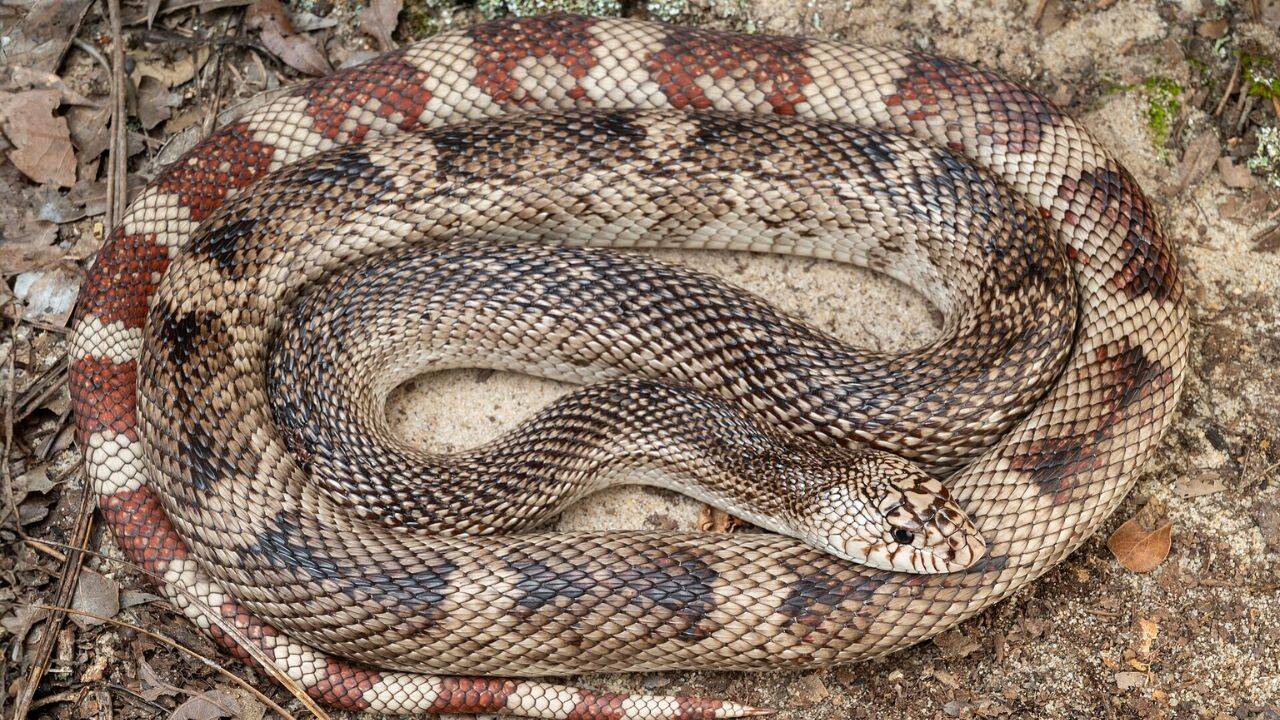
Conservation biology has long operated on a simple, stubborn rule: if you want to protect a rare creature, you have to find it first. That meant trudging through dense New Jersey pine barrens, turning over rotting logs, swatting away ticks, and staring at the forest floor until your eyes watered, all in the desperate hope of catching a glimpse of Pituophis melanoleucus, the eastern pine snake. It is a massive, striking reptile, capable of growing over six feet long, marked with dark blotches against a pale yellow or white background. Yet despite its size, it spends most of its life hidden beneath sandy soils or inside abandoned mammal burrows. Finding one is an exercise in frustration.
Environmental DNA changes that dynamic entirely.
Researchers can now detect the presence of eastern pine snakes by taking water or soil samples and analyzing the shed skin, waste, or mucus left behind in the environment. This technique, known as eDNA sampling, bypasses the traditional constraints of field biology. You do not need a herpetologist crawling through brush at dawn. You need a sample vial, a filtration kit, and a laboratory capable of amplifying trace genetic signatures.
The shift is monumental for wildlife management. For decades, the eastern pine snake has faced severe population declines driven by habitat fragmentation, illegal collection for the pet trade, and highway mortality. Because the species is elusive and sensitive to human disturbance, standard visual surveys often produce false negatives. A surveyor might walk a mile-long transect three times a week and miss a thriving underground population entirely. Environmental DNA removes the animal from the equation, letting the molecular evidence speak for itself.
To understand why this matters, look at how conservation funding is allocated. State and federal agencies operate under strict budgetary constraints. When a tract of land is slated for development, environmental impact assessments dictate whether protected species live there. If a surveyor finds no physical evidence of an eastern pine snake, the bulldozers roll. If eDNA reveals that the snake passed through a watershed weeks prior, the legal and regulatory landscape shifts instantly. The animal does not need to be caught on camera to halt a project or trigger federal habitat protections.
The science itself relies on the shedding of biological material into the surrounding habitat. Every organism leaves a trail of cellular debris. Snakes shed scales, slough off epidermal cells, and excrete waste containing epithelial cells packed with mitochondrial and nuclear DNA. Rain washes these microscopic traces into subterranean burrows, local runoff channels, and ephemeral ponds. When scientists collect these samples, they filter out the particulate matter, extract the genetic material, and run quantitative PCR assays targeted specifically at the mitochondrial DNA sequences unique to Pituophis melanoleucus.
The precision of the assay is what separates modern conservation from older guessing games. Cross-contamination or false positives are real risks in early molecular assays, but modern primer design has grown remarkably sharp. Laboratories can isolate target sequences without mistakenly triggering positive results from related colubrid snakes found in the same range.
Yet, adopting this technology creates a new set of philosophical and regulatory headaches for wildlife officials.
Finding genetic material in a soil sample proves the snake was there. It does not prove the snake is still there, nor does it tell you how many snakes are present, whether they are breeding, or if they represent a viable, self-sustaining population. A single shed scale washed down from an upstream property can travel significant distances, creating a geographic ghost trail.
Field biologists worry about an over-reliance on remote technology. If agencies lean too heavily on molecular data, they risk losing the nuanced habitat assessments that only human eyes on the ground can provide. An eDNA vial tells you a snake's genes are present; it does not tell you that the surrounding canopy cover is degrading, that invasive plant species are choking out nesting sites, or that feral predators are digging up subterranean chambers. Conservation requires a habitat, not just a sequence of base pairs.
Furthermore, landowners and developers are already pushing back against regulations triggered solely by genetic traces. When physical specimens are required, there is an undeniable burden of proof. When a permit denial or a multi-million-dollar mitigation requirement is triggered by a fragment of DNA extracted from a scoop of dirt, legal challenges multiply. Critics argue that a stray scale does not constitute an occupied home range. The legal definitions of "habitat" and "presence" were written for tangible animals, not microscopic molecular remnants.
Despite these friction points, the momentum behind molecular detection is unstoppable. Herpetologists working in the New Jersey Pine Barrens and the sandy coastal plains of the Southeast are quietly shifting their survey protocols. They recognize that traditional visual monitoring is no longer enough to track reptiles in an era of rapid environmental change.
The eastern pine snake is just one beneficiary of this methodological revolution. The same genetic tracking methods are being deployed to map the silent movements of amphibians, freshwater mussels, and elusive mammals across fragmented ecosystems. We are entering an era where our ability to detect wildlife outstrips our ability to see it with our own eyes.
The real test will not be whether we can find the snake in a test tube, but whether we can use that discovery to protect the physical landscapes that keep it alive. A strand of DNA can tell you an animal exists, but it cannot stop a suburban housing development from paving over its winter hibernaculum. The molecules offer
The Ghost in the Pines How Environmental DNA Is Exposing the Elusive Eastern Pine Snake
technology, news
Tracking a ghost is hard work. Doing it when the ghost is a six-foot subterranean constrictor that spends ninety percent of its life underground is nearly impossible. For decades, field biologists hunting the eastern pine snake faced a frustrating reality. They walked miles of sandy pine barrens, turned over rotting logs, and stared at empty air. The snake was there, breathing beneath the topsoil, but it refused to be seen. Traditional wildlife monitoring relied heavily on visual confirmation, a method that worked wonderfully for animals that wanted to be noticed and failed miserably for secretive apex predators.
Now, that dynamic is shifting. Researchers are bypassing the animal entirely, capturing its presence through genetic whispers left behind in the dirt and water. Environmental DNA, or eDNA, has transformed from a theoretical marine biology trick into a frontline conservation tool. By sweeping up microscopic sloughed skin cells, fecal matter, and mucus secretions from the soil matrix, scientists can confirm that an endangered eastern pine snake slithered through a specific patch of habitat days or weeks ago without ever laying eyes on scales.
Understanding why this matters requires looking at the desperate state of the Pine Barrens and other fragile ecosystems. Species decline does not happen with a grand explosion. It happens in silence. Habitat fragmentation, illegal pet trade collection, and aggressive development slice populations into isolated pockets. Conservationists need hard data to fight zoning boards and secure protection boundaries, but courts and developers routinely dismiss a biologist saying they feel a species is present. They want proof. They want a body.
eDNA provides that proof in digital readouts and genetic sequences. When an animal moves through its environment, it sheds biological material constantly. A pine snake burrowing through coarse sand leaves behind trace amounts of cellular DNA attached to soil particles. Field teams pull core samples from known or suspected wintering dens, known as hibernacula, and run them through polymerase chain reaction assays tuned specifically to the mitochondrial markers of Pituophis melanoleucus. The assay flags a positive match, and suddenly, a vacant patch of scrub oak becomes a legally protected zone with documented occupancy.
The mechanics of this detection method are deceptively simple yet technically grueling. Soil is notoriously hostile to foreign DNA. Humic acids, clays, and heavy mineral concentrations act as natural inhibitors that bind to genetic material and ruin laboratory assays. Early attempts to pull snake DNA from forest floors yielded muddy results and false negatives because standard extraction kits could not handle the complex chemistry of decaying organic soil.
Researchers had to refine their protocols. They learned to target specific soil horizons where pine snakes nest and brumate. They developed specialized lysis buffers that strip away chemical inhibitors before the sample goes into the sequencer. This technical leap bridged the gap between theoretical laboratory science and muddy-boots field ecology. It turned a high-end academic curiosity into a reliable weapon for wildlife managers.
Yet, technology always introduces new complications. A positive eDNA hit tells you an animal was there, but it tells you nothing about who, how, or when. Was it a massive adult female laying a clutch of eggs, or was it a juvenile passing through on a dispersal run? Did the genetic material drift down from an upstream runoff event, or was it deposited locally? The absence of a physical animal also robs researchers of vital health data. You cannot run a blood panel, check for fungal pathogens like Ophidiomyces ophidiicola—the devastating snake fungal disease—or measure body condition scores on a strand of DNA stuck to a pine needle.
Critics within traditional herpetology point out these blind spots with a degree of justified cynicism. Old-school field hands spent decades learning how to read the landscape, spotting subtle tracks, inverted leaf litter, and the faint musk of a defensive snake. They worry that a generation of young biologists will rely too heavily on lab results, staring at computer screens instead of walking the ridges.
That tension highlights a broader philosophical split in modern conservation. Do we lean into high-tech abstraction, or do we double down on boots-on-the-ground naturalism? The answer, as is usually the case in mature sciences, lies in synthesis. eDNA does not replace the traditional survey. It acts as a compass. Instead of wandering aimlessly across fifty square miles of dense forest hoping to stumble upon a rare reptile, a field crew uses eDNA mapping to narrow their search grid down to a single acre. Once the lab confirms the genetic signature, the biologists move in with telemetry gear and visual searches to find the living specimens.
The implications extend far beyond a single snake species in the Mid-Atlantic. The eastern pine snake serves as an umbrella species for the broader pine barrens ecosystem. When you protect its habitat, you automatically safeguard dozens of rare plants, invertebrates, and birds that share the same sandy, fire-dependent landscape. By making the invisible visible, genetic tracking forces developers and regulators to reckon with the actual biological reality of a tract of land rather than its apparent emptiness.
The ghost in the pines is losing its hiding place. As sequencing costs drop and field protocols become more robust, the margin for error shrinks. You can pave over a forest, and you can hide behind bureaucratic delays, but you can no longer erase the genetic footprint left in the dirt. The science has caught up to the stealth, and for one of North America's most elusive reptiles, that changes everything.