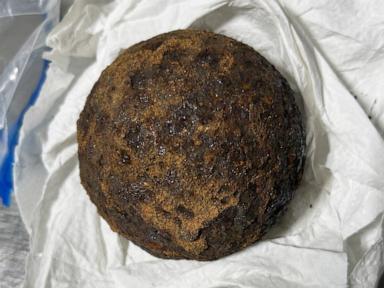
Every few months, aviation Twitter goes into a collective fainting spell over a headline about TSA agents pulling an antique weapon out of a carry-on bag. A Civil War-era cannonball here, an unexploded mortar shell there, maybe a rusty hand grenade thrown in for old time's sake. The media treats these events like quirky human-interest stories. Look at the silly tourist who forgot his artillery!
The lazy consensus is simple: passengers are morons, and the Transportation Security Administration is our watchful guardian, saving us from ourselves by intercepting deadly ordnance before it reaches cruising altitude. You might also find this connected coverage useful: The Art of the Arctic Chill in a Boiling City.
That narrative is complete nonsense.
If a passenger can waltz past ticket counters, automated document checkers, and baggage drops with a solid iron sphere designed to shred human flesh through shrapnel, the entire checkpoint apparatus is a multi-billion-dollar theater. You are not looking at a security success. You are looking at a system failure so profound it should terrify you. As discussed in latest coverage by The Points Guy, the effects are widespread.
The Myth Of The Omniscience Machine
Let us clear up the physics immediately. A solid iron cannonball or a hollow shell packed with black powder is dense. Extremely dense. When an X-ray operator looks at a bag containing a spherical mass of heavy metal, the screen does not show a vague grey smudge. It shows an opaque, impenetrable black orb that completely blocks the imaging radiation.
In the trade, this is called an alarm-inducing anomaly. You cannot miss it. It screams for a manual search.
Yet, these items continually make it past the primary screening belt and into secondary inspection lanes only because an agent happened to glance at a monitor while scrolling through their phone, or because the passenger got flagged for having a bottle of shampoo that exceeded three ounces. The cannonball is almost never the primary catch. It is discovered by accident while agents are busy confiscating artisanal honey and expensive toothpaste.
I have spent years auditing aviation security procedures behind closed doors. I have watched billions of dollars vanish into federal contracts for advanced imaging technology that still relies entirely on human beings who are bored out of their minds after twenty minutes of staring at monochrome rectangles. When a guy clears a checkpoint with a 150-year-old explosive device in his backpack, it proves that the primary line of defense is sleeping on the job.
If an amateur historian can clear security with artillery, imagine what is slipping through that does not look like a cannonball.
Why People Think TSA Is Keeping Us Safe
The standard public defense of the TSA rests on a fundamental misunderstanding of risk management. People assume that because planes are not falling out of the sky every day, the security line is the reason why.
This is the equivalent of wearing a lucky charm to ward off lightning strikes, surviving a sunny afternoon, and crediting the charm for your survival.
Federal testing of airport security checkpoints consistently reveals a failure rate that would get any private security contractor fired before lunch. Undercover red teams routinely smuggle simulated weapons and explosives past screeners with success rates that public relations flacks work overtime to bury. The system works through intimidation and compliance theater, not technical competence.
When a passenger packs a Civil War cannonball, they are usually not a terrorist. They are a relic hunter, a garage sale enthusiast, or an eccentric collector flying home from an estate sale in Virginia. They assumed, logically if incorrectly, that because the object was old and rusted, it was inert.
The media frames this as a comical lapse in passenger judgment. They ask: How could anyone forget they had a bomb in their luggage?
That question shifts the blame downward to the consumer, absolving the multi-agency bureaucratic behemoth that employs thousands of people specifically paid to spot heavy metal spheres in nylon luggage.
The Dangerous Reality Of Inert Ordnance
Let us address the most common excuse trotted out by the peanut gallery whenever one of these stories breaks: Well, it wasn't live! It was just a hollow souvenir!
You do not know that. Neither does the TSA agent until the bomb squad clears it.
Black powder degrades over time, but it does not magically turn into dust that refuses to combust. Civil War ordnance recovered from fields and attics routinely retains its explosive charge. During the conflict, roughly ten to twenty percent of all artillery shells were duds—meaning they hit the ground, failed to detonate, and sat in the dirt for a century and a half while moisture stabilized or destabilized the chemical compound inside.
When a collector buys one of these items at an auction and tosses it into a suitcase to save on shipping costs, they are playing Russian roulette with every single person on that aircraft.
More importantly, baggage holds are not gentle environments. Modern commercial cargo compartments experience pressure differentials, vibrations, and rough handling by baggage crews throwing bags onto metal carts. Subjecting a corroded, unstable nineteenth-century explosive to the kinetic trauma of airline baggage loading is an active threat to flight safety.
If the TSA actually functioned as a high-security checkpoint, that bag would have been flagged at the entrance of the queue before the passenger even reached the metal detectors.
The Real Fix Nobody Wants To Hear
If we want actual security instead of an elaborate jobs program that makes us take off our shoes, we need to completely restructure how we screen passengers.
Stop focusing on the things people accidentally bring. No one is hijacking a Boeing 737 with a rusted smoothbore projectile from the Battle of Gettysburg. The obsession with confiscating pocket knives, oversized sunscreen, and historical oddities consumes cognitive bandwidth that screeners should be using to look for genuine threats, structural vulnerabilities, and insider collusion.
We need automated threat detection that removes human error from the equation entirely. We need strict liability for airports that fail internal security audits. And above all, we need to stop treating systemic incompetence as a quirky viral news item.
The next time you see a headline about a passenger stopped with an antique weapon, do not laugh at the eccentric tourist.
Be furious that he made it that far in the first place.