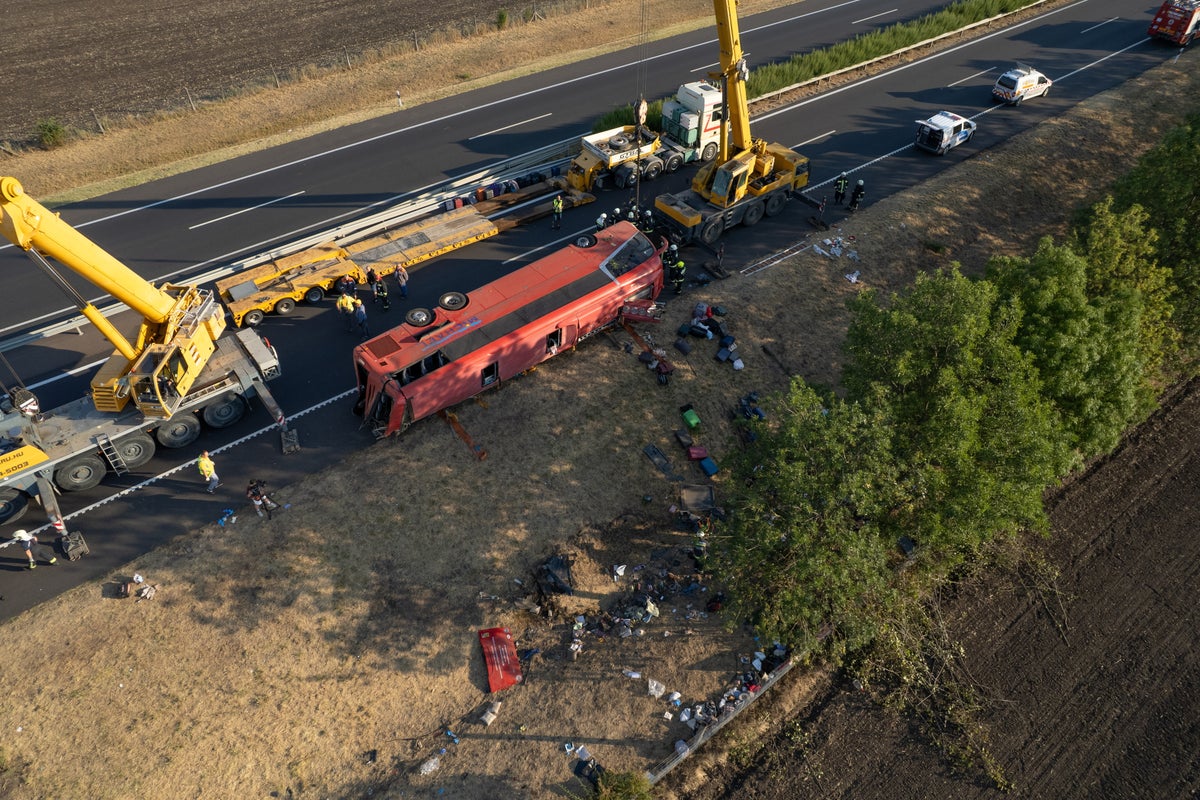
The asphalt on the M5 motorway in Hungary does not look like a place where lives unthread. It is wide, flat, and engineered for speed. To anyone driving north toward Budapest, it is simply a corridor of concrete connecting distant places, a grey ribbon stretching under a heavy, grey morning sky.
Buses pass by every few minutes. Large, high-riding coaches with tinted windows, carrying families, workers, and tourists chasing the promise of a different horizon. Inside those cabins, the air smells of old coffee, damp coats, and the low-humming anxiety of long-distance travel. Luggage is crammed tight in the belly of the vehicle. Passports rest in zipped pockets. Conversations drift between Polish phrases about the weather, the cost of gas, and what they will eat when they finally reach their destination. If you enjoyed this piece, you should read: this related article.
Then, a fraction of a second destroys everything.
According to verified reports from local authorities and emergency services, a tragedy unfolded on that stretch of road when a Polish tourist bus met with a catastrophic accident. Twelve people did not survive the impact. Ten others sustained injuries severe enough to scatter them across regional hospitals, fighting for breath, for stability, for tomorrow. For another look on this event, check out the recent coverage from TIME.
Let us be entirely clear about the mechanics of this event, using the verified facts available from rescue operations. The crash occurred on a major transit route, drawing immediate response teams, ambulances, and mobile intensive care units from surrounding districts. The vehicle suffered devastating structural damage, turning a cabin designed for safe transit into a site of unimaginable chaos.
(Note: While we can reconstruct the sequence of emergency responses through official police bulletins, the internal emotional landscape of those final moments must be understood through the universal lens of human vulnerability.)
Imagine looking out a bus window at passing fields, thinking about the hotel check-in or the coffee waiting at the next stop, and having reality instantly fracture.
Road safety experts often talk about kinetic energy in equations and coefficients of friction. They look at braking distances and tire tread depths. But physics is entirely indifferent to human hope. When a heavy passenger coach loses control, the sheer mass of the vehicle converts momentum into a force that defies easy containment.
Why do these disasters hit us with such profound disorientation? Because travel is built on an unspoken contract of trust. When we board a bus, we surrender control. We hand our safety over to a steering wheel we cannot touch, to an engine we cannot hear, to a road we cannot see around the next bend. We trust the engineering. We trust the driver. We trust the statistics that tell us public transit remains one of the safest ways to move across the continent.
And statistically, that remains true. Yet statistics offer cold comfort to a family waiting in Warsaw or Kraków for a phone call that never rings.
Consider what happens in the immediate aftermath. The sirens start. The flashing red and blue lights paint the wet tarmac in harsh, urgent strokes. First responders—paramedics, firefighters, police officers—step into a scene that defies routine. These are professionals trained for catastrophe, yet every crash carries a unique weight of human suffering. They cut through metal. They triage the wounded. They pull survivors from the wreckage, working with a desperate, practiced precision while the clock ticks down precious minutes.
Ten survivors. Ten individuals pulled from the twisted interior with fractures, trauma, and internal injuries. In the days following such an event, their world shrinks to the sterile white walls of a hospital ward, the rhythmic beep of monitors, and the slow, agonizing realization of who made it through and who did not.
Survivors guilt is not a clinical abstraction. It is a heavy, crushing presence in a hospital bed. Why me? Why did the seat three rows ahead absorb the brunt of the kinetic force while mine remained intact? That question haunts the recovery process far longer than the physical scars remain visible.
International transit across European borders is supposed to be seamless. The European Union has spent decades tearing down physical barriers, standardizing regulations, and ensuring that a vehicle can move from the Baltic Sea to the Mediterranean without stopping at a border post. But invisible barriers remain. Safety standards vary. Driver fatigue laws, though strictly monitored, run up against human biology. A single moment of lost concentration, a sudden mechanical failure, or a split-second miscalculation on a wet highway can instantly dismantle the illusion of absolute security.
We look at headlines like this and feel a momentary shudder. We click the link, read the casualty count, register the horror, and then we close the tab. We catch our morning train. We get behind the wheel of our cars. We board our own flights and buses. We have to. Life demands forward momentum.
Yet every tragedy on a highway is a permanent seam in the fabric of ordinary lives. Behind the number twelve are faces, birthdays, inside jokes, unfinished projects, and people who simply wanted to see a different part of the world. Behind the number ten are long, painful months of physical therapy, psychological healing, and the arduous task of putting a shattered routine back together.
The road on the M5 has been cleared. The debris swept away. The traffic flows north again, heavy and relentless, rubber humming against the concrete as if nothing ever happened. But the air above the tarmac still holds the echo of sirens, and the families left behind are left to navigate a world that changed forever in the blink of an eye.
.jpg)
