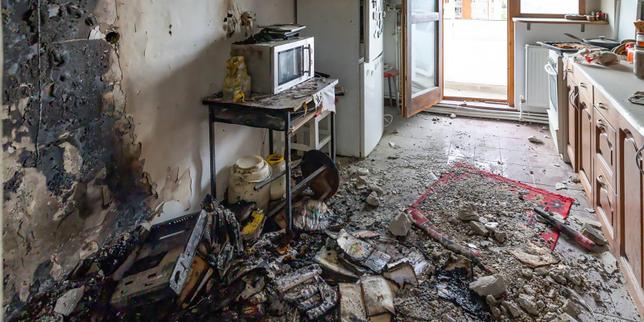
Fifty countries stood up at the United Nations to express their collective outrage. They drafted a strongly worded statement. They used terms like "inacceptable." They wagged their fingers at Moscow after a military drone crashed inside Romania’s borders.
The media swallowed it whole. Headlines framed it as a massive diplomatic blow to Russia, a unified front showing the strength of international law.
It is nothing of the sort.
This is bureaucratic performance art designed to mask a harsh reality: international diplomacy is currently bankrupt, and the United Nations has devolved into an expensive debating society where words are substituted for strategy. If you think fifty signatures on a piece of paper changes the tactical calculus on the ground in Eastern Europe, you are misunderstanding how modern conflict works.
The Myth of Collective Condemnation
Let’s look at the actual mechanism here. A drone—likely a Russian-designed Shahed variant used to target Ukrainian grain infrastructure along the Danube—veers off course and impacts Romanian soil. Romania is a NATO member. This triggers a flurry of panic, followed immediately by diplomatic damage control.
The standard playbook dictates that western allies must gather in New York, stand before a microphone, and read a joint statement. The media reports this as "global isolation" for the aggressor.
But look closer at the roster of those fifty nations. It is the usual suspect list: the core NATO alliance, EU members, and a handful of staunch global allies. It represents a specific geopolitical bloc, not the global community. Notice who is missing from the outrage machine? The Global South. India. Brazil. South Africa. Nations that control massive shares of the global population and economic growth are sitting on their hands, continuing to buy discounted Russian oil and commodities.
Singing from a shared hymn sheet in a Manhattan skyscraper does not equal global leverage. It equals an echo chamber.
The Drone Dilemma: Signal vs. Noise
The consensus narrative treats the drone crash in Romania as a deliberate, dangerous escalation—a provocation testing NATO’s red lines.
The reality is far more mundane, and far more terrifying for defense planners. It wasn't a test. It was an operational error born of proximity. When you conduct high-intensity electronic warfare and precision strikes mere meters from an international border, hardware fails. GPS signals are jammed. Spoofing occurs. Inertial navigation systems drift.
By treating an accidental overflight as a grand strategic gambit, western diplomats fall into a dangerous trap. They elevate a technical mistake into a casus belli, while simultaneously proving they have no real mechanism to punish it.
Imagine a scenario where NATO actually enforced the rhetoric these fifty nations spouted. What is the move? Do you invoke Article 5 over a piece of stray aluminum that hit an empty field? No. You don't. And because everyone knows you won't, the public condemnation looks empty. It signals weakness, not strength. It tells an adversary exactly how much friction they can introduce near NATO borders before triggering a real kinetic response.
Why the UN is the Wrong Tool for Modern Security
People often ask: "Why can't the UN Security Council step in and penalize these border violations?"
The premise of the question is fundamentally flawed. The UN was designed in 1945 to prevent total state-on-state industrial warfare between great powers by giving those exact powers a veto. It was built for stability, not justice. Expecting the UN to resolve a conflict where a permanent, veto-wielding member is the primary combatant is like asking a car to fly. The machine isn't broken; you're just trying to use it for something it wasn't engineered to do.
I have spent years analyzing international trade flows and defense supply chains during major disruptions. I have watched corporate boards and state departments pour millions of dollars into compliance and diplomatic hand-wringing, convinced that international resolutions create risk profiles. They don't. The markets know this. Defense contractors know this. The Kremlin knows this.
What actually shifts the needle? Raw industrial capacity and logistical endurance.
| Metric | Diplomatic Statements | Kinetic Reality |
|---|---|---|
| Primary Output | Press releases, symbolic votes | Artillery shells, air defense interceptors |
| Impact on Aggressor | Domestic propaganda fodder | Depleted logistics, restricted airspace |
| Enforcement Mechanism | Shaming | Physical destruction of assets |
| Time Horizon | Short-term news cycle | Multi-year war of attrition |
The Real Cost of Symbolic Diplomacy
When fifty nations waste their political capital on a joint statement that carries zero economic or military teeth, they commit a strategic error. They desensitize the public and exhaust their own diplomatic leverage.
Every time a "red line" is crossed without a tangible, physical consequence, the threshold for deterrence drops. The drone crash in Romania should have been handled quietly through military-to-military deconfliction channels, coupled with an immediate, unannounced deployment of advanced air defense batteries to the border region. That is the language of deterrence.
Instead, we got a press conference.
This focus on symbolic optics over hard capabilities is a systemic vulnerability. While western nations congratulate themselves on assembling a coalition of fifty signatories, the actual bottleneck of the conflict remains unchanged: factory throughput. The war in Ukraine is burning through air defense interceptors faster than western defense primes can manufacture them. A Patriot missile battery or a NASAMS unit cannot be willed into existence by a UN resolution.
Stop Measuring Intent, Start Measuring Capacity
If you want to understand where this conflict is actually going, stop reading the transcripts of UN sessions. Stop tracking how many countries sign onto solidarity pledges.
Start tracking the raw data that matters:
- Monthly production schedules of 155mm artillery ammunition in Europe and the US.
- The volume of machine tool imports flowing from East Asia into Russian defense factories.
- The deployment density of counter-UAS (Unmanned Aircraft Systems) electronic warfare networks along the Danube.
The obsession with diplomatic theater is a coping mechanism for a political class that has forgotten how to manage hard power. It is easier to coordinate fifty ambassadors for a photo op than it is to revitalize a decaying domestic manufacturing base or make the hard political choice to enforce a true maritime blockade.
The drone in Romania didn't expose Russian madness; it exposed western paralysis. The international community is attempting to fight a 21st-century war of attrition with 20th-century bureaucratic paperwork. Until the strategy shifts from public shaming to raw physical interdiction and industrial scale, those fifty signatures are worth exactly the cost of the paper they are printed on.
Stop looking at the podium. Watch the factories.