Silence.
That is the thing nobody ever puts in the police blotter, the eerie, vacuum-sealed hush that drops over the south side of Tallahassee in the fraction of a second between the last sharp crack of gunfire and the first wail of a cruiser siren. You do not read about the silence in a three-paragraph local brief. You read a headline. You read an age. You read the name of a historic institution reduced to a geographic marker—near FAMU—as if a century and a half of Black scholarship, marching band cadences, and late-night library study sessions were merely coordinates on a dispatch map. Expanding on this topic, you can find more in: What Most People Get Wrong About James Comey Being Charged a Third Time.
Fifteen years old.
Stop and let that number sit on your tongue for a moment. At fifteen, most teenagers are arguing over curfew, failing their first algebra quiz, or trying to figure out how to parallel park a rusted sedan without scraping the hubcaps. At fifteen, the prefrontal cortex—the brain’s biological braking system, the neurological architecture responsible for weighing tomorrow against tonight—is still years away from finishing its construction. Yet when Tallahassee police officers put handcuffs on a fifteen-year-old boy in connection with a shooting near Florida A&M University, the ink on the press release dried in minutes, treating a seismic human collapse like routine Tuesday paperwork. Analysts at Al Jazeera have provided expertise on this trend.
I know the weight of that red clay dust under your sneakers when the blue lights start strobing against the brick walls along Adams Street and Gamble Street. If you have ever walked those blocks after dusk, carrying a backpack heavy with textbooks while checking your peripheral vision at every idling car, you know the specific, exhausting tax that violence levies on a campus community. You learn to read body language from fifty yards away. You learn which streetlights are burned out. You learn to flinch at a backfiring exhaust pipe and pretend you did not.
The Geography of a Press Release
Look at how a standard news brief handles a story like this. It gives you the skeleton and throws away the heart. A shooting occurs near the university perimeter. Investigators canvass the neighborhood, pull security footage, interview witnesses, and take a fifteen-year-old juvenile into custody on felony charges. Nobody on the university side was killed, or perhaps a bystander was grazed, or property was shattered—and so the wider world scrolls right past it, filing it away under urban noise.
That is where we get the entire story backward.
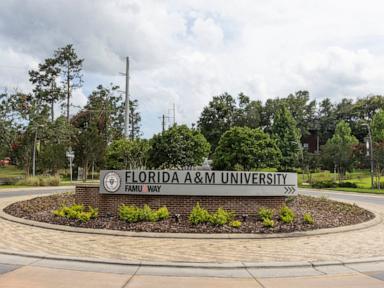
When an incident happens near Florida A&M University, the word near does an enormous amount of heavy lifting. It creates an imaginary glass wall between the campus and the surrounding Southside neighborhoods, pretending that bullets respect property lines or that trauma stops at the edge of the university quad. In reality, FAMU is woven directly into the fabric of Tallahassee’s oldest Black neighborhoods. Students live in the off-campus apartments lining Osceola and Railroad Avenue. Local kids cut across the edges of campus on their way home from school. Grandmothers sit on porches two blocks from academic halls where future pharmacists, engineers, and journalists are cramming for midterms.
Consider a hypothetical scenario that plays out in variations across college towns every single semester. Picture a nineteen-year-old sophomore—let’s call her Maya, a first-generation nursing student from Jacksonville—walking back from the Coleman Library at ten o'clock on a weeknight. Her biggest worry ten seconds earlier was whether she had enough money on her meal card for coffee before her eight-morning clinical. Then comes the pop-pop-pop three hundred yards away. Suddenly, Maya is flat against a concrete retaining wall, her heart hammering against her ribs so hard she cannot hear her own breathing, texting her mother three words: I am safe.
Now shift the camera three blocks over to the boy in the back of the patrol car.
He is fifteen. He is wearing a hoodie that is probably a size too big, his wrists pinned behind his back in steel cuffs that look absurdly heavy on arms that haven't finished growing. In the cold calculus of a charging document, he is a suspect, a threat neutralized, a statistic added to the ledger of juvenile gun crime. In reality, he is also a child whose childhood just detonated in public.
How a Child Ends Up Holding Steel
People love simple villains because simple villains excuse us from asking hard questions. If we can convince ourselves that a fifteen-year-old who pulls a trigger is simply born broken, we never have to ask where the gun came from, who left it unlocked on a nightstand or passed it through a car window, or what hollow spaces in his life made a piece of cold metal feel like the only armor available.
Think of a teenager’s decision-making process like driving a sports car with a stuck accelerator and drum brakes made of cardboard. Neuroscientists have spent decades mapping this exact mismatch. Around age fifteen, the brain’s reward and threat-detection centers—the limbic system—are firing at maximum voltage. Social status, perceived disrespect, fear of humiliation, and sudden surges of adrenaline hit a teenager with tidal-wave force. Meanwhile, the cognitive control center that whispers Walk away, this will ruin your life is still wired with temporary scaffolding.
Put a firearm into that neurological storm, and tragedy stops being a surprise; it becomes basic physics.
According to data tracked by the Centers for Disease Control and Prevention and the Everytown for Gun Safety research network, firearms remain the leading cause of death for children and teens in the United States, outpacing car crashes and cancer. Behind every single one of those numbers is a supply chain of adult negligence. Fifteen-year-olds cannot walk into a licensed dealer in Leon County and buy a handgun. Every gun in the hands of a middle-schooler or high-school freshman began its life in the legal market, purchased by an adult, and migrated into a kid's waistband through an unlocked glovebox, a burglarized home, or an illegal street transfer.
I have sat across from parents in courtroom hallways who looked as though they had aged twenty years in forty-eight hours. Their confusion is always the sharpest thing in the room. He was just at the kitchen table eating cereal yesterday, they will say, their voices catching on the absurdity of it. How did we get here?
It is terrifying to admit that even loving, attentive parents can lose the tug-of-war against a street culture amplified by social media algorithms. Today, an argument that used to end with a bruised ego behind a gymnasium gets broadcast, screenshotted, mocked in group chats, and escalated in real time until someone feels cornered into proving they aren't soft. A boy who might not even know how to tie a necktie suddenly finds himself holding a weapon designed to end a life in half a second.
The Invisible Weight Carried by FAMU
For Florida A&M University, every headline linking its name to nearby gunfire carries a double sting.
Founded in 1887 on the highest of Tallahassee’s seven hills, FAMU is a crown jewel among Historically Black Colleges and Universities. For generations, it has been an engine of upward mobility, turning kids from rural Florida towns and crowded urban districts into doctors, judges, Fortune 500 executives, and artists. Campus safety officials, Tallahassee police, and university leaders spend millions of dollars and thousands of hours tightening perimeter patrols, upgrading lighting, and coordinating emergency alert systems to protect that sanctuary.
Yet whenever an incident occurs off-campus—even blocks away—the shorthand of local journalism inevitably tethers the violence to the university’s name. Shooting near FAMU.
To a parent in Atlanta or Miami considering where to send their daughter for college, those three words land like a warning flare. They do not see the distinction between an off-campus residential street and the manicured lawns of the Set. They do not see the thousands of students who spent that exact evening tutoring local elementary kids, rehearsing with the Marching 100, or running biology experiments. One fifteen-year-old’s reckless act casts a shadow over forty thousand hours of quiet excellence.
And what happens to the neighborhood kids themselves? When young teenagers growing up within sight of a major university begin to see that campus not as their future—not as the place where they will one day wear a cap and gown—but as an alien territory on the other side of a police tape line, something vital in the civic bloodstream clots. Proximity without belonging breeds resentment. You can live five hundred yards from a university library and still feel like it belongs to another planet.
What Happens After the Booking Photo
Most readers stop paying attention the moment the arrest is announced. An arrest feels like an ending. The headline says 15-year-old arrested, we exhale, and we move on to the weather forecast.
In truth, the arrest is only the opening bell of a slow-motion collision that will grind on for years.
In Florida, prosecutors wield broad discretion—known as direct file—to charge juveniles as adults when a firearm is used in a violent felony. Depending on the exact charges filed in connection with the shooting, a fifteen-year-old can find himself stripped of the rehabilitative guardrails of the juvenile justice system before he is old enough to vote, buy a lottery ticket, or join the military.
Let’s trace the trajectory of that single pull of a trigger:
- The Immediate Fallout: Within hours, a teenager is fingerprinted, photographed, and placed in a detention cell where the fluorescent lights never fully go out and the steel doors clang with a finality that echoes in your bones.
- The Family Rupture: Mothers miss shifts at work to attend bond hearings; younger siblings absorb the shame and terror of watching police search their bedrooms; legal fees drain savings accounts that were barely holding together to begin with.
- The Victim's Ledger: Whoever was targeted—or caught in the crossfire—carries physical scars or the invisible, lifelong hypervigilance that makes every slammed car door feel like an ambush.
- The Long Shadow: Even if a teenager eventually walks out of a correctional facility at twenty-five or thirty, he emerges into an economy that slams doors in the face of anyone carrying a felony record, having spent his formative years learning survival inside a cage rather than adulthood inside a community.
Nobody wins in that ledger. Not the community, not the university, not the taxpayer footing fifty thousand dollars a year to incarcerate a youth, and certainly not the boy who traded eighty years of possibility for five seconds of panic or pride.
Breaking the Circuit Before the Next Siren
If we want fewer headlines about fifteen-year-olds in handcuffs near college campuses, we have to stop treating every shooting as an isolated weather event and start treating it like a public health contagion.
Violence moves through neighborhoods the exact same way a virus does: through proximity, exposure, and untreated trauma. Public health researchers who study community violence intervention—models like Cure Violence, which have been adapted in cities across the country—have demonstrated something remarkable. When you deploy trained credibility messengers—former insiders, mentors, coaches, and street outreach workers who know the neighborhoods block by block—to interrupt conflicts before they turn lethal, shootings drop dramatically. You don't wait for the 911 call. You step in when the rumors start circulating on Instagram. You sit on the porch with the angry fifteen-year-old and give him an off-ramp that lets him keep his dignity without picking up a gun.
At the same time, responsibility has to travel upstream to the adults who own the firearms. Secure gun storage is not a political talking point; it is basic household hygiene, no different than putting childproof caps on prescription bottles or fencing a backyard pool. A biometric safe or a ten-dollar cable lock can be the sole barrier separating a teenager’s worst impulse from an irreversible felony.
And universities, cities, and community leaders have to keep punching holes in that invisible wall between campus and neighborhood. Every summer bridge program, every youth mentorship initiative led by FAMU students, every open-door athletic clinic or coding camp turns a neighborhood kid from an outsider staring through a chain-link fence into a stakeholder who sees himself in the collegiate future right down the street.
Down on the south side of Tallahassee, the morning after the crime scene tape is rolled up and the cruisers pull away, the sun still comes up over the red clay hills. Students still walk to class with coffee cups in hand. The bells still chime across the campus green.
Yet somewhere in a juvenile detention intake room a few miles away, a fifteen-year-old boy is staring at a cinderblock wall, trying to calculate how many days make up ten years, and wishing with everything he has that he could take back a single second he didn't even understand.