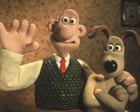
As Aardman Animations celebrates its milestone 50th anniversary, fresh archival disclosures reveal that stop-motion history nearly took a radically different path. Nick Park, the creative force behind British animation royalty, recently shared that Gromit, the iconic, silent canine companion to eccentric cheese enthusiast Wallace, was originally conceived as a cat. During the early developmental sketches and initial armature modeling phases for what would become A Grand Day Out, Park wrestled with a feline companion for his basement-inventor protagonist before abandoning the concept out of sheer frustration with the medium's mechanical limitations.
The pivot from feline to canine was not merely a matter of aesthetic preference. It altered the entire trajectory of modern character design and storytelling pacing. Cats carry a distinct behavioral vocabulary defined by aloof independence, unpredictable malice, and micro-movements that are notoriously unforgiving to translate into traditional stop-motion claymation. Dogs, by contrast, offer a broader canvas of earnest loyalty, physical elasticity, and expressive posture. By shifting species, Park accidentally unlocked the precise psychological foil needed for Wallace. A cat would have judged Wallace with arched indifference; a dog watched him with an intelligent, anxious, eye-rolling stewardship that anchored the chaotic narrative.
To understand why this near-miss matters fifty years into Aardman’s storied history in Bristol, one must examine the grueling physics of frame-by-frame production. Animating clay and plasticine requires absolute precision. A single second of screen time demands twenty-four individual photographic frames. When Park attempted to mold a cat during his student years at the National Film and Television School, the intricate geometry of whiskers, pointed ears, and lithe, slinking body lines proved counterproductive to the heavy-handed practicalities of working with malleable materials under hot studio lights.
The dog that replaced the feline concept underwent its own rapid evolutionary pruning. Alongside the species swap, Wallace himself lost a prominent mustache that had populated Park's earliest sketchbook drawings. What remained was a minimalist masterpiece of character economy. Gromit possesses no mouth, no spoken dialogue, and no internal monologue expressed through voiceovers. His entire emotional spectrum relies exclusively on the manipulation of two massive, mobile felt-covered ears and a pair of expressive brow ridges molded over wire armatures.
This constraint forced a masterclass in visual storytelling. Without dialogue, Gromit had to communicate exasperation, caffeine addiction, mechanical genius, and sheer existential dread through body language alone. When he reads the newspaper upside down, rolls his eyes at Wallace's cracked contraptions, or methodically lays down railway tracks inches in front of a moving carriage in The Wrong Trousers, the humor works because a dog's inherent obedience provides a funny contrast to his superior intellect. A cat performing the exact same actions would feel manipulative or sociopathic. A dog feels dutiful, trapped by affection into saving his oblivious owner from recurring disaster.
As the studio marks half a century of hand-crafted cinema amid an industry dominated by slick, algorithm-driven computer graphics, the survival of Gromit's archetype stands as a testament to physical constraints breeding creative excellence. Modern digital pipelines allow creators to alter character models with a keystroke, erasing the physical friction that forced Park to abandon his initial feline sketches. Yet that very friction—the stubbornness of clay, the weight of wire frames, the exhaustion of the animator hunched over a dark studio box—created a character whose silence speaks louder than any digital script. The history of animation is littered with lost ideas that deserved to stay buried, but the feline Gromit that never was reminds us that artistic breakthroughs often hide inside our most frustrating failures.