A 25-year-old goes to work before dawn. He expects to come home. Instead, his life ends violently against the trees lining the Princes Freeway.
Ashwani Sharma lost his life early Saturday morning in a crash that defies simple explanation. He was driving a B-double fuel tanker near Darnum, a quiet stretch of road east of Warragul in Victoria's Gippsland region. The details of the crash are utterly terrifying. They paint a grim picture of the extreme risks heavy vehicle operators face every single day on Australian roads.
This isn't just another traffic report fading into the 24-hour news cycle. It's a devastating loss for a young family. It's a wake-up call about the unforgiving nature of regional highways. We trust these drivers to move volatile, heavy cargo across the country while we sleep. When things go wrong, the consequences are absolute.
The Brutal Physics of the Princes Freeway Crash
Driving a fully loaded fuel tanker in wet weather is a high-stakes job. You don't get second chances.
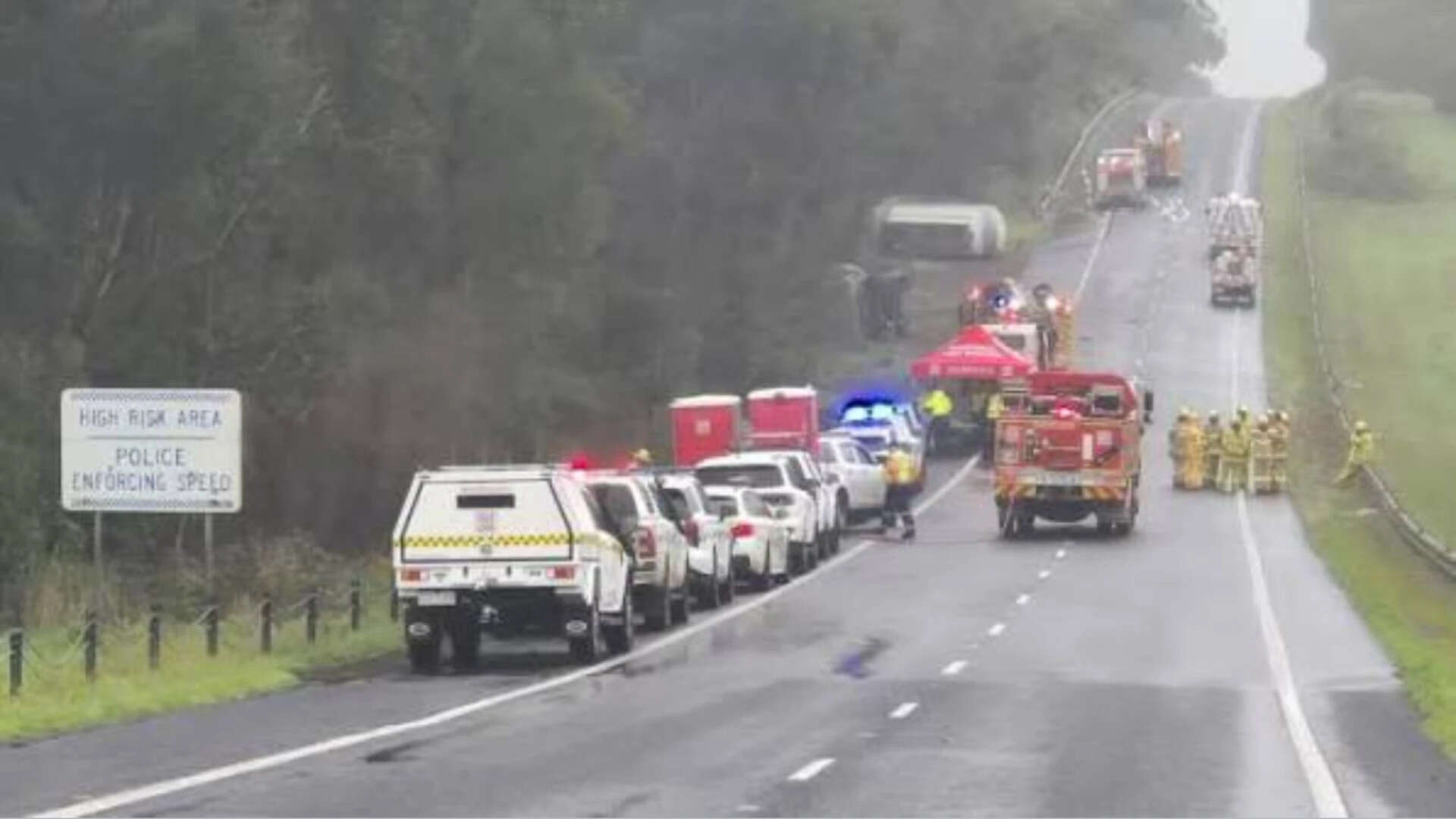
Shortly before 6:30 am, under challenging wet conditions, Sharma's rig lost control. It struck the wire rope cable barriers running along the eastbound lanes. The sheer force of a heavy combination vehicle hitting a barrier at highway speed is incredibly difficult to comprehend. The impact was violent enough to rip the driver's cabin entirely away from the two heavy fuel trailers.
Think about the mechanical strength required to hold a prime mover and its trailers together. Tearing them apart requires immense, catastrophic kinetic energy. The detached cabin then slammed into nearby trees and overturned, completely crushing the protective cell meant to keep the driver safe.
Acting Senior Sergeant Dave Harrison of Victoria Police called the scene "complex" and "horrific." He's absolutely right. When a heavy vehicle separates like that and leaves the roadway, survivability drops to near zero. Emergency services rushed to the twisted wreckage. Despite their rapid response, Sharma, who police believe was the sole occupant of the truck, died instantly at the scene.
A Young Widow and a Community Left Reeling
We often hear about highway fatalities in the abstract. A statistic on the evening news. A delayed commute. We forget there are real people left behind to pick up the pieces.
Sharma was just 25 years old. He had decades of life ahead of him. His sudden death has sent a massive shockwave through Melbourne's Indian community. It exposes the extreme vulnerability of young migrant workers who take on tough, isolated, high-risk jobs to build a foundation for their families. They work the ungodly hours. They drive the dangerous routes.
His wife is now facing an unimaginable nightmare. She woke up expecting her husband to finish his shift. Instead, she received the worst news anyone can get.
In a heartbreaking public appeal following the tragedy, she described her husband as a loving, caring, and hardworking man. Her words cut straight to the bone. "His sudden passing has left me and his family devastated both emotionally and financially."
Losing a spouse at 25 is emotionally destructive. It shatters every plan you made for the future. Losing your primary breadwinner in a split second instantly creates an acute financial crisis. Funeral costs. Repatriation expenses. Rent. Bills. The family is now relying on community support just to navigate the massive expenses that follow a sudden, violent death. It's a brutal reality check. When tragedy strikes a young family so early in life, the financial safety net is often completely non-existent.
The Mechanics of Heavy Vehicle Rollovers
We need to look closer at why these crashes happen. A B-double fuel tanker is essentially a rolling physics experiment. You have two massive tanks filled with liquid. That liquid sloshes. It moves. It creates dynamic weight shifts that challenge even the most experienced drivers.
When a truck enters a slide on wet bitumen, the driver has fractions of a second to correct it. If the trailer begins to sway or "whip," the momentum can easily overpower the steering input from the cab. Once the center of gravity shifts past the tipping point, a rollover is mathematically inevitable.
Cable barriers are installed along freeways to prevent head-on collisions. They catch standard passenger cars brilliantly. They absorb energy and keep sedans from crossing the median strip into oncoming traffic. But they aren't magic. When a fully loaded tanker hits them at freeway speeds, the wire ropes can act like a tripwire, catching the wheels or lower chassis and inducing a violent rollover.
The police investigation will eventually map out the exact sequence of events. Was it hydroplaning? A sudden mechanical failure? An evasive maneuver to avoid wildlife? We don't have those answers yet. But the structural failure of the truck highlights the raw, unstoppable momentum involved in high-speed heavy vehicle crashes.
The Environmental and Logistical Nightmare
A B-double tanker crash doesn't just block traffic. It creates an immediate, highly dangerous hazmat crisis that requires specialized emergency intervention.
The sheer violence of the collision ruptured the truck's containment systems. This triggered a massive fuel spill across the freeway. Hundreds of liters of highly flammable liquid poured out onto the asphalt, mixing with the rain and draining heavily into the surrounding bushland.
Authorities had no choice but to completely shut down all eastbound lanes between Darnum and Yarragon. The Country Fire Authority locked down the area after detecting dense, hazardous fumes rising from the wreckage. While they eventually confirmed there was no ongoing threat to nearby residents or the broader environment, the initial hours were incredibly volatile. One spark from the torn metal could have ignited a massive inferno.
The cleanup is slow, meticulous, and agonizing. You can't just tow the wreckage away. You have to decant the remaining fuel from the damaged trailers, neutralize the spilled chemicals, and carefully extract the mangled chassis without causing further environmental damage.
Public transport took a massive hit during this process. V/Line train services were entirely disrupted. Transport authorities were forced to scramble replacement coaches to run between Warragul and Traralgon for most of the day, leaving thousands of commuters stranded and delayed.
The Reality of the Princes Freeway
The Princes Freeway is a vital artery connecting Melbourne to the Gippsland region. It handles an enormous volume of passenger and commercial traffic daily. But it is notoriously unforgiving.
Stretching eastward, the freeway cuts through varied terrain. Near Darnum and Warragul, the road is flanked by heavy vegetation and massive trees. When the weather turns sour, this stretch becomes a gauntlet. Heavy rain pools on the bitumen, creating prime conditions for hydroplaning. For a passenger car, hitting a patch of standing water is scary. For a 60-tonne B-double, it is a life-or-death emergency.
Locals know the dangers well. They know exactly where the water pools and which bends get slickest after a dry spell. But even the most experienced drivers can be caught off guard by sudden, torrential downpours that characterize Victorian winters and spring mornings. The infrastructure, while regularly maintained, struggles to keep pace with the sheer volume of heavy haulage pushing through to the eastern industrial hubs.
The Silent Burden on First Responders
We must also acknowledge the people who have to clean up the aftermath.
When the call comes over the radio at 6:30 am for a heavy vehicle rollover with entrapment, police, paramedics, and CFA volunteers know exactly what they are driving into. It is a scene of absolute chaos.
Acting Senior Sergeant Dave Harrison didn't use the word "horrific" lightly. First responders are trained to handle trauma. But arriving to find a truck cabin completely ripped from its chassis and embedded in the tree line takes a severe psychological toll. They have to secure the hazardous materials, manage the immediate fire risk of a ruptured fuel tank, and then perform the grim task of victim recovery.
These emergency crews stand in the freezing rain, surrounded by toxic fumes, doing the hardest work imaginable. They carry the memories of these crashes with them for the rest of their lives. A 25-year-old victim is someone's son, husband, or brother. The emotional weight placed on our rural emergency services following a fatal trucking accident is immense and rarely discussed.
Why We Need Systemic Change
It is too easy to write this off as a tragic accident. We need to look harder at the systemic issues plaguing the heavy vehicle transport sector.
Are we pushing our drivers too hard? The National Heavy Vehicle Regulator (NHVR) enforces strict work and rest hours. Logbooks are heavily monitored. Fatigue management systems are better than they were a decade ago. But regulations on paper don't always translate perfectly to the realities of the road.
The supply chain demands absolute efficiency. Delays cost money. This unspoken pressure sits heavily on the shoulders of the driver holding the steering wheel. When bad weather hits, slowing down to a genuinely safe speed often means missing a delivery window. Missing a window means unhappy clients and potential lost wages.
We need to prioritize safety over schedules. We need to invest heavily in advanced driver training, specifically focusing on emergency vehicle control in adverse weather conditions. We need better road surface drainage on critical freight routes like the Princes Freeway. And most importantly, we need to build a culture where a driver feels completely empowered to pull over and stop if the conditions become too dangerous, without fear of financial penalty.
Standing With the Family
Ashwani Sharma went to work to provide for his family. He paid the ultimate price on a wet, dark stretch of the Princes Freeway.
The Indian community in Melbourne is rallying fiercely around his young widow. They are organizing support, raising funds, and providing the emotional backing she desperately needs right now. But they shouldn't have to carry this heavy burden alone.
The trucking industry, the companies that rely on these drivers, and the broader Australian public need to step up. We must recognize the massive human cost of keeping our supply chains moving efficiently. These drivers are out there in the absolute worst conditions imaginable, hauling the dangerous goods that keep our modern lives comfortable.
If you are local to the Melbourne area, part of the transport community, or just someone who understands the cruelty of losing a spouse so young, look for the verified fundraisers supporting Sharma's wife. Give what you can. Share her story. Financial ruin shouldn't be the reward for a young man losing his life doing a hard, essential job for our economy. Do not look away from this tragedy. The time to support this grieving family is right now.