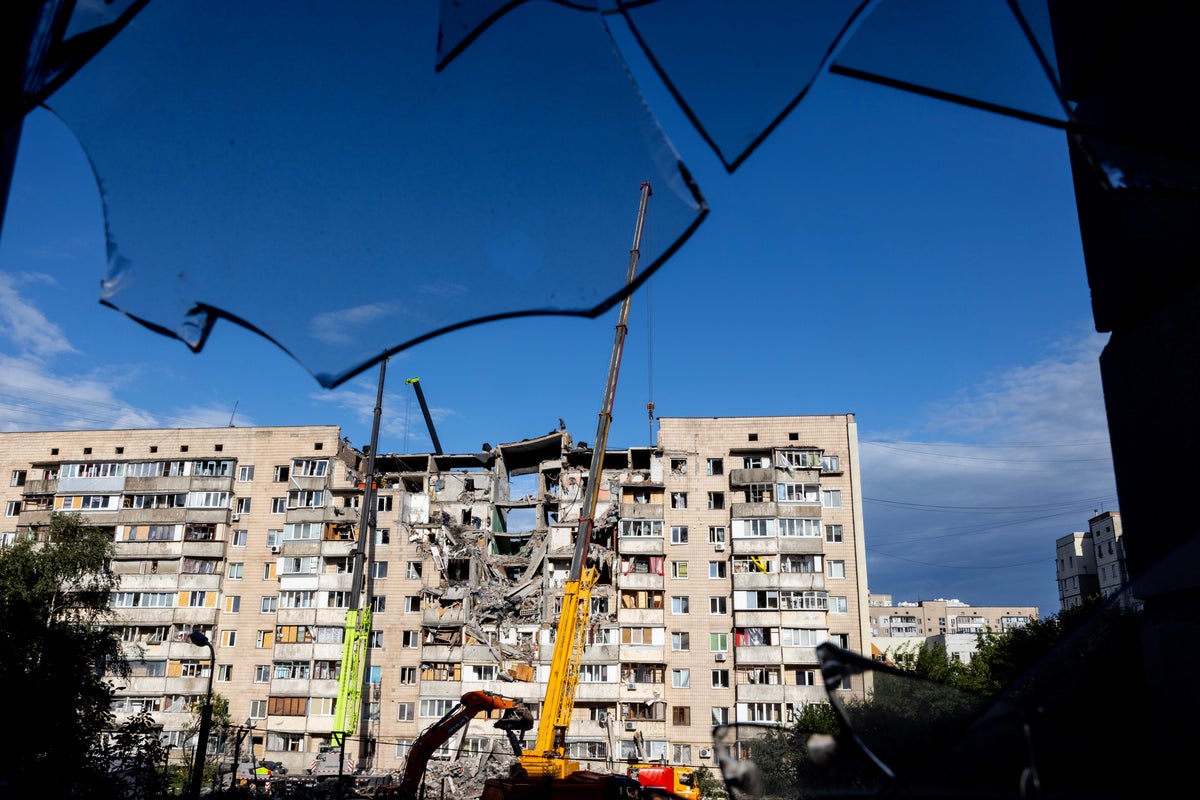
The international press is stuck in a loop. Every time a Russian missile barrage strikes Ukrainian infrastructure, the news cycle follows a predictable, lazy script. Volodymyr Zelensky pleads for more Patriot interceptor missiles, Western analysts nod solemnly about defensive gaps, and the media treats these multi-million-dollar interceptors as a silver bullet.
It is a narrative built on a fundamental misunderstanding of modern attrition warfare.
Begging for more Patriots is a losing strategy. The math does not work, the industrial capacity does not exist, and treating air defense as a purely defensive procurement problem is a recipe for catastrophic failure. I have spent years analyzing defense procurement and military logistics. In high-intensity conflict, ignoring the cost-to-benefit ratio of your munitions is how you lose a war of attrition.
We need to stop talking about Patriot shortages as a temporary supply bottleneck. It is a structural dead end.
The Mathematical Certainty of Interception Failure
The conventional narrative says Ukraine just needs enough Patriot batteries to create an impenetrable shield. This is a fantasy.
Let’s look at the brutal arithmetic of air defense. A single Patriot Advanced Capability-3 (PAC-3) MSE interceptor costs roughly $4 million. Russia regularly attacks using a mix of low-cost Shahed-136 kamikaze drones, Kh-101 cruise missiles, and North Korean-supplied ballistic missiles. A Shahed drone costs around $20,000 to $40,000 to manufacture.
When you fire a $4 million missile to destroy a $30,000 drone, you are losing the economic war. Even if you achieve a 100% interception rate, your adversary wins by bankrupting your supply lines.
Furthermore, Western defense industrial bases cannot physically manufacture interceptors fast enough to match Russian production. Lockheed Martin produces roughly 500 PAC-3 MSE missiles per year, with plans to scale to 650. In a high-intensity conflict, a country can burn through 500 interceptors in a matter of weeks, not years. Russia’s defense sector is operating on a 24/7 war footing, utilizing deep stockpiles and simplified manufacturing pipelines.
You cannot solve a production deficit with press releases and emergency aid packages. The physical inventory simply is not on the shelf.
The Flawed Premise of Absolute Protection
People frequently ask: "How can Ukraine protect its power grid without more Patriots?"
The question itself is flawed. It assumes that static defense can outpace dynamic, asymmetric offense. No nation on Earth, including the United States, possesses enough air defense assets to blanket an entire country against sustained, multi-vector missile salvos.
Air defense is designed to protect high-value, concentrated targets like command centers, critical naval ports, or specific troop concentrations. Attempting to use Patriot systems as a comprehensive umbrella for civilian energy infrastructure is an inefficient allocation of rare, strategic assets.
When you deploy a Patriot battery to protect a power plant, you pull it away from the front lines. This gives Russian tactical aviation more freedom to drop devastating FAB glide bombs on Ukrainian defensive positions. By demanding more interceptors for the rear, Ukraine is inadvertently compromising its frontline operational capabilities.
The Uncomfortable Alternative: Offensive Air Defense
If more Patriots will not save Ukraine's infrastructure, what will? The answer is uncomfortable for Western policymakers who fear escalation: you stop the arrows by killing the archer.
True air defense is offensive. It requires destroying the launchers, the factories, and the bomber fleets on the ground before they ever release their payloads.
- Targeting the Logistics Hubs: Instead of tracking a Mach 5 missile in flight, hit the rail lines and storage depots supplying the launch platforms.
- Neutralizing the Airfields: Cheap, long-range Ukrainian strike drones hitting Engels or Olenya airbases do more to protect Kyiv's power grid than ten Patriot batteries ever could. A Tu-95 bomber damaged on the tarmac cannot fire cruise missiles.
- Decentralizing the Infrastructure: Instead of defending massive, centralized Soviet-era thermal power plants that serve as massive targets, investment must shift toward modular, distributed energy generation that is too small and numerous to justify a missile strike.
Admittedly, this approach carries heavy risks. It requires deep strikes inside sovereign Russian territory, utilizing Western-supplied intelligence and long-range weapons. It forces Western political leaders to discard their arbitrary red lines. But the alternative is watching Ukraine slowly bleed out under an unsustainable defensive strategy.
Dismantling the Defense Industry Myth
The Western defense industry loves the Patriot narrative. It justifies massive, multi-billion-dollar procurement contracts and keeps stock prices high. But these systems were designed for localized conflicts, not prolonged continental warfare against a peer adversary.
We must stop treating air defense as a scorecard where a high interception rate equals victory. If Russia fires thirty missiles, and Ukraine intercepts twenty-eight, the media reports it as a success. But the two missiles that get through destroy a turbine hall, knocking out power to a million people for months.
The defense failed. The cost asymmetry worked precisely as Russia intended.
Stop asking when the next Patriot battery will arrive. Start asking why we are still forcing Ukraine to fight a 21st-century war with a defensive mindset that was obsolete before the Berlin Wall fell.
The only effective air defense is a smoking crater where the missile used to be.