News desks love a massive evacuation number. When an emergency hits a tropical paradise, headlines inevitably shout about the thousands of guests rushed to safety. It creates a comfortable illusion of order. The narrative follows a predictable script: a crisis occurs, leadership executes a flawless logistical maneuver, and disaster is contained.
This narrative is dangerously wrong.
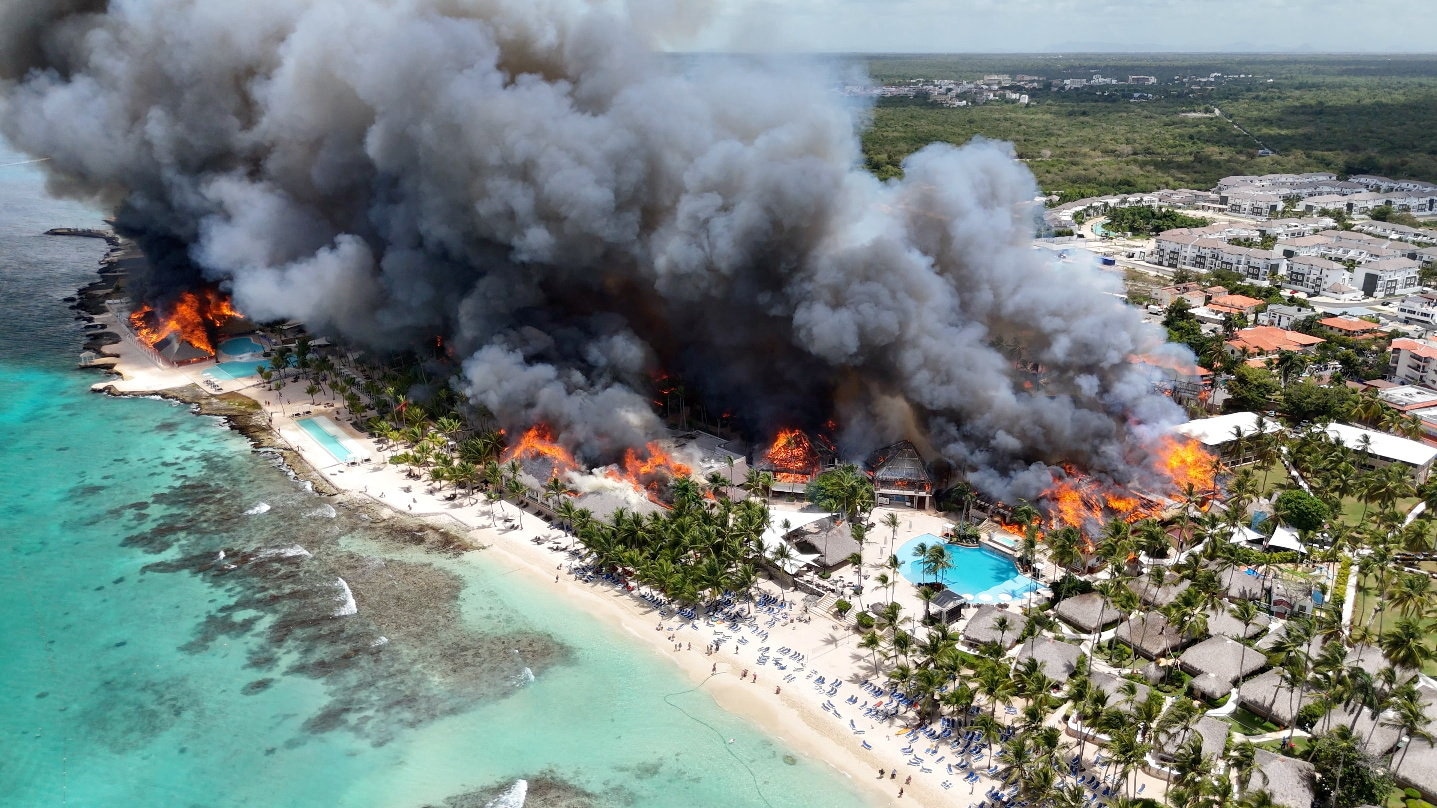
Mass evacuations are not proof of a functioning safety protocol. They are often evidence of a systemic failure to contain a threat at its origin point. When you see a headline celebrating the evacuation of 1,700 people from a beach property, you are looking at a near-miss catastrophe, not a triumph of hospitality management.
The Illusion of Total Safety
The travel industry judges emergency response by a binary metric: did people get out, or did they not? If the majority survived, the response is deemed a success. This surface-level analysis ignores the severe risks inherent in moving large volumes of panicked, untrained civilians through unfamiliar architecture under duress.
Crowd dynamics experts have long warned about the dangers of panic-induced surges. In any large-scale property, moving over a thousand people simultaneously through restricted corridors, stairwells, and exit points creates immediate friction. The risk of trampling, asphyxiation, and disorientation frequently rivals the initial threat itself.
Hospitality executives often treat evacuation as a logistical exercise akin to moving guests to a conference hall. It is not. It is a high-stakes disruption that relies entirely on human behavior remaining rational during an irrational event.
Why Early Containment Fails in Mega-Resorts
The fundamental architecture of modern luxury resorts works against immediate hazard containment. To create the open, sprawling vistas that travelers demand, properties utilize massive atriums, connected pavilions, and open-air corridors. While aesthetically pleasing, these design choices create ideal paths for smoke and fire to travel unhindered.
Compounding this architectural vulnerability is the industry-wide reliance on low-wage, high-turnover seasonal staff. The individuals expected to guide guests during a crisis are often the least trained members of the organization. A standard front-desk clerk or poolside attendant receives minimal emergency management training. Yet, when the alarms sound, these workers become default incident commanders.
True operational resilience requires shifting capital from post-incident response to immediate, localized suppression. This means implementing compartmentalization strategies that isolate hazards to their exact room or zone of origin. If a fire starts in a commercial kitchen or a laundry facility, the guest wings should remain entirely unaffected and oblivious. An evacuation of an entire property means your containment strategy failed.
The Problem With PAA: "Are All-Inclusive Resorts Safe?"
The premise of this common query is fundamentally flawed. Safety is not a static attribute that a property possesses or lacks. It is a dynamic variable determined by ongoing operational discipline, local infrastructure reliability, and regulatory enforcement.
When travelers ask if these destinations are safe, they are usually looking for reassurance regarding crime stats or structural integrity. The real danger is much more mundane: the gap between international safety standards and local enforcement. A resort can feature five-star luxury branding while operating on a municipal power grid and water supply that cannot support the property's internal fire suppression systems during a peak-load event.
Furthermore, the self-contained nature of all-inclusive properties creates a false sense of security. Guests assume that because they are behind a gate, a comprehensive corporate safety net protects them. In reality, the corporate entity often franchises the brand name to a local holding company, decoupling the global standard from the daily operational reality on the ground.
Stop Auditing Paperwork, Start Stress-Testing Operations
If you manage a hospitality portfolio, your current safety audits are likely useless. Most compliance checks consist of verifying that fire extinguishers have tags and that exit signs are illuminated. This is security theater.
To actually protect occupants, operators must transition to live, unannounced stress testing.
- Simulate Systemic Failure: Do not test alarms during the day when the property is half-empty. Trigger a simulated zone failure at 2:00 AM on a rainy Tuesday when occupancy is at 95 percent and staffing is at its lowest.
- De-centralize Command: Assume your primary manager is incapacitated. Test whether a night auditor or a security guard can autonomously interface with municipal emergency services and operate the main control panel without corporate oversight.
- Audit the Local Infrastructure: If the municipal water pressure drops below a certain threshold, does your property have independent, gravity-fed secondary reservoirs capable of sustaining suppression systems for a minimum of two hours? If you do not know the answer, your safety plan is a gamble.
The Cost of the Status Quo
This contrarian approach demands significant capital expenditure. Upgrading containment barriers, installing redundant localized suppression systems, and paying for continuous, rigorous staff training eats directly into quarterly margins. It is a hard sell for boards focused on immediate returns.
The alternative, however, is to continue relying on luck and large numbers. Every time a resort evacuates thousands of people successfully, the industry validates a broken model. They celebrate the escape rather than mourning the failure to prevent the crisis from spreading.
Relying on mass evacuation as a primary safety mechanism is equivalent to relying on a parachute as a primary flight control. It is an admission that control has already been lost. Stop measuring success by how many people fled into the night. Start measuring it by how tightly a hazard was contained before a single guest ever smelled smoke.