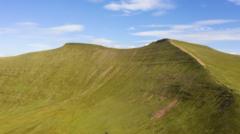
Pen y Fan doesn't care how fit you think you are. The highest peak in South Wales looks modest on paper at 886 meters, but its weather changes in minutes, and its slopes have broken elite soldiers for decades. On Saturday, July 4, 2026, the mountain claimed another life when a 68-year-old man collapsed and died during the Fan Dance Race Series, a grueling 24-kilometer civilian endurance event modeled directly on the British military's SAS selection phase.
Emergency services, including mountain rescue teams and the Welsh Ambulance Service, rushed to the peak around 11:00 AM following urgent welfare calls. It was too late. Dyfed-Powys Police later confirmed the man passed away at the scene. While officials state the death isn't suspicious, the tragedy shines a harsh light on the exploding civilian subculture of extreme military-style events. People are paying good money to push their bodies to absolute breaking points, often without realizing that nature plays by its own rules.
The Brutal Reality of the Pen y Fan SAS Selection Route
The Fan Dance isn't your average weekend mud run. It's a precise replica of the load-bearing march used in the first stage of the UK Special Forces selection process. Organized by Avalanche Endurance Events (AEE)—a company founded and managed by former SAS and SBS operatives—the march requires participants to navigate the steep, unforgiving terrain of Bannau Brycheiniog (the Brecon Beacons).
Participants usually choose between two categories. You either go "clean fatigue" with a regular trail running pack, or you choose the authentic military experience, carrying a weighted bergen backpack weighing up to 35 pounds plus food and water.
The route forces you up the famous "Jacob's Ladder," a relentless, steep stone staircase that destroys your calves and tests your mental resolve. You reach the summit, touch the trig point, and then turn around to do it all over again from the other side.
Military history casts a long, dark shadow over this specific patch of Welsh wilderness. In July 2013, three prospective SAS reservists—Edward Maher, Craig Roberts, and James Dunsby—died from hyperthermia during a selection march on a scorching 31°C day. In 2016, Corporal Joshua Hoole collapsed and died just 400 meters from the finish of a similar military fitness test nearby. The Ministry of Defence faced scathing inquests over those tragedies, proving that even young, peak-condition soldiers can succumb to this terrain when the conditions turn hostile.
Why Civilian Endurance Events Are Surging in Risk
We live in a culture obsessed with type-two fun. That's the kind of suffering that feels miserable while it's happening but great once it's over. Events like the Fan Dance, brutal ultramarathons, and tactical challenges appeal to an aging demographic of high-achievers who want to test their limits.
But there's a massive difference between running a flat city marathon and marching over a mountain with a heavy pack.
- The Load-Bearing Trap: Carrying 35 pounds shifts your center of gravity, crushes your spinal alignment, and forces your cardiovascular system to work exponentially harder. Your heart rate spikes, and your body generates massive internal heat, even on a cool day.
- The Age Factor: The human body changes as it ages. Cardiovascular elasticity decreases, and our ability to regulate internal core temperature degrades. Pushing for peak physical exertion at 68 on an unyielding incline carries vastly different physiological risks than doing it at 25.
- The Mindset Problem: People who sign up for military-inspired challenges usually possess a "never quit" attitude. This grit is commendable, but it's also dangerous. When your body screams at you to stop because your organs are overheating or your heart is failing, a stubborn mind will often force you to keep walking right into a medical emergency.
How to Prepare Safely for Military Grade Challenges
If you're dead set on tackling a challenge like the Fan Dance, you need to respect the mountain. You can't just train on a commercial treadmill and assume you're ready for the Brecon Beacons.
First, master the art of "rucking" gradually. Never put 35 pounds in a pack on day one. Start with 10 pounds and walk on flat ground. Slowly increase the weight by no more than 10% each week, and only introduce steep elevation once your core, hips, and ankles have adapted to the load.
Second, listen to your body's early warning signs. Dizziness, sudden confusion, lack of sweating, or an uncontrollably racing heart are not things you can just "tough out." They are signs of heat illness or cardiac distress. If you feel these symptoms coming on, drop your pack, get into the shade, hydrate, and notify event staff immediately. No plastic medal or finisher t-shirt is worth your life.
For those looking to understand the intense mental and physical preparation required for these grueling mountain routes, watching real-world accounts of military training can provide stark perspective. This investigative look into past tragedies on the very same peaks underscores the unforgiving nature of the terrain: BBC Documentary on Brecon Beacons Training Risks.
Step one for your next challenge starts today. Get a proper medical screening, especially if you're over 40, to rule out any underlying cardiac issues before you lace up your boots.