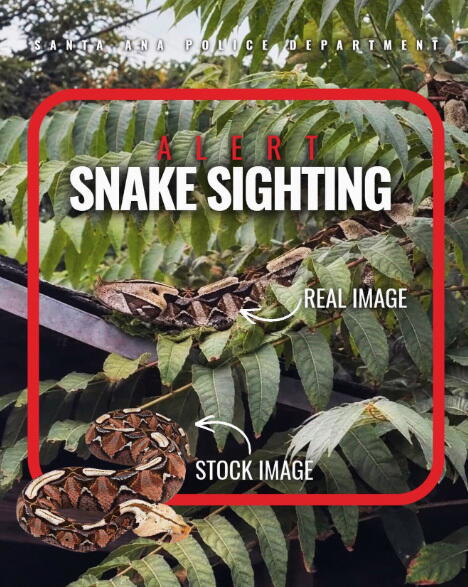
Every time someone renders a scaly reptile with a diffusion model and uploads it to neighborhood boards, local law enforcement treats it like an active shooter incident.
Police departments issue urgent public warnings. News anchors furrow their brows. Panicked citizens lock their sliding glass doors over a synthetic creature that possesses fewer polygons than a PlayStation 2 asset.
The lazy consensus says this is a terrifying new frontier of digital deception. The narrative argues that generative tools are outstripping human credulity, flooding our streets with hyper-realistic chimeras that will paralyze municipal services through sheer optical terror.
It is a comfortable panic. It lets chiefs of police blame algorithms for an institutional failure that has nothing to do with pixels and everything to do with competence.
I have spent the last decade watching public institutions fail to triage basic information streams. The panic over synthetic reptiles is not a technology crisis. It is a symptom of a municipal infrastructure that cannot tell the difference between a high-resolution photograph and a JPEG artifact generated by a bored teenager on a laptop.
The Anatomy of a Manufactured Panic
Let us look at the actual mechanics of the incident that triggered this latest round of civic hand-wringing. A low-quality image of an alleged exotic snake circulated in a suburban pocket of Southern California. Instead of running a basic reverse-image search, verifying scale against known environmental cues, or applying two seconds of critical inspection, authorities treated the digital fabrication as zoological fact.
They amplified it. They turned a localized Photoshop exercise into a regional panic.
When you give a badge and a megaphone to people who cannot distinguish between a real-world hazard and an obvious computational glitch, you do not have a security problem. You have a filtering problem.
The software did not cause the panic. The institutional reflex to panic did.
For decades, public safety messaging operated on a simple broadcast model. The state said something was dangerous; citizens believed it because the information bottleneck required it. That monopoly on threat assessment is gone.
Instead of adapting to an environment where anyone can mint a convincing graphic in five seconds, departments are doubling down on an outdated posture of unearned authority. They expect citizens to trust their threat assessments while simultaneously proving they lack the technical literacy to verify a primary source.
The Myth of the Unbreakable Eye
The foundational lie of the current moral panic is that artificial imagery is getting too good to spot.
It is not.
Look closely at the snake images that supposedly terrify neighborhoods. The lighting makes no physical sense. The scales repeat patterns that betray algorithmic shortcuts. The depth of field is flat, resembling a video game render from 2014 more than a living organism captured by a sensor.
People fall for these images because they want to fall for them. Panic is addictive. It offers a brief, thrilling injection of relevance into an otherwise mundane suburban existence.
When a police department validates a synthetic snake, they are scratching that itch for their constituents. They are confirming the worst fears of a public that has been trained to believe danger lurks behind every virtual bush.
We do not need new legislation to watermark pixels. We do not need federal agencies regulating open-weight models because someone generated a python on a suburban lawn. We need to stop treating administrative illiteracy as a national security emergency.
What Real Operational Resilience Looks Like
If your municipal communications team can be paralyzed by a mid-tier prompt engineer using a free Discord bot, your crisis management apparatus is obsolete.
Private sector entities figured this out years ago. Financial institutions do not panic when someone generates a fake corporate logo; they run verification chains. Logistics companies do not shut down shipping lanes because someone drew a digital roadblock on a map. They cross-reference telemetry, sensor data, and ground truth.
Municipalities rely on vibes.
When a report comes in about a dangerous animal, a chemical spill, or a structural threat, the immediate instinct should be skepticism, not amplification. Every dispatch center should have baseline verification protocols that treat incoming visual media as guilty until proven innocent.
Instead, departments rush to be first on social media. They trade accuracy for engagement, mimicking the worst impulses of the platforms they claim are poisoning public discourse.
The Cost of Cowardice
Every hour police officers spend chasing synthetic reptiles is an hour they are not solving actual crimes. Every press release dedicated to debunking a digital creature is bandwidth stolen from real public safety challenges.
By treating these pranks as sophisticated cyber-attacks, law enforcement is playing defense against a ghost. They are validating the worst actors by treating low-effort trolls like master saboteurs.
Stop asking how we can stop people from generating fake images. You cannot. The open-source genie left the bottle, locked the door, and threw away the key.
Start asking why our public servants fold the second a JPEG looks mildly unusual. Until we fix that intellectual rot, the next panic is just a prompt away.