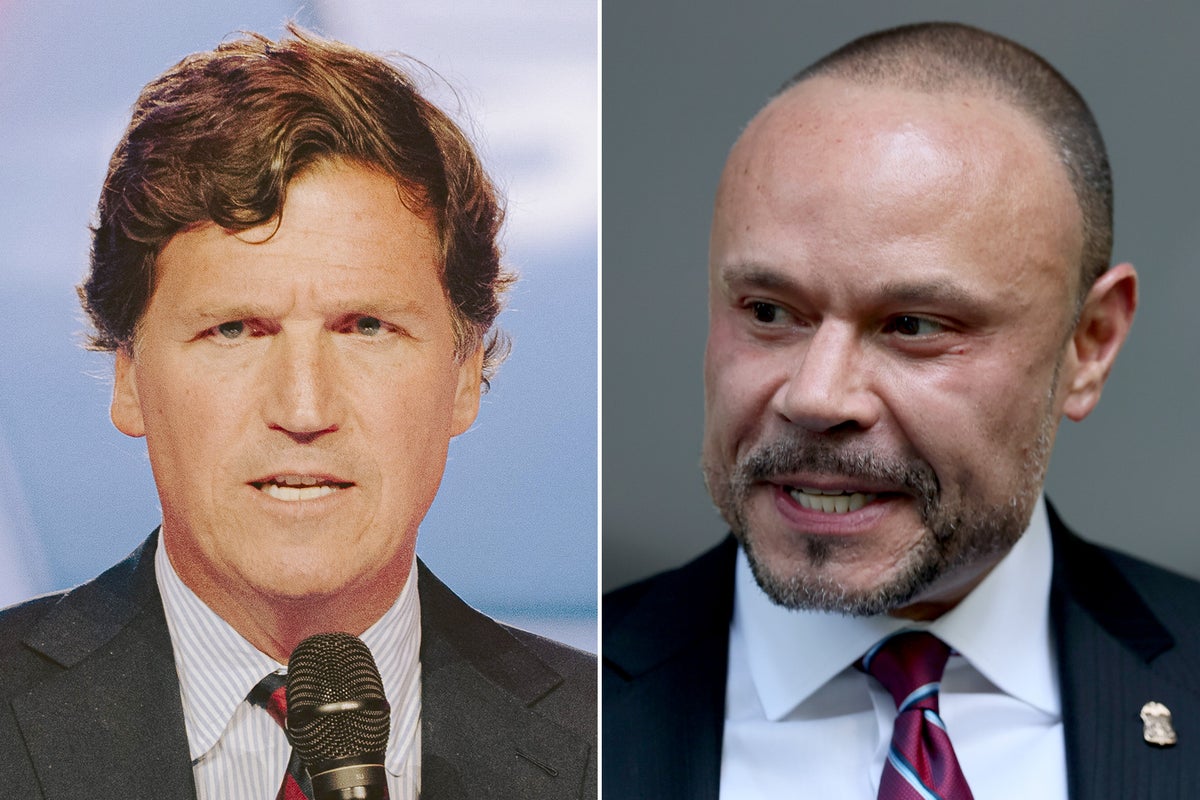
The media ecosystem thrives on artificial friction. When Dan Bongino and Tucker Carlson trade rhetorical blows over the details of the July 2024 Butler, Pennsylvania shooting, mainstream commentators rush to cover it as a civil war within independent media. They treat it as a high-stakes battle for the truth of a historical event.
They are missing the entire point.
This isn't a war over facts. It is a masterclass in audience retention. The lazy consensus among media watchdogs is that this public disagreement represents a fracturing of alternative news platforms. In reality, this public friction is the exact mechanism that keeps both audiences locked into the alternative media loop. It is a symbiotic content engine, and the public is buying the theater wholesale.
The Mirage of the Independent Fracturing
Mainstream analysis treats political commentators like traditional journalists bound by strict editorial alignment. When two major figures disagree on a massive story—like the mechanics and security failures of the Trump assassination attempt—the immediate narrative is that one must destroy the other.
That is 20th-century thinking.
In the modern media architecture, disagreement is currency. When Bongino challenges Carlson's platforming of alternative theories regarding the Butler shooting, he isn't trying to cancel Carlson. He is validating his own brand as the rigorous, boots-on-the-ground law enforcement expert. Simultaneously, Carlson validates his brand as the ultimate skeptic willing to ask the questions others deem too volatile.
- Brand Position A (Bongino): The institutional insider who knows how Secret Service details operate and demands procedural accountability.
- Brand Position B (Carlson): The macro-analyst who views institutional failure not as incompetence, but as design, questioning the broader narrative.
These positions do not cancel each other out. They create a closed-loop ecosystem. The viewer who watches Bongino's takedown of Carlson's guest then clicks over to Carlson to see the response. The attention remains entirely within the independent media ecosystem, starving traditional networks of the eyeballs they desperately need to claw back. I have watched media companies spend millions trying to engineer organic engagement, yet they fail to realize that controlled friction outperforms polite alignment every single day.
Dismantling the Premium on Pure Consensus
People frequently ask: Why can't independent media figures agree on basic facts regarding major national events?
The question itself is flawed. It assumes that consensus is the ultimate goal of news delivery. Consensus is boring. Consensus breeds complacency. More importantly, consensus is what drove audiences away from traditional cable news networks in the first place.
When every anchor on every major network repeats the exact same talking points, the audience feels the lack of authenticity. The friction between commentators is actually a sign of a functioning intellectual marketplace, even if that marketplace is loud, chaotic, and occasionally prone to exaggeration.
Consider the mechanics of the Butler shooting investigations. The official congressional reports and the independent oversight panels have provided a mountain of data regarding communication breakdowns, drone detection failures, and line-of-sight oversight.
[Traditional Media] ----> Single Narrative ----> Audience Boredom
[Independent Media] ---> High Friction Dispute -> High Audience Engagement
When a commentator focuses on these logistical failures, they are operating within a framework of institutional reform. When another commentator pushes past that framework to suggest deeper systemic malice, they are shifting the goalposts from operational incompetence to historical conspiracy. The clash isn't over the data itself; it's a fundamental disagreement on the nature of institutional failure.
The downside of this contrarian model is obvious: it fractures objective reality for the consumer. If you follow one thread, you see a series of tragic, bureaucratic blunders. If you follow the other, you see a coordinated, malevolent operation. The truth usually sits in the mundane reality of bureaucratic rot, but mundane rot doesn't generate millions of downloads per episode.
The Mechanics of Public Disagreement as Marketing
Look closely at how these public disputes play out across platforms. A clip is clipped for social media. A headline is generated. The comment sections turn into digital gladiator arenas.
This is not accidental chaos; it is highly optimized distribution.
- The Trigger: One creator platforms a highly controversial stance or guest.
- The Reaction: A peer creator calls out the stance, defending their own domain expertise.
- The Amplification: Algorithms detect the surge in cross-platform mentions and push both creators to wider audiences.
- The Monetization: Both platforms see a spike in premium subscriptions, ad reads, and direct engagement.
Stop viewing these clashes as genuine ideological hatred. They are structural necessities for businesses that rely on direct-to-consumer attention. The moment independent media figures stop arguing with each other is the moment they become as stale as the corporate networks they replaced.
The real casualty here isn't the truth—the truth remains accessible in the hundreds of pages of public testimony and physical evidence. The casualty is the audience's blood pressure, manipulated by a perfectly executed theater of conflict that treats news analysis as a contact sport.
Stop looking for a victor in the podcast wars. The house always wins, and in this game, both players own the house.