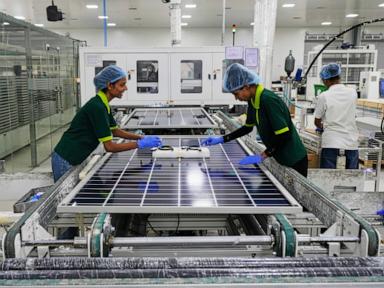
Chinese technology startups operating inside state-backed innovation zones face an acute structural paradox. While municipal governments subsidize hardware prototyping, supply chain integration, and domestic infrastructure at unmatched speeds, the domestic market itself suffers from severe deflationary pricing and margin compression. To achieve sustainable unit economics, these enterprises must convert high-profile diplomatic events—such as state visits by U.S. leadership to flagship Chinese tech hubs—into commercial pipelines with foreign buyers. The survival of early-stage Chinese hardware and enterprise software firms depends entirely on executing a cross-border arbitrage strategy: manufacturing at Chinese marginal cost while pricing at Western or global enterprise value.
The Structural Economics of Domestic Margin Compression
Understanding why Chinese startups aggressively court foreign procurement officers during diplomatic summits requires examining the unit economics of the domestic Chinese technology sector. Over the past decade, municipal authorities across major Chinese hubs—most notably Shenzhen, Hangzhou, and Shanghai—deployed massive industrial policy capital to build dense manufacturing ecosystems. This concentration reduced the time and capital required to move from a computer-aided design file to a functional hardware prototype. In other news, take a look at: Stop Giving the FAA Billions to Fix Air Traffic Control.
However, the same state-driven capital allocation created hyper-competitive domestic markets characterized by rapid commoditization. When dozens of startups receive simultaneous municipal grants, tax holidays, and subsidized industrial park leases to pursue identical sectors—such as industrial robotics, autonomous logistics, or commercial drones—domestic pricing collapses toward marginal cost.
This dynamic produces three operational bottlenecks for domestic founders: The Wall Street Journal has also covered this fascinating issue in great detail.
- Customer Acquisition Cost (CAC) Inflation: In a saturated domestic market, differentiating a technical product requires unsustainable marketing spend or aggressive price discounting, eroding gross margins before the company reaches scale.
- Enterprise Payment Friction: Domestic enterprise buyers and state-owned enterprises frequently impose extended accounts receivable cycles, stretching working capital to breaking points for venture-backed firms.
- Capital Market Contraction: With domestic initial public offering windows narrowed and domestic venture capital shifting heavily toward state-aligned deep tech mandates, startups can no longer rely on continuous equity injections to subsidize unprofitable domestic growth.
Foreign markets resolve all three constraints simultaneously. North American, European, and Middle Eastern enterprise buyers evaluate hardware and industrial automation through the lens of Western labor costs. A robotic system or automated inspection sensor priced at a 300 percent markup over Chinese domestic rates still represents a 50 percent cost reduction compared to legacy Western industrial vendors. Consequently, foreign revenue delivers the gross margin expansion necessary to fund ongoing research and development.
The Diplomatic Catalyst Mechanism
High-level diplomatic engagements, such as a U.S. presidential visit to a showcase Chinese technology city, function as compressed market-entry accelerators. Under normal commercial conditions, an unknown Chinese startup faces prohibitive trust barriers when approaching Fortune 500 procurement teams or foreign institutional distributors. Geopolitical friction, export control anxieties, and compliance audits typically stall cold outreach before a technical evaluation ever begins.
State visits temporarily alter this risk calculus through three distinct mechanisms.
First, diplomatic summits concentrate global media, foreign trade delegations, and multinational corporate executives within a single physical jurisdiction. Municipal authorities curate showcase exhibitions specifically designed to project technological maturity and openness to foreign direct investment. For a startup selected to exhibit along the official diplomatic corridor, the state effectively underwrites the initial customer acquisition event, placing founders directly in front of decision-makers who otherwise remain inaccessible.
Second, physical proximity reduces perceived counterparty risk. Foreign buyers often hesitate to wire capital or integrate supply chains with overseas hardware vendors due to fears of vaporware, poor quality control, or unverified manufacturing capacity. Hosting foreign delegations inside operational smart cities and automated factories allows startups to demonstrate live production lines, real-time telemetry, and physical inventory. Seeing an autonomous vehicle fleet or a humanoid robotics assembly line operating at scale replaces abstract marketing claims with verifiable operational proof.
Third, diplomatic engagement signals temporary bilateral stability. Corporate procurement officers operate under strict political risk mandates. When top executives from Washington and Beijing engage in direct dialogue within a commercial hub, it provides foreign buyers with institutional cover to initiate pilot programs and sign memorandums of understanding. Even if broader tariff regimes or technology restrictions remain intact, the optics of bilateral cooperation unlock suspended commercial negotiations.
The Four Pillars of the Cross-Border Arbitrage Model
To capitalize on foreign demand without triggering regulatory blockades, Chinese startups employ a structured operational framework. This model separates physical manufacturing from commercial distribution and data governance.
1. Supply Chain Localization and Cost Isolation
Startups retain core research, industrial design, and component sourcing within China’s Pearl River Delta or Yangtze River Delta ecosystems. Maintaining engineering teams in hubs like Shenzhen preserves rapid iteration cycles—where printed circuit board revisions occur in 48 hours rather than six weeks. By keeping fixed R&D overhead denominated in renminbi while generating top-line revenue in U.S. dollars or euros, companies capture an immediate currency and cost-structure advantage.
2. Corporate Domicile Ring-Fencing
Recognizing that foreign enterprise buyers face compliance restrictions regarding Chinese-owned entities, startups frequently establish bifurcated corporate structures. The intellectual property for international markets is licensed to, or held by, an entity incorporated in Singapore, Delaware, or the Cayman Islands. This ring-fencing allows the commercial sales arm to operate as a neutral international vendor, bypassing automatic procurement disqualifications triggered by country-of-origin screening filters.
3. Final Assembly Shifting (The China-Plus-One Execution)
When targeting the U.S. market, direct shipments from Chinese ports incur punitive Section 301 tariffs that destroy unit economics. To neutralize tariff exposure, startups ship sub-assemblies—such as motors, optical sensors, and chassis components—to final assembly facilities in Vietnam, Malaysia, or Mexico. Performing final integration and software flashing outside mainland China alters the product's customs classification, allowing tariff-free or reduced-tariff entry into Western markets while retaining the upstream Chinese component cost base.
4. Data Sovereignty and Edge Processing
Software-enabled hardware—ranging from smart building sensors to agricultural drones—faces intense scrutiny over data transmission back to servers in mainland China. Successful export-oriented startups architect their systems around strict edge computing and localized cloud hosting. Telemetry data is processed locally on the device or routed exclusively to regional servers hosted on Amazon Web Services or Microsoft Azure within the buyer's jurisdiction. Stripping out cross-border data flows eliminates the primary national security objection raised by foreign chief information security officers.
Evaluating the Constraints of the Export Strategy
While courting foreign buyers solves domestic margin compression, relying on cross-border expansion introduces severe operational vulnerabilities. Founders and investors must account for four structural risks that can invalidate the arbitrage model overnight.
Regulatory Whiplash and Entity List Exposure
Tariff structures and export controls operate on political timelines rather than commercial ones. A startup operating in dual-use sectors—such as lidar sensors, advanced batteries, or artificial intelligence chips—can be added to the U.S. Department of Commerce Entity List or face sudden congressional procurement bans regardless of its corporate restructuring. Diplomatic summits generate short-term optimism, yet they rarely dismantle the underlying national security apparatus driving technological decoupling. A single legislative designation can freeze foreign accounts receivable and invalidate multi-year distribution contracts.
The Enterprise Service and Support Deficit
Selling complex hardware to foreign enterprises is an initial transaction; retaining the account requires field maintenance, spare parts logistics, and localized technical support. Many Chinese startups excel at engineering velocity but underinvest in post-sale service infrastructure. When an automated warehouse robot malfunctions in Ohio or Bavaria, shipping replacement components from Shenzhen creates unacceptable downtime for the client. Building localized field engineering teams erodes the very margin advantage that motivated the international expansion.
Intellectual Property Enforcement Asymmetry
Entering Western markets exposes startups to aggressive patent litigation from entrenched incumbents. Legacy industrial firms in the U.S. and Europe frequently utilize patent portfolios as defensive moats to block lower-priced Asian entrants from gaining market share. Navigating International Trade Commission investigations and federal patent disputes requires millions of dollars in legal reserves—capital that early-stage startups often lack.
Brand Trust and Commoditization Trap
Without direct brand equity among end-users, many Chinese hardware startups default to Original Equipment Manufacturer (OEM) or white-label agreements with foreign distributors. While white-labeling accelerates initial volume, it traps the startup at the bottom of the value chain. The foreign distributor controls the customer relationship, captures the primary software recurring revenue, and can switch to a cheaper competing factory in Shenzhen once the hardware design stabilizes.
Tactical Execution for Foreign Market Capture
Startups aiming to convert diplomatic visibility into durable foreign revenue must execute a disciplined market-entry sequence rather than chasing broad global distribution.
First, target non-regulated commercial verticals before pursuing critical infrastructure. Selling robotics, smart manufacturing tools, or commercial cleaning equipment to private logistics firms, hospitality groups, and retail operators avoids the national security reviews triggered by telecommunications, energy grid, or municipal government contracts. Private sector buyers prioritize return on investment and payback periods over geopolitical alignment.
Second, anchor international expansion through regional system integrators rather than direct sales. Building an internal enterprise sales force in North America or Europe requires immense upfront capital and cultural fluency. Partnering with established local system integrators—firms that already hold master service agreements with Fortune 500 factories—allows the startup to embed its hardware into broader turnkey automation solutions. The integrator handles installation, maintenance, and customer trust, while the startup focuses on hardware reliability and API documentation.
Third, transition monetization from hardware margins to localized software subscriptions. Hardware margins inevitably compress over time as competitors replicate physical designs. Startups must architect their platforms so that core operational analytics, fleet management, and predictive maintenance reside in cloud software hosted locally within the target market. Locking foreign buyers into annual recurring software contracts builds enterprise valuation and insulates the business against physical supply chain disruptions.
Fourth, maintain dual-track supply chains before tariff triggers activate. Waiting until a tariff hike is announced to establish assembly operations in Southeast Asia or Latin America results in catastrophic inventory delays. Startups generating more than 20 percent of their pipeline from North American prospects must qualify secondary contract manufacturers outside China during their Series A or Series B expansion phase, treating geographic assembly redundancy as a mandatory cost of customer acquisition rather than an optional contingency.