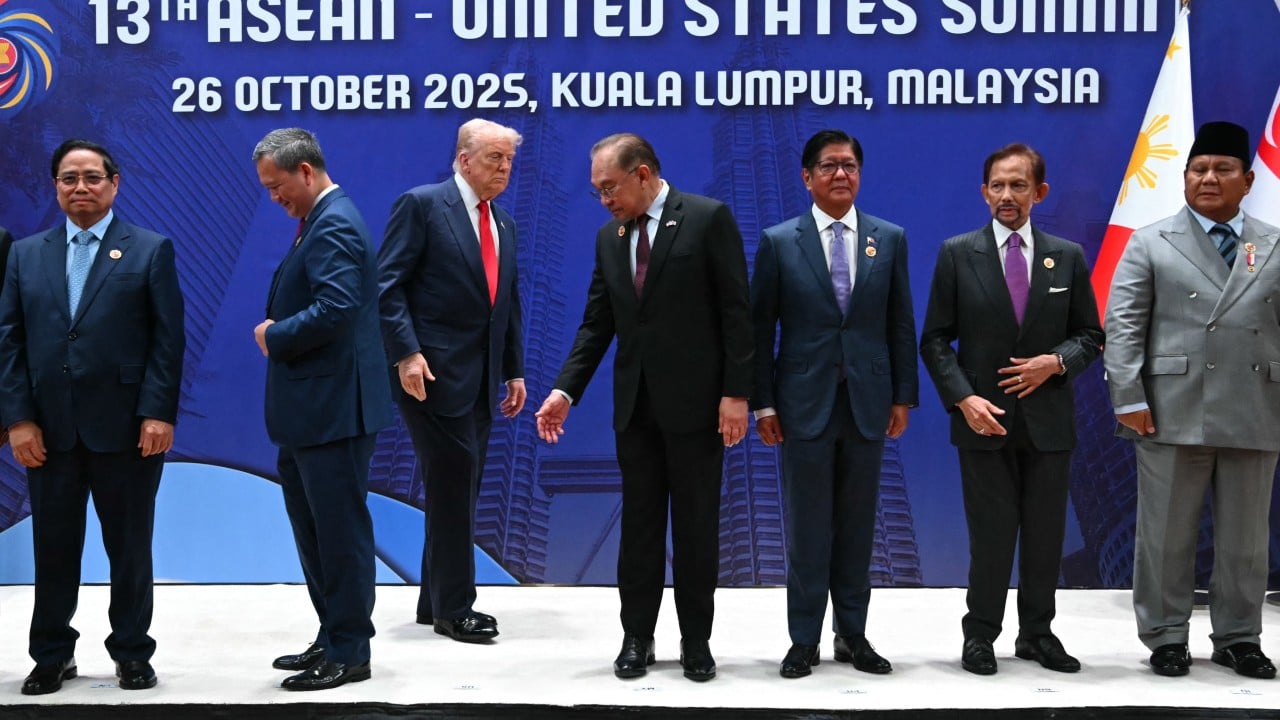
Critics love to mock the Association of Southeast Asian Nations for its endless summitry. They count the declarations, roll their eyes at the buffet lunches, and dismiss the process as a talk shop designed to avoid hard choices. That cynical view misses the entire point of how peace is maintained in one of the most volatile regions on earth. ASEAN meetings are not failing because they produce endless communiques without immediate enforcement mechanisms; they succeed precisely because they force adversaries to sit in the same room year after year.
For decades, foreign policy analysts from Washington and London have demanded concrete outcomes, binding treaties, and major security architecture patterned after the North Atlantic Treaty Organization. They view consensus building as weakness. They mistake polite diplomatic friction for total paralysis. But this Western-centric lens fails to grasp the unique security dilemma of Southeast Asia. A region holding ten distinct nations with clashing territorial claims, diverse political systems, and overlapping great power rivalries cannot survive under a system of majoritarian voting or hard alliances. Meanwhile, you can explore related stories here: The FBI Indictment Proves Our Counterintelligence is Completely Backward.
To understand why these seemingly interminable sessions matter, you have to look past the press releases and examine the architecture of preventive diplomacy. When Beijing and several Southeast Asian claimants lock horns over the South China Sea, the temptation for unilateral escalation is constant. Without a standing venue for low-stakes communication, minor naval frictions easily spiral into open conflict. The ASEAN Regional Forum and its related summits provide that essential safety valve. They establish routine contact points among military leaders and foreign ministers who might otherwise only communicate through naval warnings or state-controlled media.
Consider the rhythm of this institutional machinery. Throughout any given year, member states participate in hundreds of working groups, senior official meetings, and ministerial panels. Subjects range from transnational crime and maritime safety to disaster management and supply chain resilience. This density of interaction builds institutional muscle memory. When an unexpected crisis strikes, whether a disputed fishing zone confrontation or a sudden trade barrier, officials do not need to scramble to find out who to call. They already exchange messages on secure channels because they shared coffee in Jakarta or Phnom Penh three weeks prior. To understand the complete picture, check out the recent report by The New York Times.
Skeptics often point to the adherence to consensus as ASEAN's fatal flaw. Because every decision requires the agreement of all ten members, ambitious policies get watered down into the lowest common denominator. Yet this requirement is also the secret to the bloc's survival. In a region where Indonesia values strategic autonomy, Singapore prioritizes open trade, and Cambodia maintains deep economic ties with China, majority voting would tear the organization apart within months. Consensus ensures that no small state feels railroaded by larger neighbors, and no major member is pushed into a corner where defiance becomes its only option.
The economic stakes amplify this diplomatic calculus. Southeast Asia sits at the maritime crossroads of global trade. Disruptions in the Malacca Strait or the South China Sea would freeze supply chains from Tokyo to Rotterdam. The economic integration fostered by ASEAN mechanisms creates a web of shared commercial interests that acts as an economic deterrent against war. When corporate supply lines cross borders multiple times before a finished smartphone or automobile is assembled, national governments calculate the cost of disruption in millions of lost jobs rather than abstract geopolitical points.
Of course, the system faces severe stress tests. The ongoing crisis in Myanmar has exposed the limits of non-interference. When the military junta seized power in 2021, ASEAN's traditional reluctance to criticize internal governance left the bloc struggling to formulate an effective response. Critics argued that the Five-Point Consensus was toothless, offering the generals diplomatic cover while violence escalated inside the country. That assessment is difficult to dispute. The Myanmar deadlock demonstrates that consensus can curdle into complicity when member states disagree fundamentally on what constitutes an existential threat to regional stability.
Yet even in failure, the framework forces ongoing negotiation. Western sanctions isolate rogue regimes, often driving them deeper into the arms of rival economic blocs with fewer human rights concerns. ASEAN keeps the door open, maintaining a channel of communication that can be utilized when conditions shift. It is frustrating, slow, and frequently unsatisfying to human rights advocates, but diplomacy in a pluralistic neighborhood is rarely clean. It is an exercise in managing permanent friction rather than achieving permanent harmony.
The presence of external powers complicates the picture further. The United States and China view Southeast Asia as the primary chessboard for their strategic competition. Both superpowers routinely pressure regional capitals to choose a side, offering infrastructure loans on one hand and security guarantees on the other. ASEAN's collective neutrality—often criticized as fence-sitting—is the only shield small nations have against being turned into proxy battlegrounds. By insisting on maintaining centrality in regional security dialogues, member states force Washington and Beijing to engage on terms set by Southeast Asia, rather than dictated from foreign capitals.
Look closely at how major diplomatic breakthroughs happen in the region. They rarely arrive via dramatic midnight treaties signed under flashing cameras. Instead, they emerge from years of bureaucratic grinding, draft resolutions passed back and forth across delegations, and informal hallway conversations during ministerial dinners. This quiet persistence creates the conditions for stability. It lowers the political temperature before disputes can reach a boiling point.
The next time headlines mock another ASEAN summit for producing a vague joint statement, remember what is not happening. Fleets are not colliding in the Gulf of Thailand. Trade routes remain open. Leaders are arguing over wording in air-conditioned convention centers rather than mobilizing troops along disputed borders. Endless meetings may be tedious to cover and frustrating to analyze, but they remain infinitely preferable to the alternative.