Revoking White House press credentials for major news organizations—specifically CNN, MSNOW, and Politico—is not an impulsive public relations maneuver; it is a calculated reallocation of institutional access designed to alter the information supply chain. When an executive administration restricts physical entry to the briefing room and press pools, it shifts the battleground from narrative persuasion to logistical friction and legal precedent. Understanding this move requires stripping away partisan rhetoric and analyzing the administrative mechanisms, constitutional guardrails, and operational realities that govern executive-press relations.
The Architecture of White House Access
Physical access to the White House complex is governed by a tiered credentialing system managed jointly by the White House Press Office, the United States Secret Service, and the White House Correspondents' Association (WHCA). To evaluate the impact of a ban, one must distinguish between the three distinct layers of access that define executive journalism. Meanwhile, you can read similar stories here: The Quiet Thaw at the Top of the World (And Why Everyone Suddenly Wants a Piece of It).
- The Hard Pass: This is a permanent credential issued to correspondents who regularly cover the White House. It requires a rigorous Secret Service background check and grants daily entry to the James S. Brady Press Briefing Room and the surrounding press workspaces. Revoking a hard pass removes a reporter's baseline operational infrastructure.
- The Day Pass: Journalists without hard passes must apply for daily clearance, subject to Secret Service vetting for each visit. Moving an outlet from hard passes to day passes introduces administrative latency, allowing the administration to delay or deny entry for specific high-stakes events without issuing a blanket ban.
- The Protective Pool: Managed largely by the WHCA, the press pool is a rotating, small group of reporters, photographers, and broadcast technicians who travel with the president on Air Force One, attend restricted Oval Office sprays, and cover off-campus events. Exclusion from the pool severs an outlet's direct observational feed of the executive in unscripted environments.
When an administration announces a ban targeting specific outlets like CNN, MSNOW, and Politico, the operational impact depends entirely on which tier is targeted. A revocation of hard passes forces reporters off the campus, while interference with pool assignments challenges the traditional self-governance of the WHCA.
The Legal and Constitutional Friction
Executive authority over White House access is not absolute. It operates within a narrow corridor defined by the First and Fifth Amendments of the United States Constitution, reinforced by decades of federal appellate precedent. To understand the full picture, we recommend the excellent report by BBC News.
The foundational legal constraint is Sherrill v. Knight (1977), decided by the U.S. Court of Appeals for the D.C. Circuit. In that ruling, the court established that while the First Amendment does not guarantee every journalist a right to enter the White House, once the government opens press facilities to the media generally, it cannot deny access arbitrarily or based on the content of a journalist's reporting.
Under the Sherrill framework, revoking a press pass triggers Fifth Amendment due process requirements. The White House must satisfy three procedural criteria:
- Notice: The administration must provide the journalist or outlet with explicit notice of the factual basis for the proposed revocation.
- Opportunity to Rebut: The affected party must be given a meaningful opportunity to respond to and contest those facts before a final decision is executed.
- Written Decision: The final determination must be issued in writing, articulating a compelling governmental interest—historically limited to legitimate physical security threats rather than editorial disagreement.
Subsequent litigation, notably Cable News Network, Inc. v. Trump (2018) and Karem v. Trump (2020), reinforced these procedural boundaries. Federal courts consistently ruled that the White House cannot bypass due process by citing general behavioral standards or editorial hostility without establishing clear, pre-existing rules and offering an administrative hearing.
If an administration attempts to enforce a sweeping ban against CNN, MSNOW, and Politico without satisfying the Sherrill due process test, the action is structurally vulnerable to immediate temporary restraining orders in federal district court. The legal mechanism favors the plaintiffs because the deprivation of First Amendment access constitutes irreparable harm per se under established judicial doctrine.
The Economics of Information Asymmetry
Beyond the courtroom, banning established political and broadcast outlets alters the economics of political news production. Legacy networks and specialized political publications rely on proximity to generate proprietary reporting. When that proximity is severed, the cost structure of news gathering shifts dramatically.
The Loss of Ambient Intelligence
White House reporting relies heavily on informal, unrecorded interactions—conversations in the upper press area, brief exchanges with senior advisors walking the colonnade, and real-time observation of staff demeanor during crises. Removing reporters from the building eliminates this ambient intelligence. Outlets must compensate by increasing reliance on off-campus sourcing, encrypted messaging, and secondary leaks, which increases verification times and raises the risk of reporting inaccuracies.
The Substitution Effect in the Briefing Room
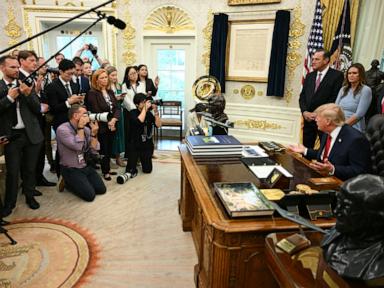
Seats in the Brady Briefing Room are a finite, zero-sum resource. Removing major cable networks and high-volume digital outlets creates immediate physical vacancies. An administration uses this vacuum to execute a substitution strategy: reallocating prime front-row seats and question privileges to aligned media outlets, independent digital creators, and regional broadcasters. This reshapes the visual and tonal framing of the daily briefing, replacing adversarial cross-examination with cooperative inquiry.
Syndication and Pool Dependency
Even when an outlet is banned from the physical grounds, it rarely loses access to the raw audio and video feeds of public White House events. Under current broadcast pooling agreements, major networks share live feeds of briefings and presidential remarks. A banned outlet can still air the briefing and analyze the footage. However, it loses the ability to inject its own questions into the public record, reducing its role from an active participant in the accountability mechanism to a passive commentator.
Distinguishing Fact from Strategic Hypothesis
In evaluating the announcement to ban CNN, MSNOW, and Politico, an objective analysis must separate verifiable institutional mechanics from strategic hypotheses regarding executive intent.
Established Operational Facts:
- The White House Press Office holds the administrative apparatus to deactivate hard passes via the Secret Service security system.
- Precedent dictates that targeted revocations based on viewpoint discrimination fail judicial scrutiny when challenged under the Fifth Amendment.
- The White House Correspondents' Association controls the rotation of the travel pool, though the Secret Service retains final clearance authority over individuals entering secure zones.
Strategic Hypotheses:
- The Litigation Trap Hypothesis: The administration may fully anticipate a judicial injunction. In this scenario, the objective is not permanent exclusion, which is legally untenable, but rather the generation of a prolonged legal battle that reinforces a political narrative of institutional conflict. The court loss becomes a secondary communication asset.
- The Decentralized Media Pivot: The ban may serve as a forcing function to formalize a new media ecosystem. By sidelining dominant cable and beltway outlets, the executive branch signals to emerging digital platforms and independent podcasters that direct presidential access is available to those who bypass traditional editorial gatekeepers.
- The Resource Drain: Forcing major news organizations into federal litigation diverts legal budgets and executive management bandwidth away from investigative reporting and toward defensive access preservation.
Operational Countermeasures for Excluded Outlets
When a news organization faces credential revocation, relying solely on First Amendment litigation creates an operational gap between the filing of a complaint and the issuance of an injunction. High-performing newsrooms deploy a multi-track response to maintain coverage continuity.
- Immediate Administrative Documentation: Upon receiving notice of a ban, legal counsel must demand the specific factual basis for the revocation in writing. This locks the administration into a legal rationale before it can retroactively construct security-based justifications, creating a clean record for a Fifth Amendment due process challenge.
- Distributed Sourcing Networks: Newsrooms must decentralize their reporting footprint immediately. Instead of anchoring coverage on a single White House correspondent, editors shift beat reporters from agency headquarters—the Pentagon, State Department, Treasury, and Department of Justice—to track executive policy execution at the operational level, where White House press restrictions do not apply.
- Coalition Leverage via the WHCA: Individual outlets have limited bargaining power against the executive branch, but collective action introduces structural risk for the administration. If the WHCA coordinates a unified response—such as refusing to fill vacated seats or sharing pool feeds aggressively—it neutralizes the administration's ability to divide and conquer the press corps.
- Direct-to-Audience Transparency: Rather than treating access loss as an internal industry dispute, effective outlets integrate the mechanics of the exclusion directly into their coverage. Explaining precisely what information is being withheld and how the administration is controlling the briefing room environment turns an operational handicap into an editorial data point.
Limitations of Institutional Resistance
Neither judicial intervention nor press corps solidarity provides a permanent solution to executive access restrictions. Both mechanisms carry structural limitations that favor a persistent administration.
First, judicial remedies protect access to public forums like the briefing room, but they cannot compel the president or senior staff to grant interviews, answer specific questions, or hold formal press conferences. An administration forced by a federal judge to restore hard passes to CNN, MSNOW, and Politico can simply reduce the frequency of formal briefings, move communications to social media platforms, or conduct exclusive interviews with favored outlets outside the briefing room structure. Compliance with the letter of Sherrill v. Knight does not guarantee meaningful access.
Second, press corps solidarity historically fractures under commercial pressure. Broadcast networks and digital publications compete fiercely for ratings, exclusive scoops, and advertiser revenue. When one outlet is banned, competitors face a strong market incentive to occupy the vacated space and capture the resulting audience share rather than boycott the briefing room in protest.
The Structural Trajectory of Executive Communications
The revocation of credentials for CNN, MSNOW, and Politico marks an escalation in the restructuring of American political communication, moving away from a centralized, institutional press model toward a fragmented, transactional access system.
News organizations cannot rely on twentieth-century legal precedents to protect a business model built on physical proximity to the West Wing. As the executive branch increasingly treats press credentials as revocable privileges rather than institutional norms, media outlets must permanently reallocate capital away from briefing room presence and toward independent, agency-level investigative infrastructure. The competitive advantage in political journalism will no longer belong to the outlets with front-row seats in the Brady Briefing Room, but to those capable of mapping executive power from the outside in.